


Victorian Mourning Brooch
These Victorian mourning brooch pieces are intimate keepsakes in gold, jet and tortoiseshell, worn to remember those who passed.
Victorian Mourning Brooch
A Victorian mourning brooch is a wearable memorial, most often taking the form of a pin set with dark materials, hair or miniature portraits. The examples you encounter on this page span the nineteenth century, including pieces from the early and late Victorian eras alongside occasional Edwardian works.
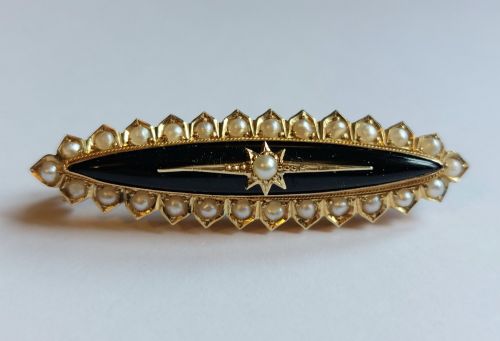
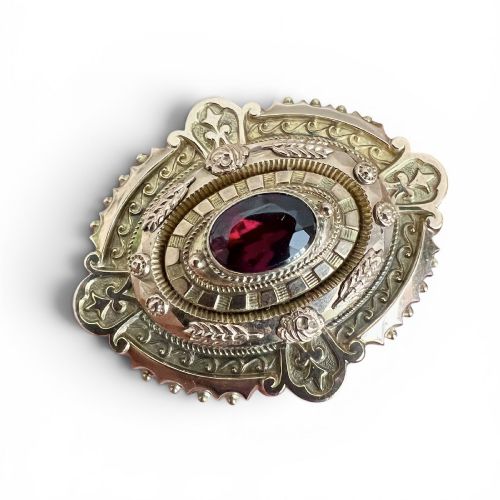
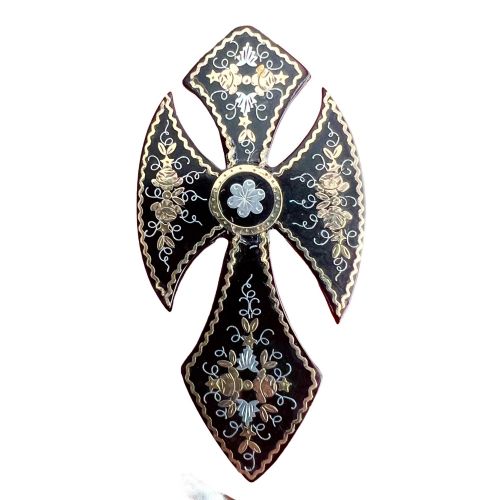
Many items combine gold or silver with hardstone, onyx, jet or tortoiseshell, while others incorporate a locket compartment at the back for a lock of hair or a photograph. Forms vary from simple bar brooches and crosses to elaborate Etruscan Revival locket brooches and buckle shapes.
The materials carry symbolic weight, reflecting the sombre aesthetic of the period. Whether carved from Whitby jet or inlaid with gold and silver piqué work, these pieces served a deeply personal function for those left behind.
Materials and construction
Gold and silver form the structural mounts and frames, frequently worked in fifteen-carat or nine-carat purity, alongside rolled gold variations. Jewellers also utilised tortoiseshell decorated with intricate gold and silver inlay work, known as piqué.
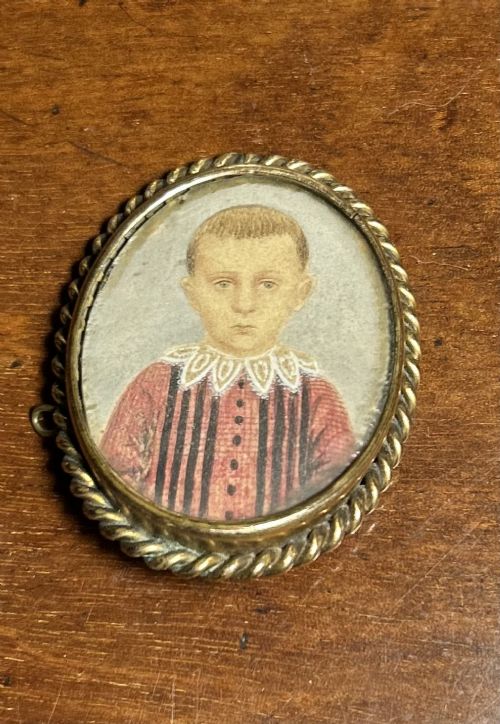
Stones such as onyx, hardstone, garnet and diamond are set into the metalwork, alongside organic materials like Whitby jet and carved stag antler. Miniature portraits, enamel work and seed pearls complete the decorative vocabulary of these pieces.
Listings span the nineteenth century and into the Edwardian era, incorporating materials from gold and silver to tortoiseshell, onyx, jet and diamond.
Distinctions in quality
The fineness of the metalwork and the complexity of the materials dictate the standing of a piece. Fine hand-carved Whitby jet, detailed miniature portraits and crisp piqué inlay demonstrate superior craftsmanship compared to simpler moulded or mass-produced items.
The integrity of the setting and the preservation of delicate elements like hair work or enamel also define the grade of the brooch. Pieces that retain their original glass covers, secure pin mechanisms and undamaged stone settings represent the better end of the survivals.
The Victorian Mourning Brooch Glossary
- Piqué
- A method of decorating tortoiseshell or ivory by inlaying tiny pins or strips of gold and silver. This technique creates delicate geometric or floral patterns across the surface.
- Whitby Jet
- A hard, black lignite found on the Yorkshire coast, carved into ornaments and heavily favored during the nineteenth century for mourning jewellery. It takes a high, brilliant polish.
- Etruscan Revival
- A nineteenth-century design style inspired by ancient archaeological discoveries, featuring granulation, filigree and applied wirework on gold. This aesthetic added classical gravity to personal ornaments.
- Seed Pearl
- Very small, natural or saltwater pearls often used in clusters or borders around central stones and hair compartments. Their delicate size allowed jewellers to create intricate floral and geometric motifs.
- Bar Brooch
- A horizontal pin form consisting of a narrow metal bar, sometimes plain and sometimes decorated with gemstones, enamel or central medallions. It is one of the most common structural formats for nineteenth-century pins.
Victorian Mourning Brooch: Frequently Asked Questions
What is inside a mourning brooch?
Many of these pieces contain woven human hair, hand-painted portrait miniatures or photographic portraits under glass. These inclusions were placed at the back or centre of the brooch as a personal remembrance of the deceased.
Some examples also feature hollow locket compartments designed specifically to hold these sentimental tokens securely hidden away from view.
How do I wear a vintage brooch?
These pieces look best pinned to the lapel of a heavy coat, the collar of a structured jacket or the front of a woollen scarf. Because they are antique items with delicate mechanisms, ensure the fabric is thick enough to support the weight of the gold or stone.
Fasten the pin carefully, checking that the safety catch or C-clasp holds the stem firmly in place throughout the day.
How do I date a Victorian brooch?
Dating relies on stylistic clues, materials and occasionally hallmarks stamped onto the metal mount. Early Victorian pieces often feature heavier, romantic designs, while Etruscan Revival styles emerged later in the nineteenth century.
The presence of specific elements, such as piqué work or photographic inserts rather than hand-painted miniatures, also helps narrow down the decade of creation.