
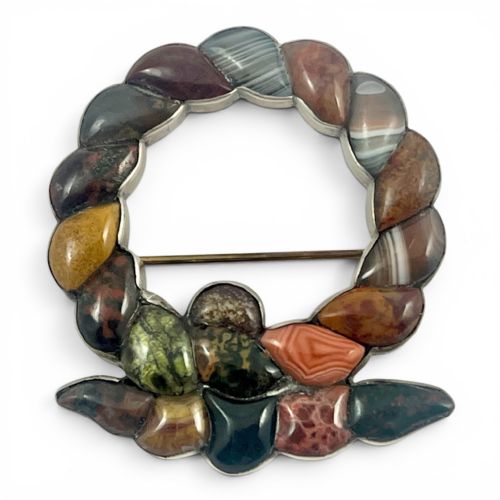


Banded Agate Brooch
A banded agate brooch offers striking natural patterns set in precious metals, bringing authentic Victorian character to modern wear.
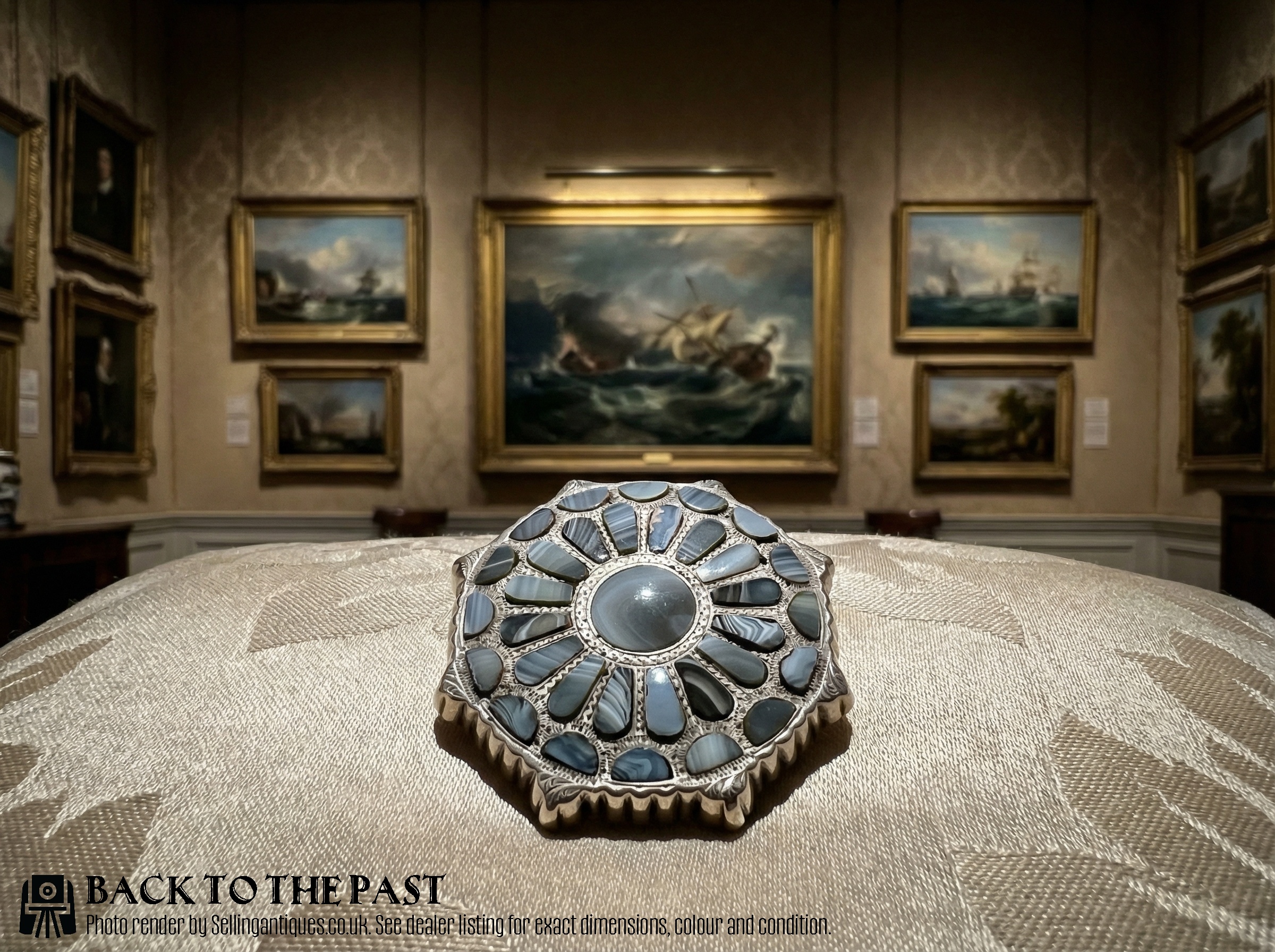
Banded Agate Brooch
A banded agate brooch is a piece of antique Victorian jewellery featuring naturally striped chalcedony set in silver or gold mountings. These ornaments frequently appear in Scottish pebble or revival styles, displaying distinct regional character from the nineteenth century.
Most examples found here date from the Victorian era, spanning the decades around eighteen eighty and the mid nineteenth century. Buyers often encounter silver or gold settings housing polished specimens of agate, jasper, or bloodstone.
Forms range from simple bar brooches to shield designs and elaborate pebble compositions. Certain pieces form part of a jewellery suite alongside matching earrings or bracelets.

How they were made
Maker's workshops utilised natural stones including banded agate, Montrose agate, malachite, jasper, and bloodstone. These minerals were expertly cut and polished to reveal their intricate natural strata.
Silversmiths and goldsmiths secured the polished specimens within metal mounts, often incorporating intricate Celtic or Scottish revival motifs. The integration of durable silver and warm gold provided sturdy backing for heavy stone displays.
Banded Agate Brooch Retail Price Guide 2026
Typical asking prices for banded agate brooch among the pieces listed under this phrase on Sellingantiques today, from the lower quarter to the upper quarter. They describe what is for sale here now, not the wider market.
Some nineteenth-century wearers pinned these striped stones to their plaid shawls to ward off the Highland chill in style.
What varies in quality
Quality rests upon the visual impact of the stone banding and the precision of the lapidary work. Superior stones exhibit sharp, well-defined contrasting lines and a high, unblemished polish.
The complexity of the metal setting also dictates the standard of the piece, distinguishing simple bar mounts from elaborate shield designs and matched suites.
The Banded Agate Brooch Glossary
- Banded agate
- A variety of chalcedony featuring distinct parallel layers of colour. These natural stripes give each brooch its unique appearance.
- Montrose agate
- A specific Scottish variety of banded agate prized in nineteenth-century jewellery. It originates from the Montrose area.
- Scottish revival
- A nineteenth-century design movement inspired by traditional Scottish motifs and Highland heritage. Jewellers incorporated local stones and Celtic symbols.
- Specimen brooch
- A piece designed to showcase a particular raw mineral or stone. These items highlight natural geological patterns rather than faceted gems.
- Jewellery suite
- A matching set of ornaments designed to be worn together. Such collections frequently combine a brooch with earrings or a bracelet.
Banded Agate Brooch: Frequently Asked Questions
What periods do these brooches come from?
These pieces date almost exclusively from the Victorian era, spanning the mid to late nineteenth century. Many examples reflect the popular Scottish revival styles of eighteen fifty through eighteen ninety.
Craftsmen of this period favoured natural British stones set into substantial silver or gold frames. Each item carries the distinct aesthetic of nineteenth-century lapidary work.
How do I wear a banded agate brooch?
These substantial pieces look striking pinned to heavy fabrics such as wool coats, tweed jackets, or thick scarves. Their weight requires sturdy material to hold the pin securely in place.
Consider pairing a single brooch with tailored clothing to let the natural stone patterns stand out. Alternatively, matched suites allow for coordinated accessorising.
What stones are used alongside agate?
Victorian jewellers frequently combined banded agate with jasper, bloodstone, and malachite. Smoky quartz and amber also appear in specific regional designs.
These complementary minerals enhance the rich colour palette of the main agate stones. Each material reflects the geological interests of the period.
Are these brooches heavy to wear?
Solid silver or gold mounts combined with large polished stones create a noticeable weight. This substance is a hallmark of genuine nineteenth-century construction.
Due to this heft, proper placement on thicker garments ensures the brooch hangs correctly without pulling delicate fabrics.