
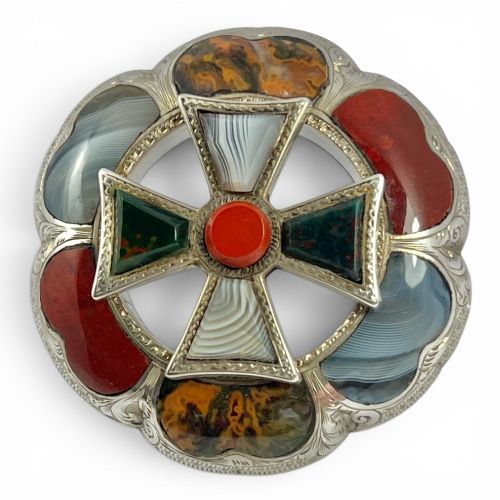
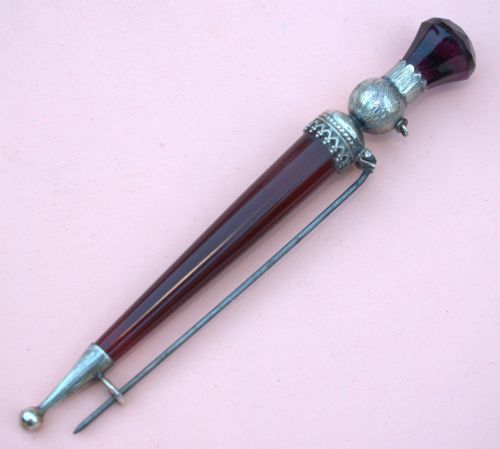


Victorian Pebble Brooch
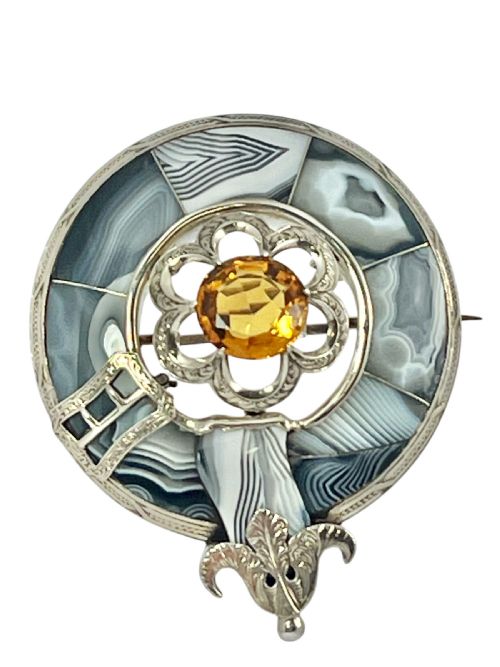
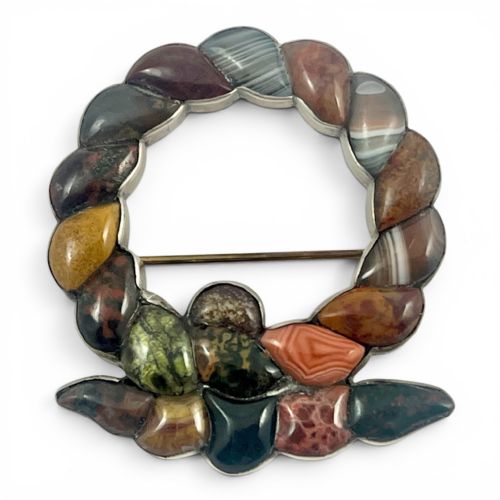
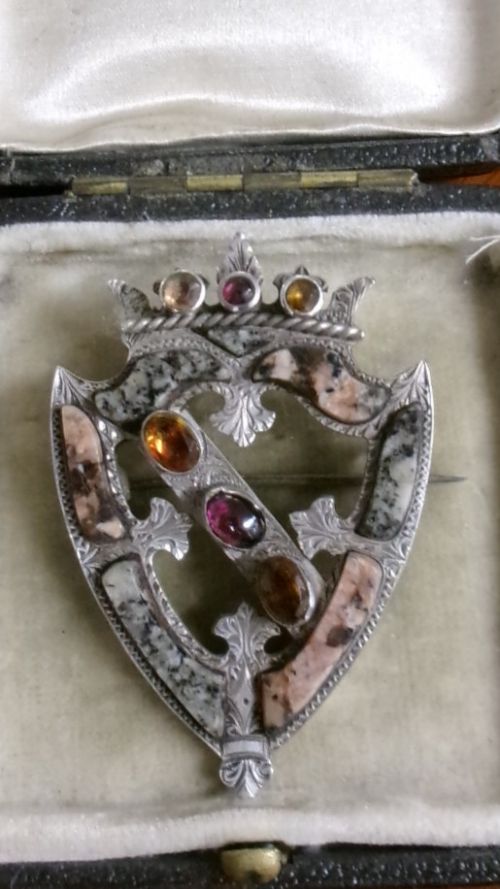
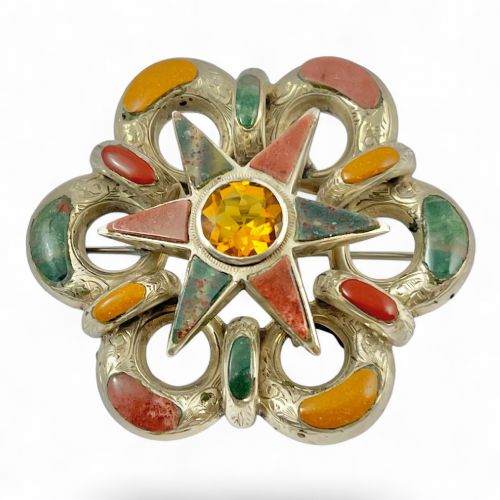
A victorian pebble brooch brings together native hardstones and silver work in a lasting piece of 19th century jewellery.
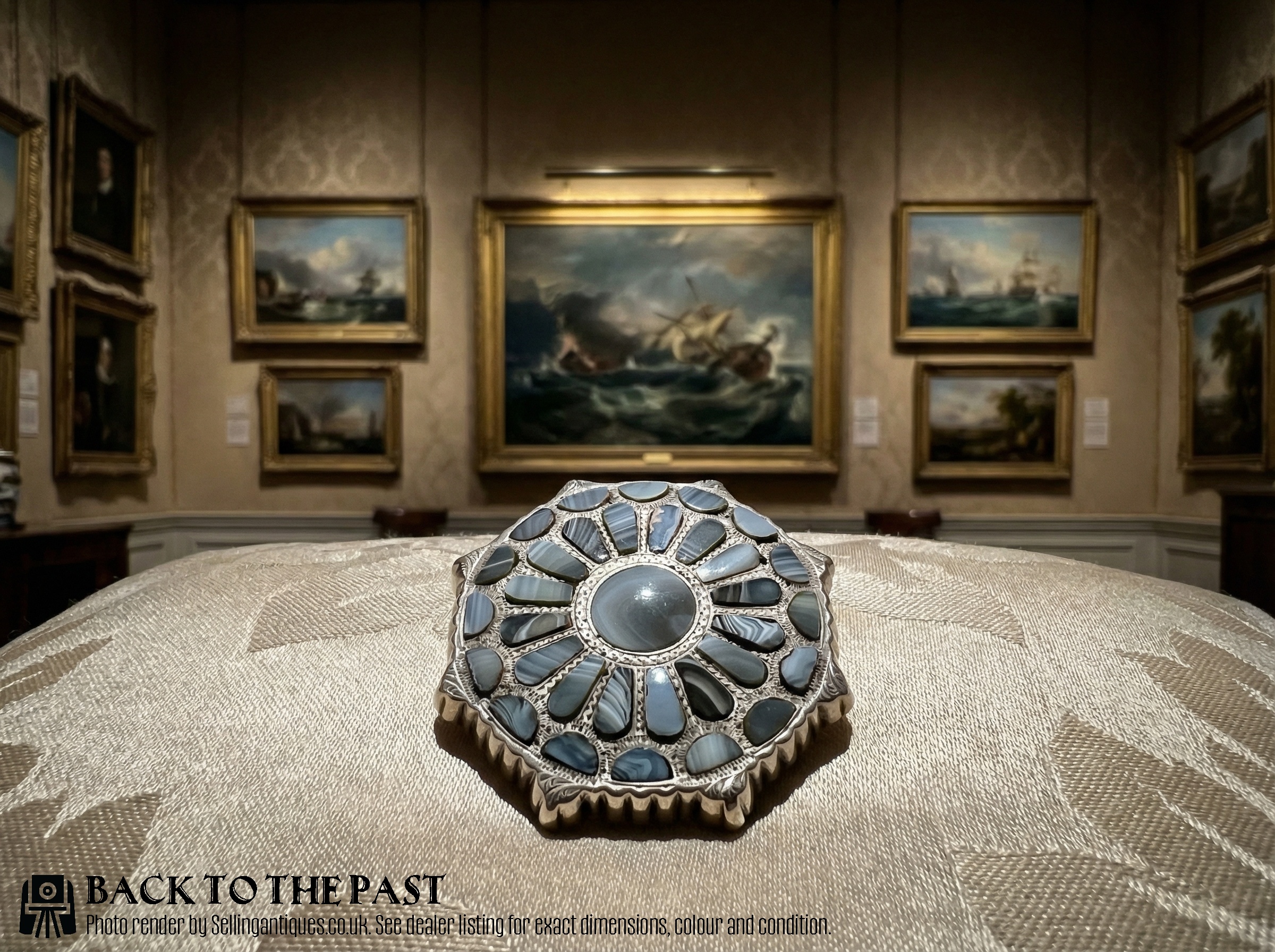
Victorian Pebble Brooch
A victorian pebble brooch takes many forms, from shield shapes and dirks to broadswords and padlocks, rooted firmly in the Scottish Revival movement. These pieces originate across the nineteenth century, with examples dating from the 1840s through to 1900.
The most common pieces encountered here combine sterling silver or provincial silver settings with multi-coloured hardstones. Buyers find brooches, kilt pins, and occasional matching jewellery suites that reflect nineteenth century tastes.

Materials and Technique
Craftsmen utilised sterling silver and gold to mount natural specimens of agate, jasper, bloodstone, and citrine. Stones were cut, polished, and fitted closely together into geometric or figurative metal frameworks.
Techniques included braided silver work, tartan mosaic arrangements, and secure bezel settings that held diverse hardstones firmly in place. Jewellers combined different mineral colours, such as Montrose agate and blue lace agate, within a single piece.
Victorian Pebble Brooch Retail Price Guide 2026
Typical asking prices for victorian pebble brooch among the pieces listed under this phrase on Sellingantiques today, from the lower quarter to the upper quarter. They describe what is for sale here now, not the wider market.
Listings feature items dated from the early Victorian period through to 1900, utilising silver, gold, agate, jasper, and citrine.
Craftsmanship and Material Selection
The distinction between standard items and finer examples rests on the variety and selection of the hardstones used. Pieces featuring scarce minerals like citrine alongside well-matched Montrose agate command greater attention.
The intricacy of the metalwork also separates pieces, with detailed silver casting, broadsword designs, and complex braided patterns showing higher degrees of skill than simpler mountings.
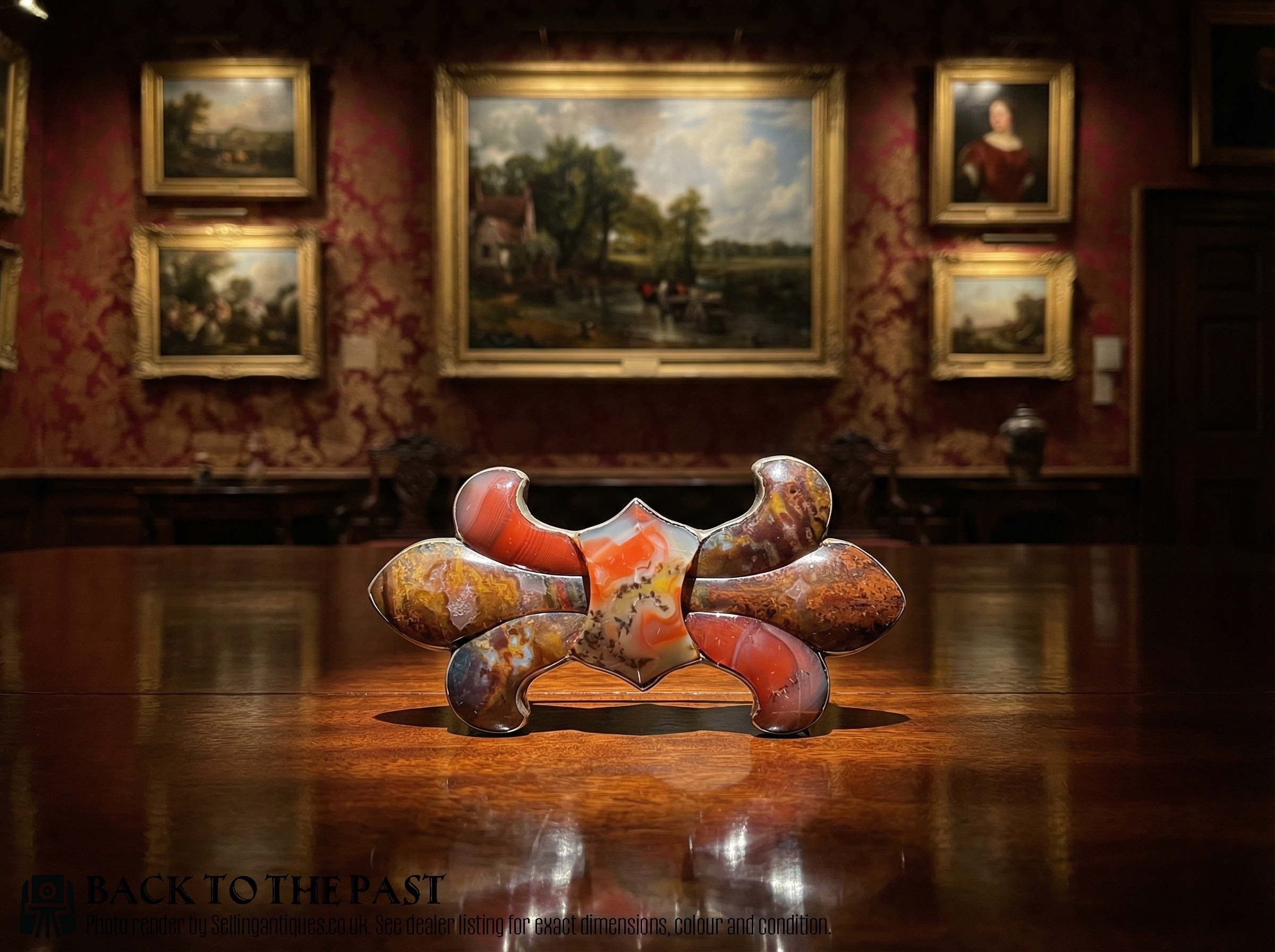
The Victorian Pebble Brooch Glossary
- Agate
- A variety of chalcedony that forms in concentric bands or distinct patterns. It provides the multicoloured hardstones central to these pieces.
- Jasper
- An opaque, impure variety of quartz that appears in various earthy tones within nineteenth century settings.
- Citrine
- A yellow variety of quartz often set alongside hardstones to add bright colour. It appears frequently in pieces from the 1870s and 1880s.
- Dirk
- A traditional long dagger, replicated in metalwork for use as a brooch or kilt pin. These pieces often incorporate hardstone handles and scabbards.
- Plaid brooch
- A large fastening worn to secure highland plaid garments. They typically measure larger than standard dress brooches.
Victorian Pebble Brooch: Frequently Asked Questions
How do I wear a heavy brooch?
These substantial pieces require sturdy fabrics like wool, tweed, or thick cotton to support their weight without sagging.
Pin them through multiple layers of material or near structural seams for secure placement.
What is Scottish Revival jewellery?
This design movement drew inspiration from Highland traditions, popularised during the nineteenth century by royal patronage.
Items reflected regional weaponry, Celtic motifs, and native Scottish stones.
How do I clean an agate brooch?
Wipe the hardstones gently with a soft, damp cloth to remove surface dust without disturbing the silver settings.
Avoid soaking antique silver and stone assemblies in liquid cleaners.
Are these brooches solid silver?
Many pieces are made from sterling silver or regional provincial silver, whilst some utilise alternative alloys.
Inspect the metal components for hallmarks or test results where markings are absent.