
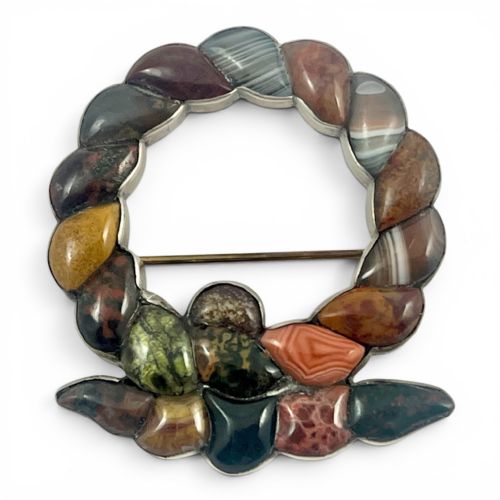


Scottish Jasper Brooch
A Scottish jasper brooch brings the rich mineral tones of the Highlands to your lapel, offering genuine Victorian craftsmanship in silver and stone.
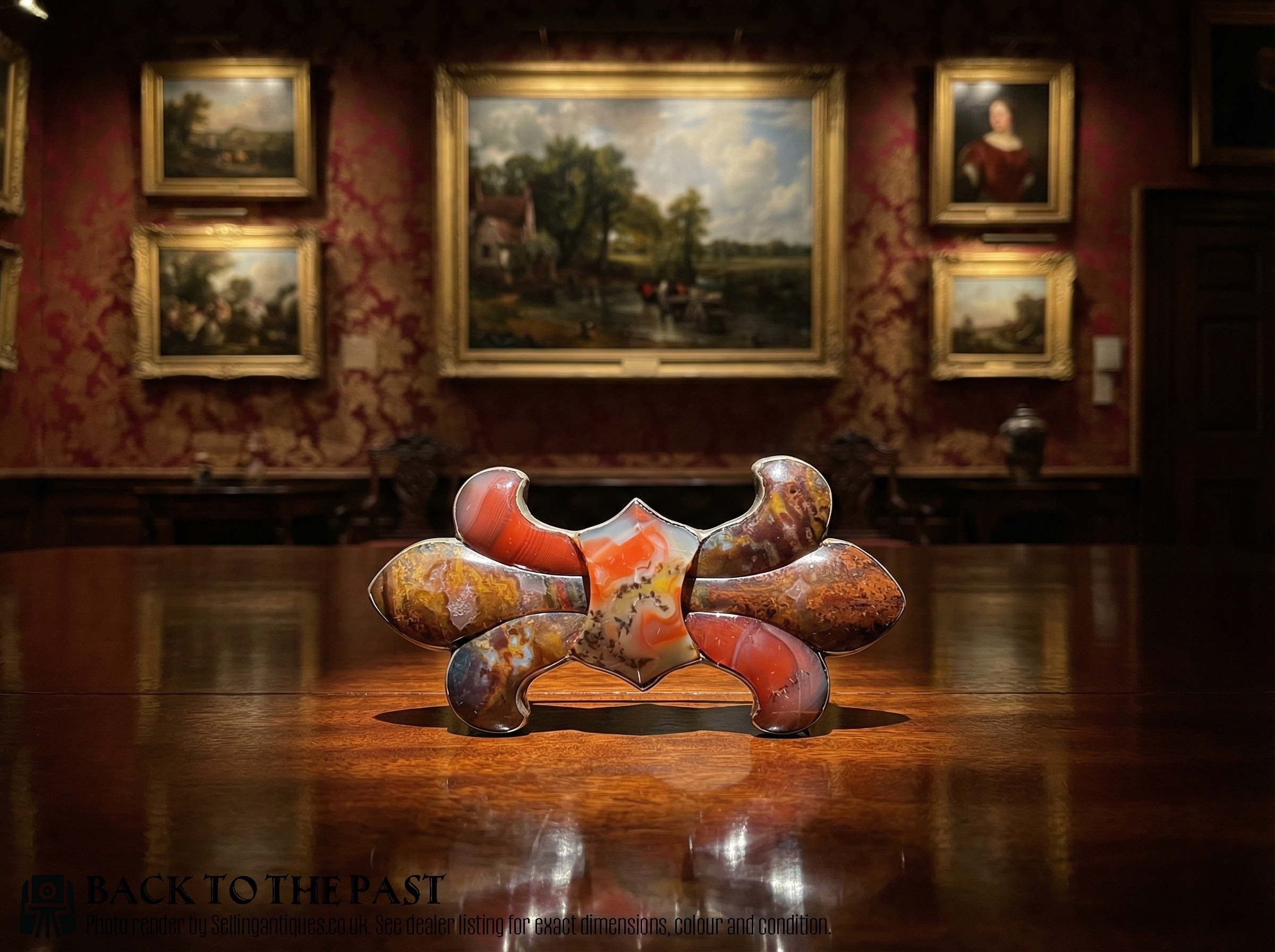
Scottish Jasper Brooch
The selection on this page centres on items fashioned from silver or gold, frequently paired with agate, bloodstone, and citrine alongside green and red jasper. Forms vary from simple bows and specimen pins to basket-hilted broadsword kilt pins and braided plaid brooches dating across the middle and late Victorian eras.
Materials and construction methods
Silversmiths and jewellers shaped sterling silver and gold into elaborate metalwork mounts that securely bezel-set numerous hardstone panels. These stones were precisely cut, polished, and fitted together to form intricate geometric patterns or naturalistic motifs.
Makers utilised regional quartz varieties, incorporating banded agates, deep red jaspers, and bloodstones into heavy metal frameworks. Provincial workshops, such as those in Inverness, employed traditional hand-tooling techniques to engrave and finish the precious metal backings.
Scottish Jasper Brooch Retail Price Guide 2026
Typical asking prices for scottish jasper brooch among the pieces listed under this phrase on Sellingantiques today, from the lower quarter to the upper quarter. They describe what is for sale here now, not the wider market.
Materials recorded across the available selection include silver, gold, sterling silver, jasper, agate, bloodstone, citrine, and smoky quartz.
Distinctions in craftsmanship and design
Quality rests upon the precision of the stone-cutting and the complexity of the metal mounting. Pieces featuring tight, seamless stone inlays and deeply chased silver demonstrate superior workshop capability.
Larger or more elaborate forms, such as broadsword kilt pins and braided plaid brooches with multiple stone types like citrine and jasper, demand greater technical skill from the maker than simple geometric shapes do.
The Scottish Jasper Brooch Glossary
- Jasper
- An opaque, microcrystalline variety of quartz that appears in various earthy tones within these Victorian jewels. It provides a dense, colourful contrast to the brighter agates and silver mounts.
- Agate
- A common cryptocrystalline quartz featuring distinct colour bands or layers. It forms the primary background material for many nineteenth-century Scottish pebble jewellery designs.
- Broadsword
- A heavy-bladed sword design replicated in miniature for decorative kilt pins. These specific brooches mimic traditional Highland weaponry using silver and inset stones.
- Provincial
- Describing items manufactured outside major capital cities, often by regional silversmiths. Inverness silver pieces represent this distinct local production.
Scottish Jasper Brooch: Frequently Asked Questions
What is a scottish jasper brooch?
A scottish jasper brooch is a nineteenth-century piece of jewellery made from silver or gold and set with native hardstones. They reflect the Victorian enthusiasm for Highland themes and native minerals.
These accessories were worn to fasten plaid garments or simply as decorative lapel ornaments. Their construction combines traditional metalsmithing with detailed lapidary work.
How do I date my brooch?
Dating relies on stylistic clues, metal types, and the specific combinations of hardstones used in the mount. Most examples on this page originate from the Victorian era between eighteen-forty and nineteen-hundred.
Examining the pin mechanism, the depth of the silver chasing, and provincial hallmarks helps narrow down the decade of production. Earlier pieces often display simpler geometric arrangements compared to later heavily braided designs.
Were these brooches worn by men?
Many larger forms, such as broadsword kilt pins and heavy plaid brooches, were originally designed for traditional men's Highland dress. They served the practical purpose of securing heavy wool tartans across the shoulder.
Smaller bow brooches and padlock locket pendants catered to women's Victorian fashions of the period. Both categories utilised the same distinctive regional hardstones and silverwork techniques.
What stones accompany the jasper?
Makers frequently paired jasper with banded agates, dark green bloodstones, and bright yellow citrines. These stones were gathered locally and polished into contrasting geometric segments.
The inclusion of multiple mineral varieties creates a rich mosaic effect characteristic of nineteenth-century Scottish pebble jewellery. Smoky quartz also appears alongside silver and gold elements in more elaborate items.