



Agate and Silver Brooch
An agate and silver brooch brings together banded chalcedony and bright metal, offering a wearable piece of Victorian Scottish history that suits any lapel.
Agate and Silver Brooch
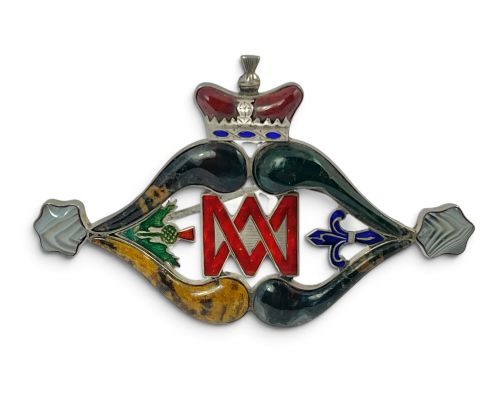
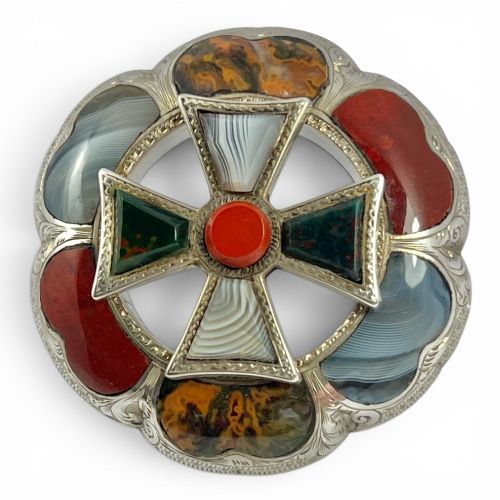
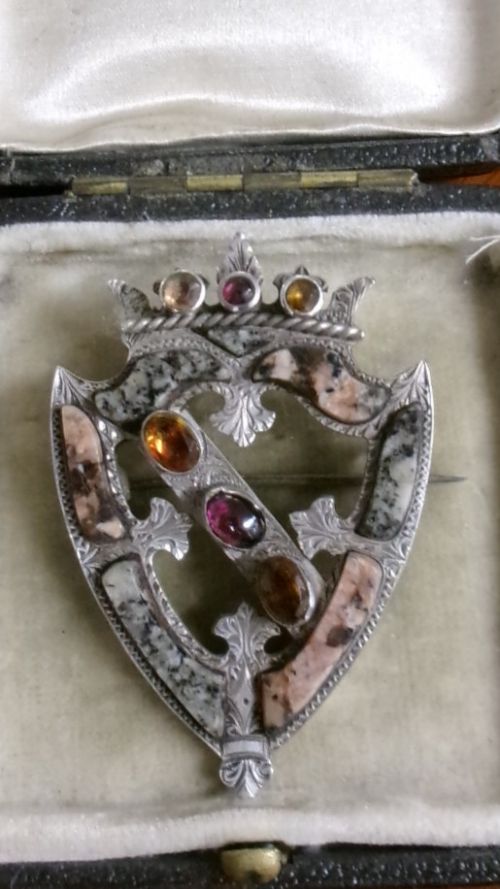
When searching for an agate and silver brooch, collectors generally encounter nineteenth-century pieces originating from Scotland. These items often take distinct regional forms such as dirks, broadswords, shields, and padlock lockets, alongside more traditional pin formats.
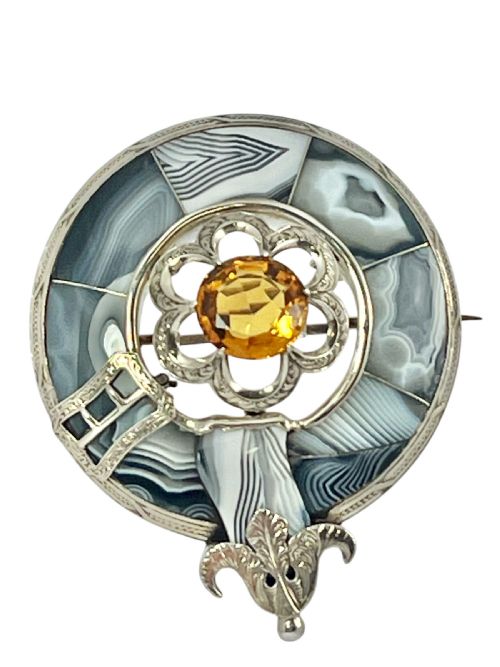
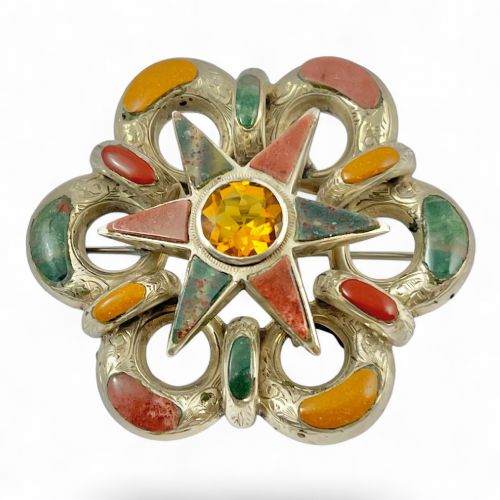
The aesthetic is heavily tied to the Victorian Scottish Revival movement, drawing on Highland traditions. Most examples seen in trade combine patterned stones with heavy silver mounts, sometimes incorporating citrine or enamel highlights.
Beyond standard brooches, the category expands into kilt pins and matching jewellery suites that pair earrings with a central fastening. These pieces showcase a distinct regional identity rooted in the nineteenth century.
Materials and construction
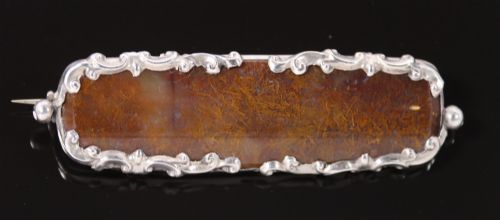
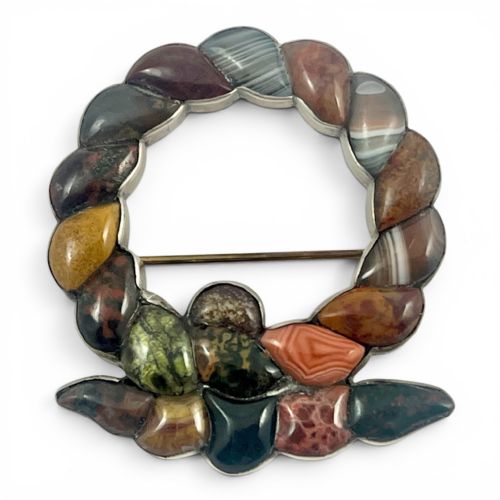
The primary materials recorded are silver and various forms of chalcedony, specifically Montrose agate, moss agate, and jasper. Makers also integrated citrine and bloodstone into the settings to add contrasting spots of yellow and green.
Stones were cut, polished, and fitted into substantial silver bezels by hand. Many examples feature stones arranged in geometric pebble mosaics that reflect nineteenth-century lapidary skills.
Agate and Silver Brooch Retail Price Guide 2026
Typical asking prices for agate and silver brooch among the pieces listed under this phrase on Sellingantiques today, from the lower quarter to the upper quarter. They describe what is for sale here now, not the wider market.
Listings span the Victorian period from 1860 to 1900, alongside a single Georgian example from 1800.
Variations in quality
Quality rests upon the stone cutting, the variety of the agates used, and the complexity of the silver work. Exceptional specimens display tightly fitted multi-stone mosaics with vivid natural banding and crisp metal detailing.
The Agate and Silver Brooch Glossary
- Montrose agate
- A specific variety of banded chalcedony prized for distinct colouration and markings, frequently utilised in Scottish Revival jewellery. It forms the focal point of many nineteenth-century pins.
- Moss agate
- A chalcedony stone containing dendritic inclusions that resemble green moss or plant life. This material appears in Georgian and Victorian silver settings.
- Dirk brooch
- A fastening shaped like a traditional Scottish dagger, combining practical use with Highland symbolism. These pieces often incorporate elaborate silver work and multiple coloured stones.
- Scottish Revival
- A nineteenth-century cultural movement that popularised traditional Highland motifs, weaponry shapes, and pebble jewellery. This style defines the majority of pieces in this category.
- Specimen brooch
- An item designed to showcase specific native stones and geological samples collected from the landscape. These mount individual polished agates within a simple silver frame.
Agate and Silver Brooch: Frequently Asked Questions
What is a Scottish pebble brooch?
A Scottish pebble brooch is a Victorian ornament made from native stones like agate, jasper, and bloodstone set into silver. These items celebrate the natural geology of the region through careful lapidary work.
They were extremely popular during the nineteenth-century Scottish Revival. Wearers pinned them to plaids, shawls, and heavy wool garments as both decoration and fastening.
How do I date an agate brooch?
Dating relies on examining the metal mounts, pin mechanisms, and overall stylistic context. Most examples date from the Victorian era, particularly the mid-to-late nineteenth century.
Clues include the depth of the silver mount, the style of the hinge and C-clasp, and whether the design follows specific Revival motifs like broadswords or shields.
What are kilt pins?
Kilt pins are large, sturdy brooches traditionally worn on the apron of a kilt to prevent it from blowing open in the wind. In nineteenth-century versions, they often took the form of miniature swords or daggers.
Jewellery makers adapted these functional items into elaborate silver and agate dress pieces. They function well on modern heavy coats, scarves, and thick knitwear.
How should I care for my brooch?
Silver mounts require gentle cleaning with a soft cloth to maintain their lustre without disturbing the stones. Avoid immersing multi-stone pebble pieces in liquid cleaner, as moisture can penetrate the adhesive or backings.
Store the item in a dry box away from direct sunlight and humidity. Handle the pin mechanism carefully when fastening to thick fabrics.