



Victorian Band Agate Brooch
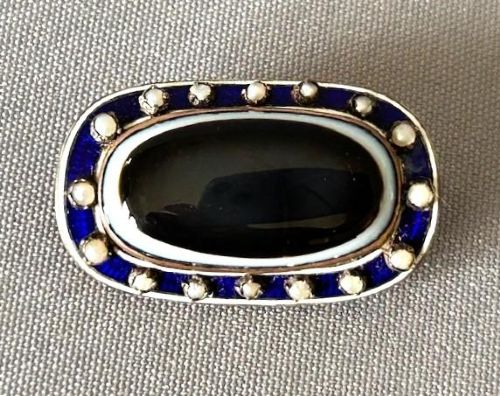
A victorian band agate brooch is a distinctive piece of Scottish pebble jewellery, prized for its layered quartz stones and silver settings.
Victorian Band Agate Brooch
When searching for a victorian band agate brooch, a buyer encounters pieces from the Victorian era, particularly the Scottish Revival style associated with the nineteenth century. These ornaments typically take the form of brooches, sometimes accompanied by matching earrings, bracelets, or padlock charms forming a jewellery suite.
The most common examples on this page are silver brooches featuring natural banded stones, originating around the middle to the latter half of the nineteenth century. Makers during this period utilised local Scottish stones, creating wearable pieces that reflect regional geological traditions.
Beyond the standard brooch format, the listings occasionally include related forms such as bar brooches and pendant charms. Each item showcases the characteristic striped patterning of the chalcedony family set securely within metal mounts.
How they were made
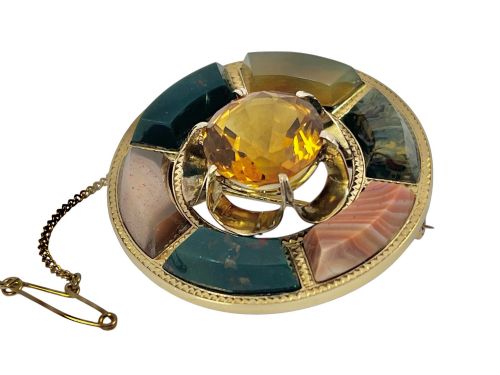
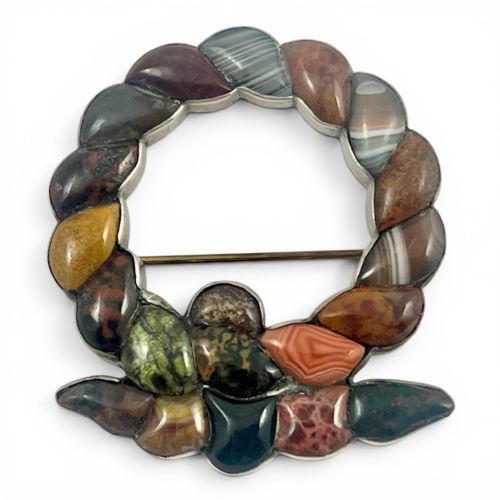
The construction of these pieces relies on the combination of sterling silver or gold settings paired with hardstones such as agate, jasper, bloodstone, and malachite. Craftsmen carefully shaped and polished these mineral specimens to highlight their natural concentric bands and varied colours.
Metalwork techniques of the period involved mounting the polished hardstones into substantial silver frames, often incorporating traditional Scottish pebble designs. Additional variations include panels of Montrose agate or smoky quartz secured within the metal framework.
Victorian Band Agate Brooch Retail Price Guide 2026
Typical asking prices for victorian band agate brooch among the pieces listed under this phrase on Sellingantiques today, from the lower quarter to the upper quarter. They describe what is for sale here now, not the wider market.
Victorian ladies fastened their heavy wool plaid shawls with these very pebble brooches when braving a chilly Scottish mist.
What varies in quality
Quality in these ornaments is determined by the clarity and striking nature of the stone banding, alongside the intricacy of the metal mount. Specimens with sharply defined, vibrant mineral layers command greater attention than those with muted or muddy tones.
The sophistication of the silver or gold setting further distinguishes the work. Heavier, more detailed mountings that complement the natural contours of the hardstone represent the finer end of nineteenth-century production.
The Victorian Band Agate Brooch Glossary
- Agate
- A variety of chalcedony quartz characterised by coloured bands or stripes. It forms in concentric layers within volcanic rocks and provides the primary visual element for these nineteenth-century ornaments.
- Scottish Revival
- A design movement popularised during the Victorian era, heavily influenced by traditional Scottish ornamentation and Highland motifs. This aesthetic often incorporates regional hardstones set in silver.
- Pebble jewellery
- Ornaments created using polished local stones gathered from riverbeds and shores rather than traditional faceted gems. These stones were shaped into smooth geometric or natural forms for personal adornment.
- Jasper
- An opaque, microcrystalline variety of quartz that appears in various earthy colours. It frequently accompanies agate within nineteenth-century Scottish pebble pieces.
- Montrose agate
- A specific regional variety of banded chalcedony associated with Scottish collections. Collectors prize this material for its distinct coloration and local provenance.
Victorian Band Agate Brooch: Frequently Asked Questions
What is a band agate brooch?
A band agate brooch is a Victorian ornament featuring layered chalcedony quartz set in silver or gold.
These pieces often reflect the Scottish Revival style, utilising locally sourced stones.
How do I date a Scottish pebble brooch?
Dating relies on the materials, fastening types, and stylistic markers typical of the nineteenth century.
Most examples seen here originate between eighteen fifty and eighteen ninety.
What stones are used besides agate?
Maker workshops frequently incorporated jasper, bloodstone, malachite, and smoky quartz.
These supplementary minerals appear alongside banded chalcedony in regional jewellery suites.
Were these brooches worn daily?
Victorian wearers utilised these sturdy silver and hardstone pieces to fasten plaid shawls and heavy garments.
The durability of quartz made them suitable for regular use.
How should I care for agate jewellery?
Store these pieces away from harder gems to prevent scratching the polished stone surfaces.
Clean the silver mounts gently with a soft cloth without harsh chemical dips.