


Silver Pebble Brooch
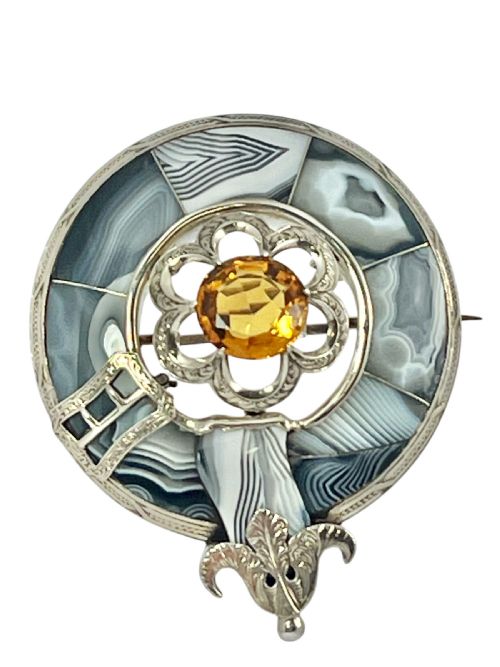
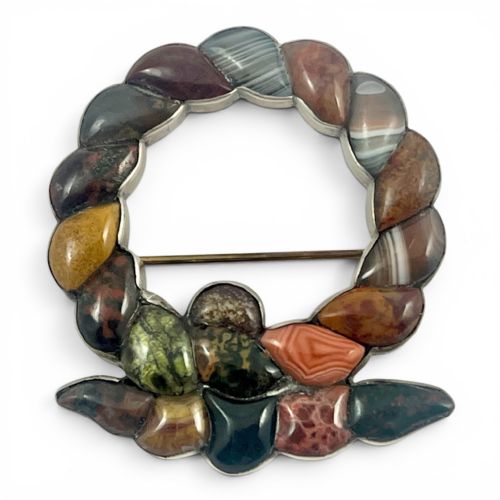
A silver pebble brooch is a tactile piece of Victorian hardstone jewellery prized for its banded stones and solid metalwork.
Silver Pebble Brooch
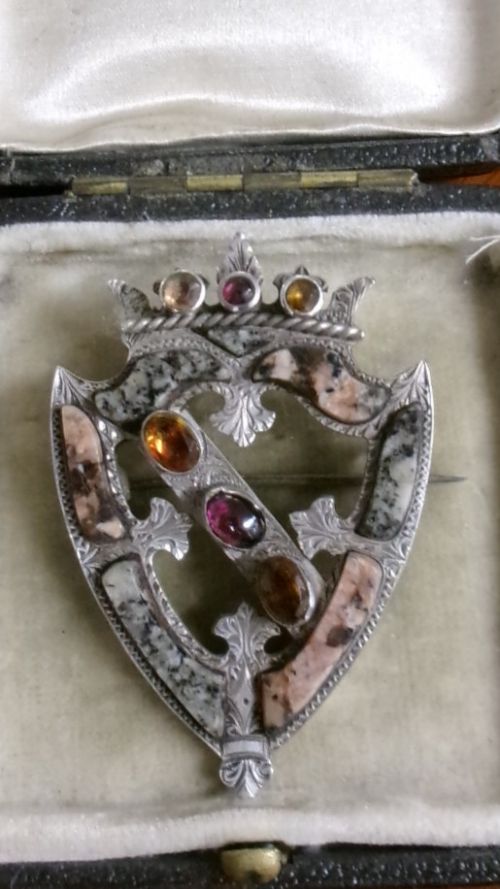
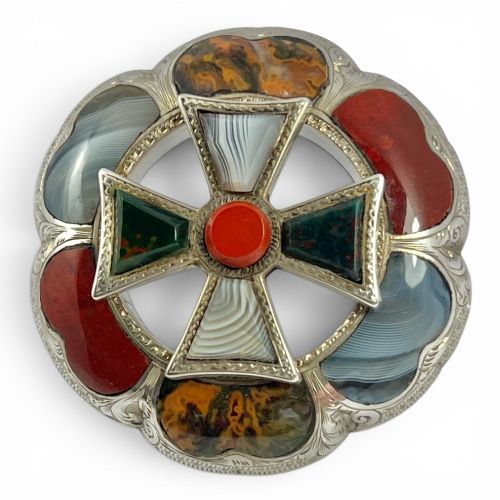
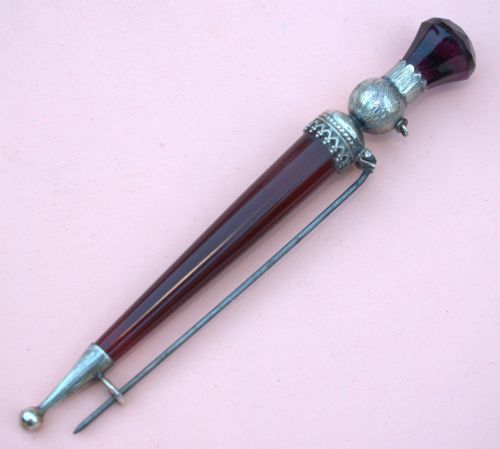
A silver pebble brooch is typically a nineteenth-century Scottish Revival jewel designed to fasten heavy woollens and plaids. These pieces take various forms including shields, dirks, broadswords, bows, knots, and padlock lockets.
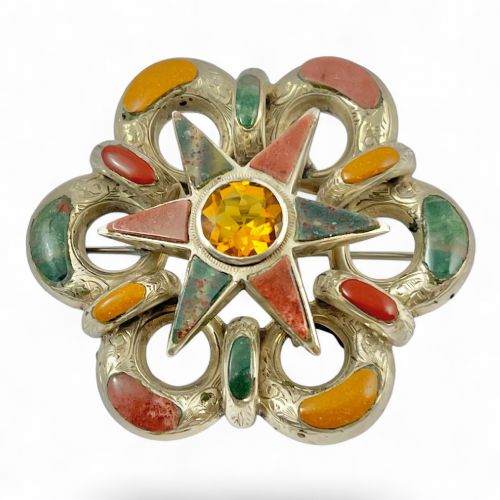
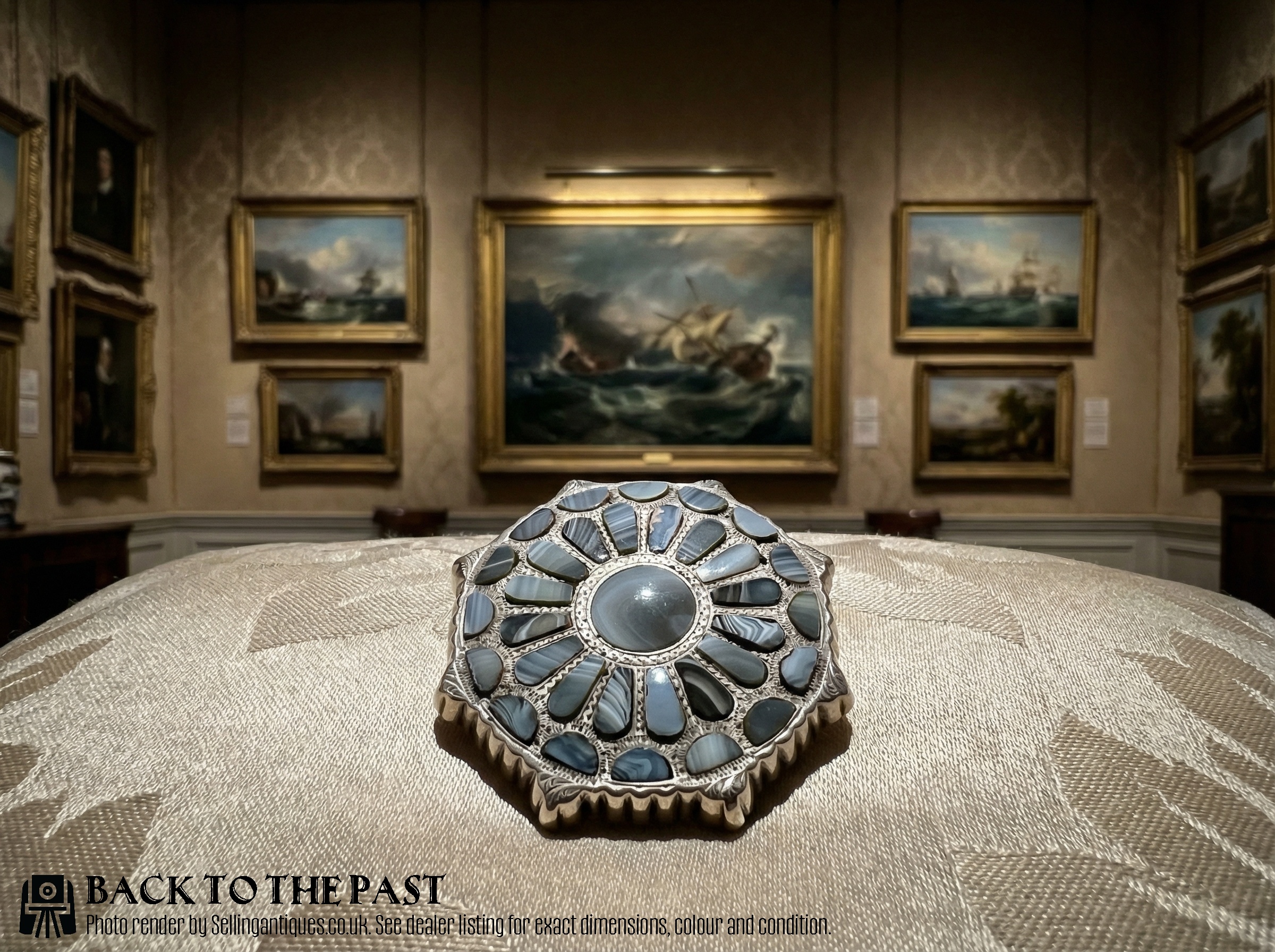
The version most often met on this page is the Victorian Scottish pebble brooch in sterling silver. These incorporate banded agates, jaspers, bloodstones, and citrines set into substantial silver mounts.

How they were made
Lapidaries cut and polished natural hardstones including Montrose agate, jasper, bloodstone, and granite into smooth cabochons or flat geometric slices. These multi-coloured hardstones were then closely fitted into bezels within the silver frameworks.
Silver Pebble Brooch Retail Price Guide 2026
Typical asking prices for silver pebble brooch among the pieces listed under this phrase on Sellingantiques today, from the lower quarter to the upper quarter. They describe what is for sale here now, not the wider market.
Victorian jewellers turned Highland daggers into dress accessories, letting citizens wear miniature broadswords without starting a clan feud.
What varies in quality
The distinction between ordinary and exceptional examples rests on the depth of the silver work and the variety of the hardstones. Sculptural forms like broadswords and dirks require significantly more intricate metal manipulation than simple geometric mounts.
The Silver Pebble Brooch Glossary
- Hardstone
- A semi-precious stone such as agate, jasper, or bloodstone used for ornamental purposes. These materials were chosen for their natural colours and distinctive internal patterns.
- Montrose agate
- A specific variety of Scottish banded chalcedony prized for its distinctive concentric layers. It forms a central component in many nineteenth-century Highland revival ornaments.
- Dirk
- A traditional Scottish dagger shape adapted into a decorative kilt pin or brooch. These figural pieces imitate Highland weaponry in miniature silver and stone.
- Cabochon
- A gemstone shaped and polished with a smooth, convex top rather than faceted edges. This style displays the natural grain and colour variations of hardstones effectively.
- Specimen brooch
- A piece displaying representative examples of regional stones gathered from various locations. These ornaments functioned as miniature displays of local geological diversity.
Silver Pebble Brooch: Frequently Asked Questions
What is a silver pebble brooch?
A silver pebble brooch is a nineteenth-century Victorian ornament featuring polished hardstones such as agate, jasper, and bloodstone set in silver. They originated largely during the Scottish Revival period.
These pieces were worn to secure heavy woollen garments like plaids and kilt shawls. Today they function as collectible wearable history.
How do I date a silver pebble brooch?
Dating relies on stylistic clues, mounting techniques, and the types of stones utilised in the design. Most examples seen here date from the Victorian era between the eighteen-forties and nineteen-hundreds.
Brooches taking specific weapon forms like dirks and broadswords often point to the peak of the mid-nineteenth-century Scottish Revival.
How were these brooches worn?
Victorian wearers pinned these substantial ornaments to heavy woollens, tartan plaids, and shawls. Their sturdy construction and secure pins allowed them to anchor thick fabrics firmly.
Modern collectors continue to wear them on heavy coats, knitwear, and scarves much like their original nineteenth-century purpose.
What stones are found in these brooches?
The stones include various forms of quartz and chalcedony gathered locally by nineteenth-century lapidaries. Montrose agate, bloodstone, red and green jasper, granite, and citrine appear frequently.
Selected stones often display natural banding or rich colour variations that contrast against the polished silver settings.