

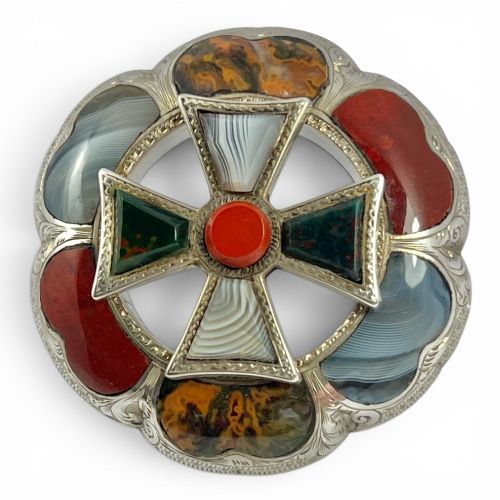


Engraved Silver Brooch
An engraved silver brooch brings together hard stone work and bright metal from the nineteenth and early twentieth centuries.
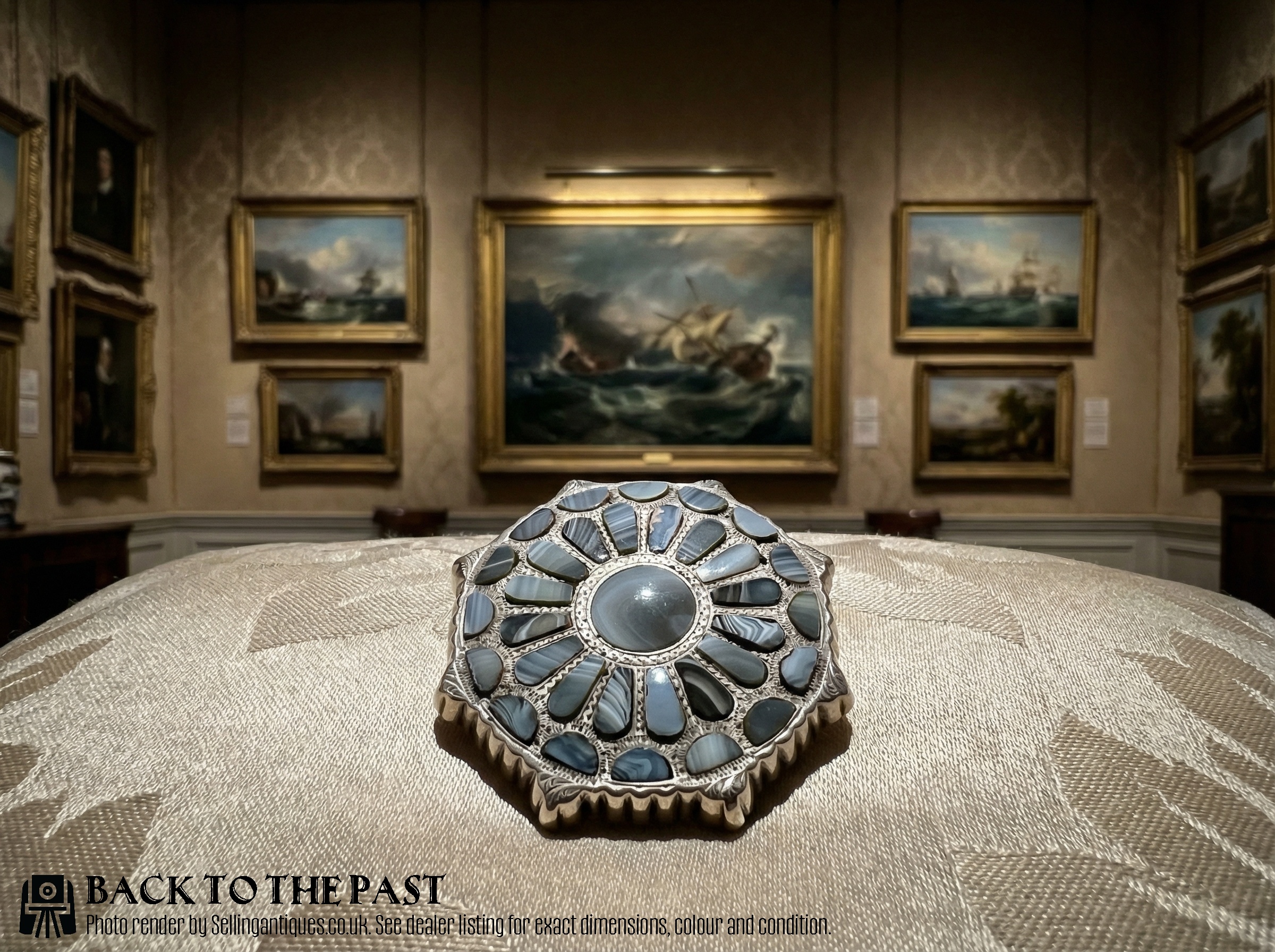
Engraved Silver Brooch
When you search for an engraved silver brooch, you enter a field defined largely by Victorian Scottish provincial work and later Edwardian designs. These pieces range from substantial pebble and shield forms to nautical themes and inscribed keepsakes.
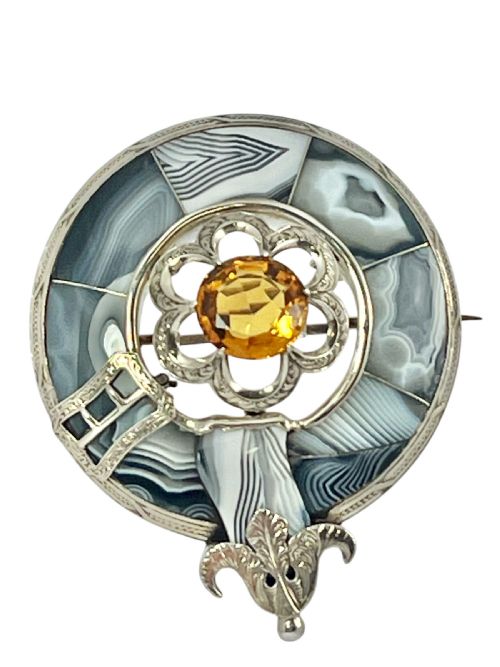
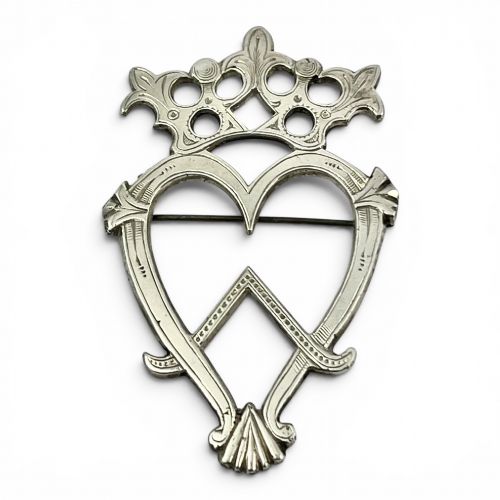
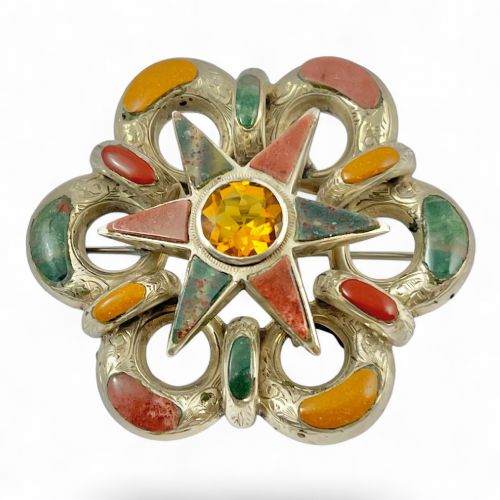
You are most likely to meet Victorian examples set with coloured stones such as agate, jasper, bloodstone, and citrine. The silver frames carry hand engraving that frames the hard stones or names a specific date and event.
The assortment spans from the early nineteenth century into the Edwardian period, capturing both regional Scottish vernacular styles and mainstream British jewellery tastes. Each piece demonstrates how metalwork and lapidary craft combined in everyday dress.
How they were made
The foundation of these brooches rests on worked silver, shaped into bezels, pins, and mounts to hold heavy stones securely. Silversmiths applied hand engraving with gravers to trace geometric patterns, foliage, or commemorative inscriptions directly into the metal surface.
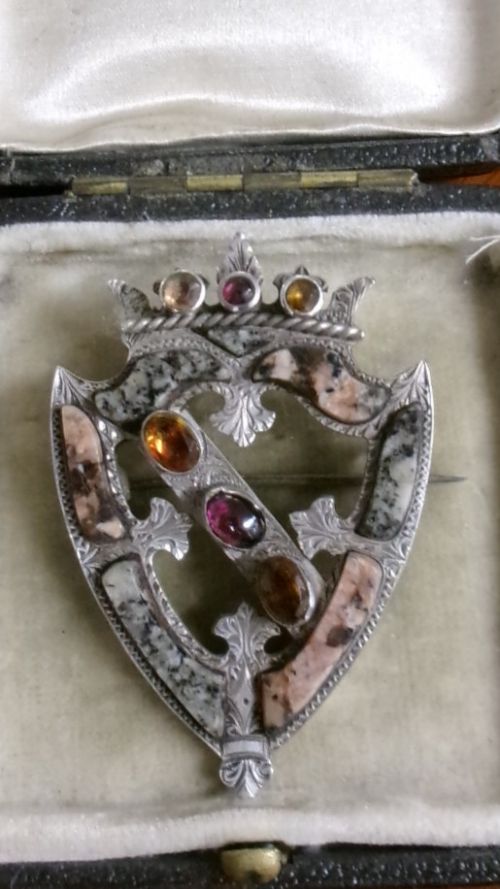
Hard stones including agate, montrose agate, bloodstone, jasper, amethyst, and citrine were cut, polished, and fitted tightly into silver settings. In many cases, pebbles were collected and shaped locally before being mounted by provincial silversmiths.
Engraved Silver Brooch Retail Price Guide 2026
Typical asking prices for engraved silver brooch among the pieces listed under this phrase on Sellingantiques today, from the lower quarter to the upper quarter. They describe what is for sale here now, not the wider market.
What varies in quality
Quality in an engraved silver brooch depends on the crispness of the hand engraving and the depth of the metalwork. Sharper cut lines and heavier silver gauge separate superior workshop production from simpler output.
The selection and polish of the inset stones also set pieces apart, with evenly matched agates, bright citrines, and clean jaspers commanding attention. The integration of stone and silver shows whether a maker exercised real lapidary skill.
The Engraved Silver Brooch Glossary
- Agate
- A form of chalcedony showing coloured bands or markings, frequently cut and polished for Victorian jewellery. It served as the primary decorative stone in Scottish pebble work.
- Citrine
- A yellow variety of quartz valued for its bright clarity and warm tone. It frequently appears as a central faceted stone in Scottish silver brooches.
- Provincial
- A term for items made outside major capital cities, often by regional makers with distinct local styles. Inverness smiths produced notable examples of this character.
- Bloodstone
- A dark green jasper flecked with red spots of iron oxide. It provided a dramatic contrasting background in multi-stone pebble jewellery.
- Padlock locket
- A hinged container shaped like a small padlock, sometimes incorporated into or worn alongside nineteenth-century chatelaines and brooches.
Engraved Silver Brooch: Frequently Asked Questions
What periods do these brooches come from?
The available pieces originate primarily from the Victorian and Edwardian eras, spanning the nineteenth century up to the early twentieth century. Regional Scottish provincial workshops produced many of the dominant agate and pebble designs.
Earlier examples from the early Victorian period often feature heavier provincial silver settings, while Edwardian pieces introduce lighter novelty and nautical themes.
How were Scottish pebble brooches worn?
These pieces served practical fasteners for plaid garments, shawls, and heavy woollen tartans as well as decorative items. Their sturdy silver frames and strong pin stems held thick fabrics securely in place.
Over time, their role shifted towards decorative dress jewellery worn on lapels, collars, and hats by collectors of regional craft.
What stones are typically found in them?
Makers utilised a wide range of British hard stones, with various forms of agate taking a central role. Montrose agate, jasper, bloodstone, and granite appear frequently across the regional Scottish items.
Transparent quartz varieties such as citrine and amethyst also occur as faceted or cabochon centrepieces to add colour variation.
How can you tell an Edwardian piece from a Victorian one?
Victorian examples tend to display heavier silver construction, dense pebble mosaics, and hand-engraved motifs tied to regional traditions. Their weight and stone combinations reflect mid-to-late nineteenth-century tastes.
Edwardian pieces often present lighter frames, more open silverwork, and specific thematic subjects like nautical designs, reflecting changing twentieth-century fashions.