


Scottish Silver Jewellery
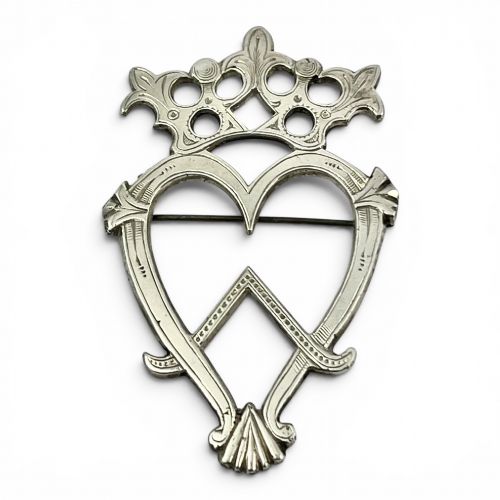
Scottish silver jewellery brings together ancient Celtic motifs, vibrant native stones and sterling silver work that collectors prize for its rugged character.
Scottish Silver Jewellery
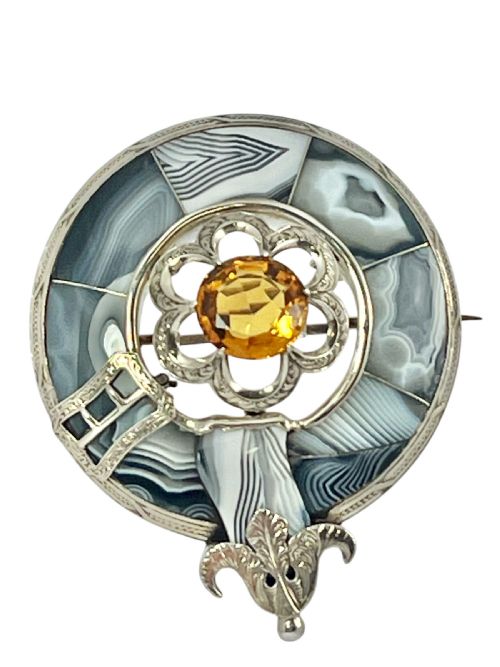
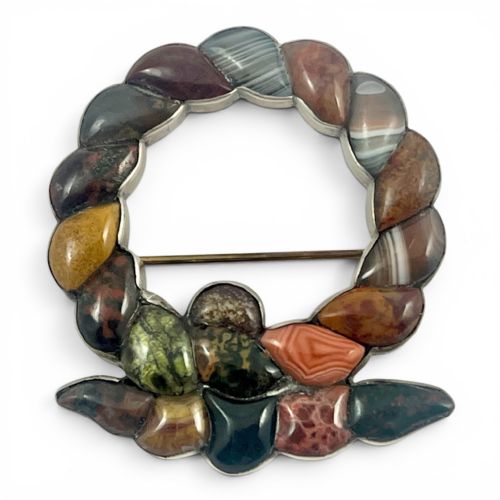
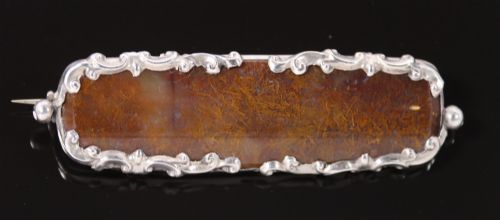
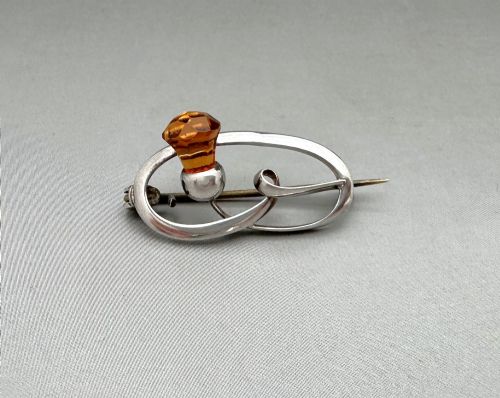
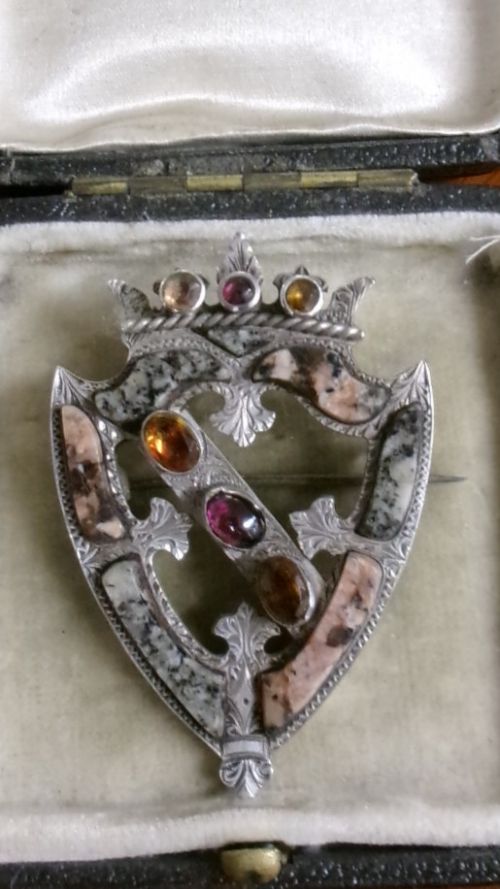
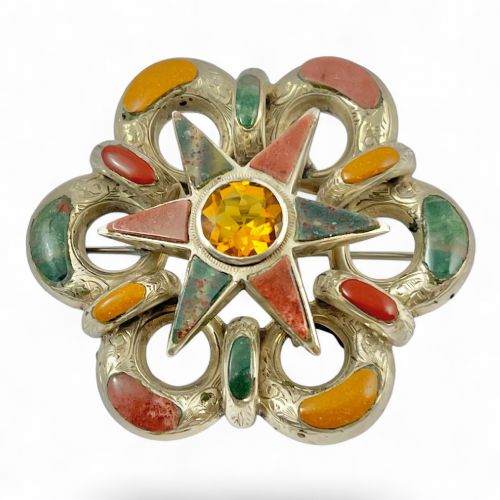
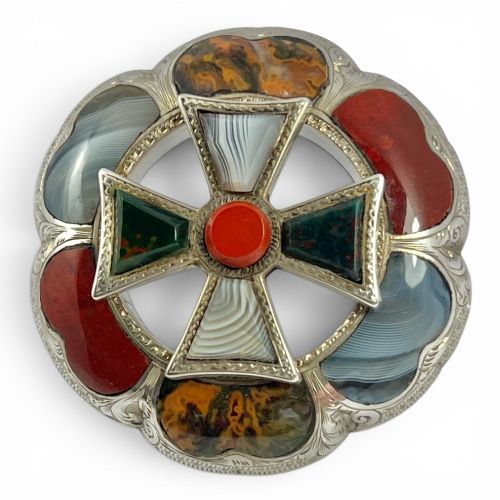
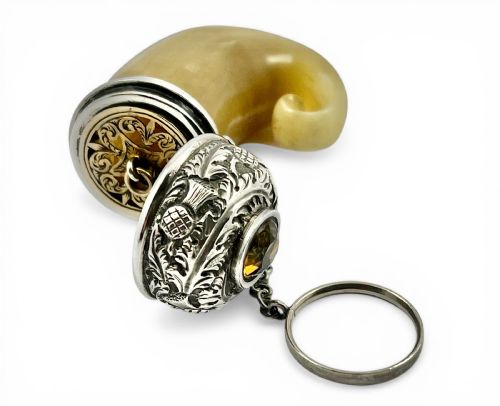
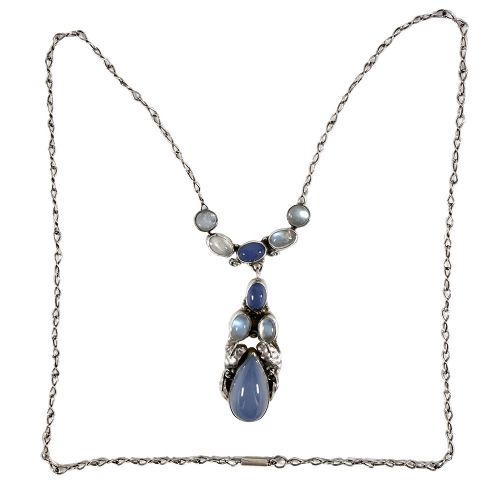
Buyers browsing this selection most frequently encounter Victorian silver brooches set with hardstones like agate and jasper, often paired with citrine or coloured glass. Mid-century interpretations also appear, exemplified by the modernist designs originating from Iona workshops during the nineteen-sixties.
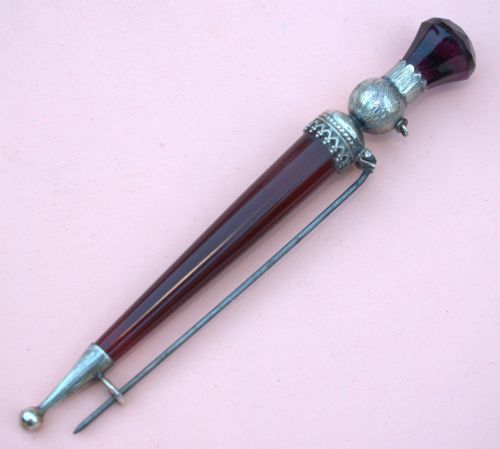
The objects serve both decorative and functional purposes, ranging from kilt pins fastened to heavy woollens to delicate whistle charms suspended from chains. Their enduring appeal lies in this fusion of regional heritage with wearable silver craft.
Materials and Construction
Makers construct these items primarily using sterling silver or unmarked silver, shaping the metal through casting, chasing and hand engraving. Settings are engineered to house native hardstones, including banded agates and jaspers, alongside faceted citrines and amber glass.
Stones are cut and polished to display natural banding or warm yellow tones, then bezel-set securely into the silver mounts. Pins, hinges and suspension loops are soldered directly to the reverse of the pieces to withstand daily wear.
Listings combine Victorian and nineteen-sixties pieces, uniting nineteenth-century agate work with mid-century Scottish revival silver.
Assessing Quality
Quality in these pieces rests on the precision of the lapidary work and the crispness of the metal detailing. Superior examples feature tightly fitted hardstones with high polish and deeply carved foliage or Celtic knotwork that remains sharp.
Lesser items display looser stone settings, shallower engraving and plain bezels that lack the hand-tooled character found in the finer workshops. The weight of the silver and the structural integrity of the pin fittings further separate standard production from superior output.
John Hart of Iona
The Scottish Silver Jewellery Glossary
- Sterling silver
- An alloy comprising ninety-two point five percent silver and seven point five percent other metals, typically copper. This standard ensures durability while maintaining a bright metallic lustre.
- Agate
- A form of chalcedony quartz displaying natural concentric bands of colour. Scottish examples frequently utilise local stones gathered from the shorelines and hillsides.
- Citrine
- A yellow variety of quartz valued for its transparent amber tones. It appears frequently in Victorian pebble jewellery as a central foil to darker agates.
- Kilt pin
- A large decorative fastener traditionally secured to the apron of a kilt. These items double as substantial brooches with sturdy pin mechanisms.
- Celtic revival
- An artistic movement reviving ancient insular art forms. The style incorporates intricate interlace, key patterns and zoomorphic motifs into nineteenth and twentieth-century metalwork.
Frequently Asked Questions
What is Scottish pebble jewellery?
Scottish pebble jewellery consists of silver mounts set with polished native hardstones such as agate, jasper and bloodstone. These pieces gained immense popularity during the Victorian era following royal patronage of the Highlands.
Craftsmen arranged the stones in geometric patterns or mosaic layouts that showcased the natural colours of the Scottish landscape.
How do I date a Victorian brooch?
Dating these brooches involves examining the pin mechanism, the depth of the silver chasing and any accompanying hallmarks or registration marks. Victorian examples from the nineteenth century typically feature C-clasps and hinged pins that extend beyond the outer edge of the frame.
Later twentieth-century revivals adopt more secure safety catches and modern tubular hinge assemblies.
Are these pieces made of solid silver?
Most items utilise sterling silver or unmarked silver alloy for the structural body and settings. The mounts and bezels are fabricated to hold heavy stone inlays securely without adding excessive weight to the wearer.
Testing the metal or checking for assay office stamps helps confirm the silver standard used in construction.
How should I wear an antique brooch?
Antique brooches function well secured to heavy fabrics like wool, tweed or heavy linen lapels. The substantial weight of agate and silver requires a thick weave to support the pin without sagging.
Using a separate backing disc or ensuring the safety clasp is fully engaged keeps the piece secure during daily use.