


Scottish Highland Brooch
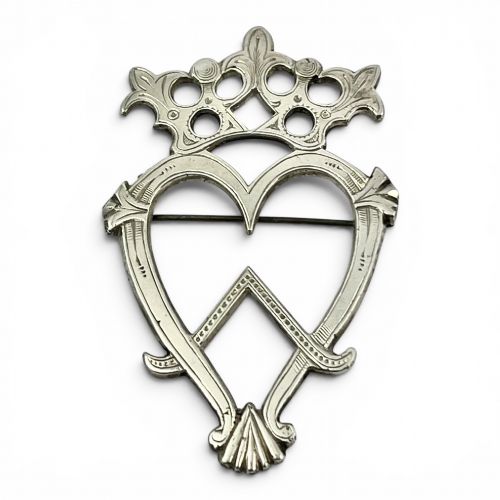
A Scottish highland brooch is a traditional fastened pin rooted in the nineteenth century, prized for its robust silverwork and colourful hardstones.
Scottish Highland Brooch
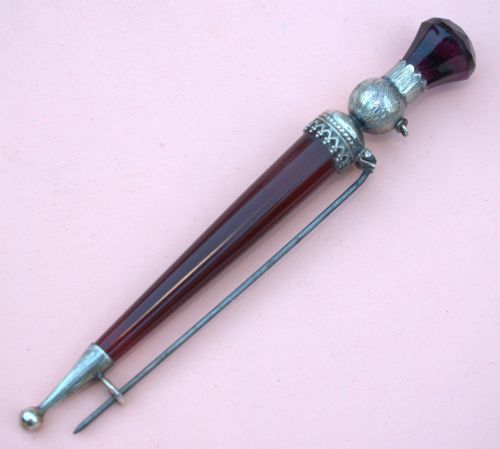
A scottish highland brooch is a wearable fastening, frequently taking the form of dirks, broadswords, baskets, shields, or circular mounts. These objects draw heavily on regional heritage, appearing most commonly in Victorian Scottish revival and Celtic revival designs.
Most examples found here date from the Victorian period through to the mid twentieth century. They serve both a functional purpose as kilt pins and a decorative role as lapel fastenings.
How they were made
Silversmiths shaped sterling silver and nine-carat gold into elaborate forms including swords and traditional shields. These metallic mounts provide the sturdy framework necessary to secure heavy pins.
Craftsmen set polished hardstones such as agate, jasper, bloodstone, and citrine directly into the metalwork. Coloured glass also appears as a traditional substitute in specific compositions.
Every miniature broadsword brooch safely contains a hidden weapon against dull winter coats.
What varies in quality
The sophistication of the stonework largely dictates the standing of a piece. Precision in cutting and fitting natural banded agates and clear citrines separates standard productions from finer examples.
The complexity of the metal chassis also matters greatly. Elaborate hand-engraved silver blades and detailed Celtic knotwork reflect superior craftsmanship compared to simpler castings.
John Hart of Iona
The Scottish Highland Brooch Glossary
- Agate
- A form of chalcedony showing distinct natural bands of colour. Craftsmen cut and polish these stones to highlight their varied patterns within silver mounts.
- Citrine
- A yellow variety of quartz frequently utilised as a focal stone in nineteenth-century jewellery. These transparent gems range from pale yellow to deep amber.
- Dirk
- A traditional Scottish dagger represented here in miniature form as a brooch or kilt pin. The hilt and blade are rendered in solid silver.
- Broadsword
- A heavy double-edged sword translated into decorative metalwork for fastening heavy woollen garments. The basket hilt offers a distinct geometric shape for stone settings.
- Celtic Revival
- A nineteenth-century artistic movement that revived ancient interlaced patterns and knotwork. This style heavily influences the engraved details on these brooches.
Scottish Highland Brooch: Frequently Asked Questions
How were these brooches originally worn?
These pieces functioned primarily as practical fastenings for thick plaid shawls and highland tartans. They also served to pin heavy woollen kilts in place.
Over time, they transitioned into decorative dress accessories worn on lapels and jackets. Their substantial weight required robust construction to hold heavy fabrics securely.
What materials make up these brooches?
The primary structure consists of sterling silver or nine-carat gold. Craftsmen forged these metals into recognisable forms like swords and shields.
Natural hardstones provide the colourful details. Agate, jasper, bloodstone, and citrine appear frequently, alongside occasional coloured glass inserts.
How do I date a Victorian piece?
Dating relies heavily on stylistic markers associated with the Victorian Scottish revival of the mid to late nineteenth century. Look for characteristic sword forms and banded agates.
Assay marks and stamped silver hallmarks offer more precise chronological data where present. Maker attributions also help anchor pieces to specific decades.
What is the difference between a kilt pin and a brooch?
Kilt pins typically take elongated forms such as miniature broadswords or dirks designed to anchor the outer apron of a kilt. Standard brooches are often more circular or shield-shaped.
Both items utilise similar silver smithing techniques and stone settings. Their usage frequently overlaps depending on size and fastening mechanism.