


Scottish Silver Lapel Pin
These pieces of scottish silver lapel pin work are solid silver wearable ornaments set with coloured stones, offering a tangible link to regional heritage.
Scottish Silver Lapel Pin
A scottish silver lapel pin takes several wearable forms across this selection, primarily appearing as brooches, jabot pins, and hat pins. You will encounter forms spanning the Georgian, Victorian, and mid-century eras, alongside specific stylistic revivals.
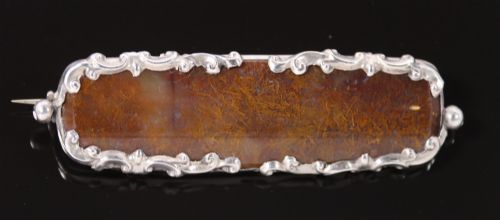
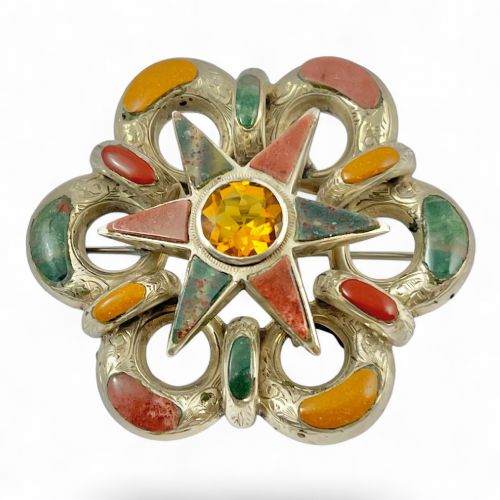
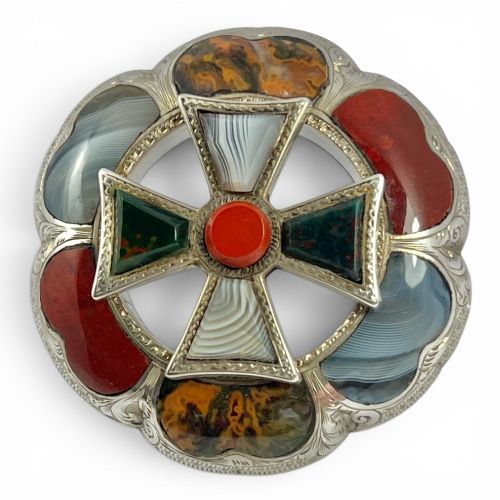
The most common versions met here are Victorian Scottish pebble brooches fashioned from silver and mounted with natural stones. These items range from simple braided plaid designs to substantial shield and sword motifs.
Origins represented in these listings stretch from the nineteenth century into the twentieth century, taking in both traditional regional motifs and later interpretations like Celtic Revival and Art Deco work.
How they were made
Makers shaped these items using silver and sterling silver, constructing the mountings to securely hold a variety of hardstones. Natural materials including agate, jasper, moss agate, and citrine were cut, polished, and set directly into the metalwork.
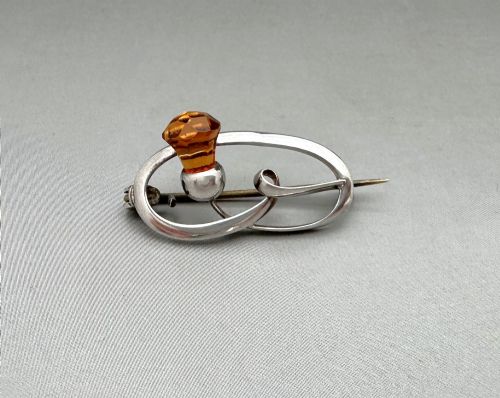
Techniques relied on traditional silversmithing methods to create braided bands, shield shapes, and thistles. Stone settings were meticulously arranged to display the natural banding and colour variations of the agates and jaspers.
Materials documented in these pieces combine sterling silver and silver with natural stones such as agate, jasper, and citrine.
What varies in quality
Quality in these pieces is dictated by the complexity of the silver construction and the stone cutting. Finer examples display intricate metalwork, such as braided silver detailing, alongside well-matched and deeply coloured citrines or moss agates.
Maker attribution also distinguishes different tiers of work, with identifiable pieces bearing the marks of known workshops or designers standing apart from unrecorded production. The precision of the stone setting and the overall balance of the mount determine the piece's standing.
Charles Horner·John Hart of Iona·Celtic Art Industries
The Scottish Silver Lapel Pin Glossary
- Agate
- A variety of chalcedony displaying natural banding or colour variations, frequently utilised in nineteenth-century Scottish jewellery. It forms the primary decorative stone in many pebble brooches.
- Jabot pin
- A decorative pin originally designed to fasten folds of lace on eighteenth-century neckwear, later worn as a lapel or fastening ornament. These often feature an elongated pin with an ornate terminal.
- Plaid brooch
- A large circular brooch traditionally used in Scottish Highland dress to secure a plaid or shawl. They typically feature substantial silver mounts set with stones.
- Citrine
- A yellow variety of quartz valued for its bright colour and clarity, often mounted centrally in Victorian Scottish silver brooches. It provides a warm contrast to the surrounding silver and darker stones.
- Celtic Revival
- A nineteenth- and twentieth-century design movement drawing inspiration from ancient Celtic art, knotwork, and metalwork. This style heavily influences many Scottish silver pins and brooches.
Scottish Silver Lapel Pin: Frequently Asked Questions
What is a scottish silver lapel pin used for?
These items were traditionally worn to secure heavy wool garments, shawls, and plaids in Highland dress. Today, they function primarily as decorative accessories fastened to lapels, hats, or scarves.
Many designs incorporate pins and clasps sturdy enough to pass through thick textiles while displaying regional stones and motifs.
How do I date a silver pebble brooch?
Dating relies on examining the mounting style, the cut of the stones, and any accompanying hallmarks or maker marks. Victorian examples from the mid-nineteenth century often feature substantial pebble work and braided silver borders.
Later pieces from the mid-twentieth century lean towards cleaner Celtic Revival lines or distinct maker signatures associated with Iona workshops.
Are all these pins made in Scotland?
While the designs and motifs draw heavily on Scottish traditions, production methods and workshops varied across different regions and eras. Some pieces originate from Scottish makers and specific island workshops, while others reflect broader British silver manufacturing.
Maker marks and silver assay offices help pinpoint the geographic origin of individual pieces.
What stones are typically set in these pins?
The most common stones found in these pieces are varieties of quartz and chalcedony native to or popular in Britain during the nineteenth century. Agate, moss agate, and jasper provide varied natural patterns and earth tones.
Citrine is frequently used as a prominent central stone, while alternative materials like amber glass appear in later twentieth-century interpretations.