


Victorian Scottish Brooch
When you search for a victorian scottish brooch, you enter a world of heavy silver, banded stones and romantic Highland symbolism.

Victorian Scottish Brooch
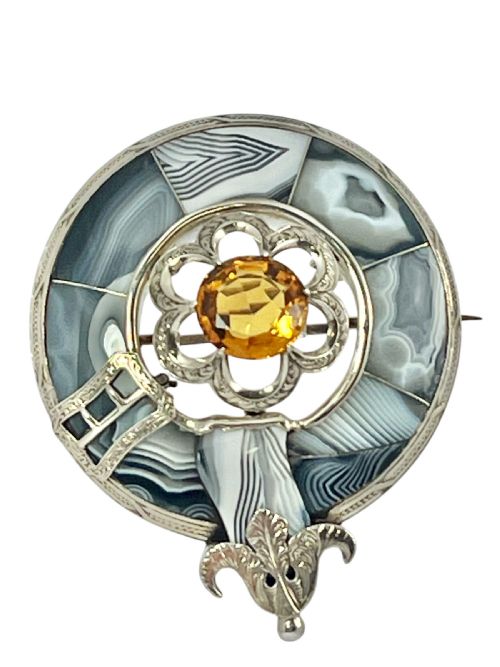
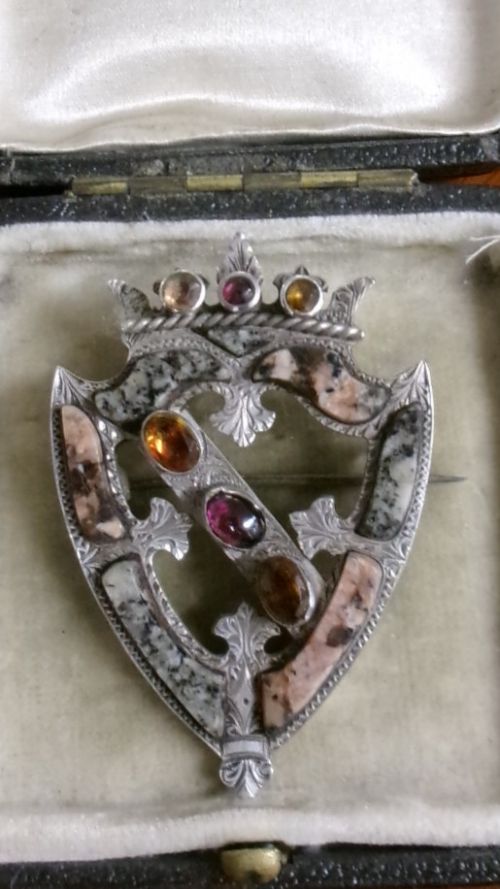
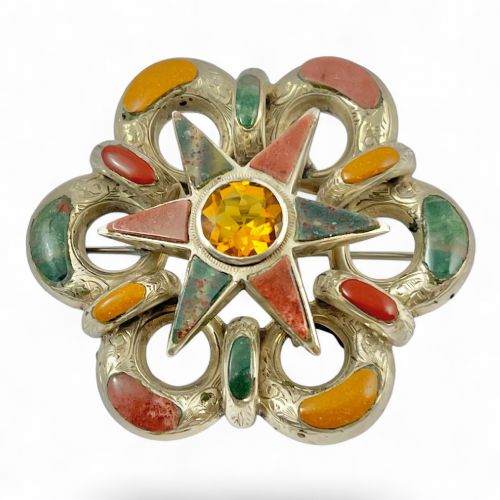
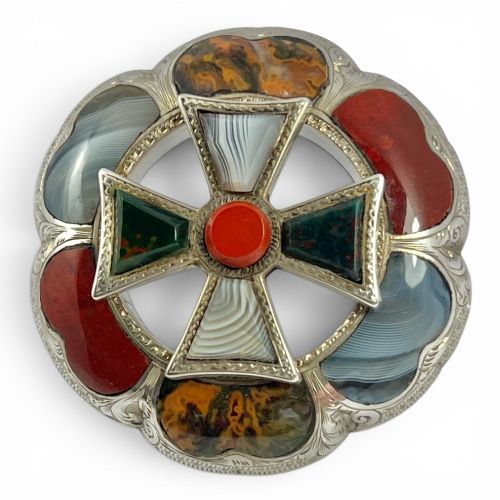
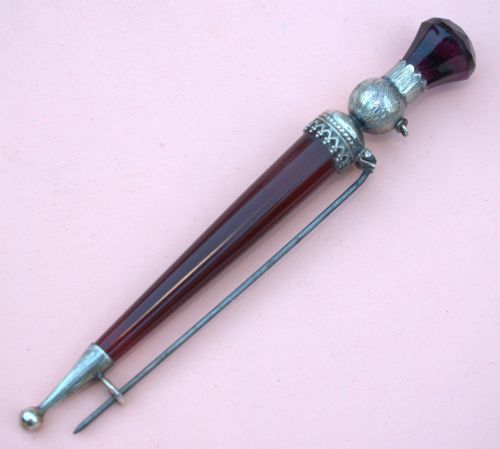
A victorian scottish brooch is a piece of nineteenth-century jewellery rooted in the romantic revival popularised by Queen Victoria's affection for Balmoral and the Highlands. These pieces take distinct regional forms, frequently echoing the shapes of Highland weaponry, armour and traditional motifs like the dirk, broadsword, shield or Celtic cross.
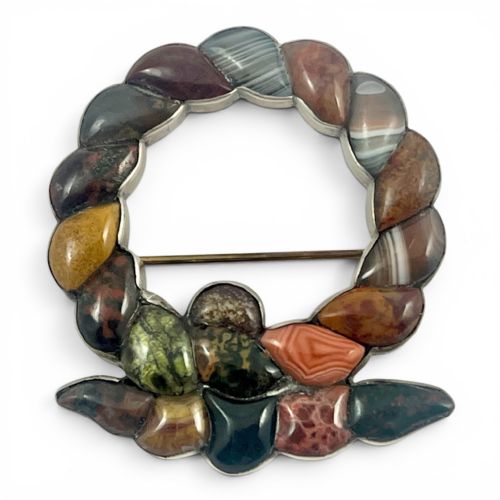
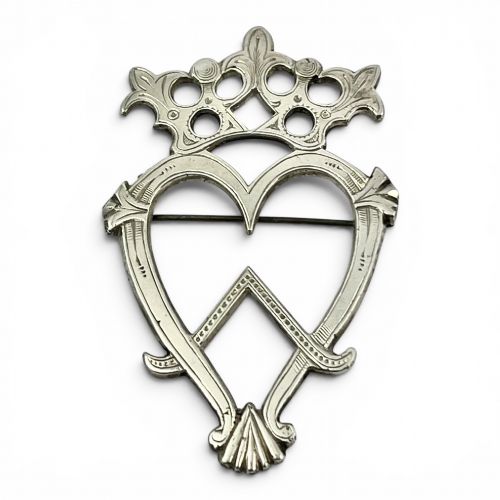
The most common versions met on this page are pebble brooches, which mount slices of patterned hardstone into heavy silver frames. Alongside these, buyers find shield shapes, kilt pins and specific regional pieces such as the Inverness Mary brooch or luckenbooth designs.
Originating predominantly from the Victorian era, particularly the middle and late decades of the nineteenth century, these ornaments served both as functional fasteners for plaid and tartan garments and as decorative accessories.
How they were made
Silversmiths constructed the foundational mounts using sterling or provincial silver, frequently incorporating engraved strapwork and traditional detailing. Stones like agate, jasper, bloodstone and chalcedony were meticulously cut, polished and fitted into geometric or figural settings.
For pieces requiring central colour accents, lapidaries set faceted citrines, amethysts or smoky quartz into the silver framework. Techniques also included intricate micro-mosaic work, tartan patterns and occasionally taxidermy mounts, reflecting the diverse craft traditions of nineteenth-century Scottish workshops.
Victorian Scottish Brooch Retail Price Guide 2026
Typical asking prices for victorian scottish brooch among the pieces listed under this phrase on Sellingantiques today, from the lower quarter to the upper quarter. They describe what is for sale here now, not the wider market.
Archival records show diverse figural forms spanning broadswords, dirks, shields, garter belts, bows, padlocks and even taxidermy bird mounts.
What varies in quality
The distinction between standard output and the finest examples lies in the precision of the stone-cutting and the complexity of the silver work. Superior pieces display tightly fitted hardstones with natural banding matched purposefully across the mount, rather than simply dropped into a generic cast frame.
Depth of engraving, the inclusion of multiple contrasting minerals such as jasper and montrose agate, and the presence of substantial faceted citrines or cairngorms elevate a piece. Maker marks, provincial hallmarks from towns like Inverness, and uncommon figural forms like broadswords or cello shapes further distinguish exceptional items from routine production.
The Victorian Scottish Brooch Glossary
- Agate
- A variety of chalcedony displaying distinct natural bands or layers of colour. It forms the primary hardstone material utilised in the majority of Scottish pebble jewellery.
- Dirk
- A traditional long dagger of the Scottish Highlands. Brooches fashioned in this shape mimic the weapon's hilt and blade.
- Cairngorm
- A smoky yellow-brown or brown variety of quartz found in the Scottish mountains. It frequently serves as the central faceted gemstone in high-grade silver pieces.
- Luckenbooth
- A traditional Scottish love token design featuring two entwined hearts surmounted by a crown. This motif appears frequently in brooch and shield formats.
- Pebble brooch
- An ornament constructed by mounting polished native hardstones into a metal frame. The stones represent geological specimens gathered from Scottish rivers and hillsides.
Victorian Scottish Brooch: Frequently Asked Questions
What is a scottish pebble brooch?
A scottish pebble brooch is a nineteenth-century silver ornament set with polished native hardstones collected from Scottish landscapes. These stones typically include various coloured agates, jaspers and bloodstones.
Craftsmen arranged these geological specimens into geometric patterns, shields or symbolic weapon shapes. They functioned practically to fasten heavy woollen plaids and decoratively as fashionable attire.
How do you wear a kilt pin brooch?
A kilt pin brooch is traditionally worn on the right apron of a kilt to secure the fabric and prevent it from blowing open in the wind. These pieces fasten through only the outer layer of wool.
In modern contexts, collectors utilise them to fasten heavy scarves, shawls or lapels on coats. Their substantial silver construction and pin mechanism support heavier textiles securely.
How can you date a victorian brooch?
Dating a victorian brooch relies on examining the metal hallmarks, pin mechanisms and prevailing stylistic revivals recorded in the manufacturing period. Items from the mid-nineteenth century often reflect the early enthusiasm for Highland tourism sparked by Queen Victoria.
Later nineteenth-century examples frequently incorporate busier combinations of stones and more complex cast silver motifs like broadswords or garter belts. Comparing the specific stone combinations and structural construction helps narrow the decade of origin.