


Victorian Pebble Jewellery
Victorian pebble jewellery brings together Scottish silver, agate, jasper, and malachite in brooches and earrings that collectors prize for their rich regional character.
What Victorian pebble jewellery is
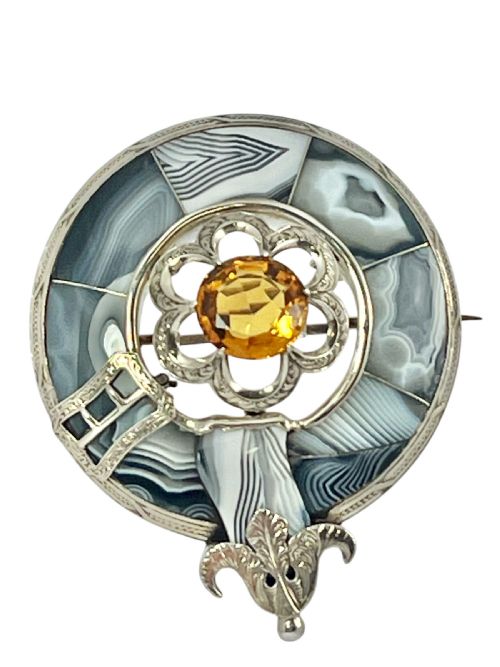
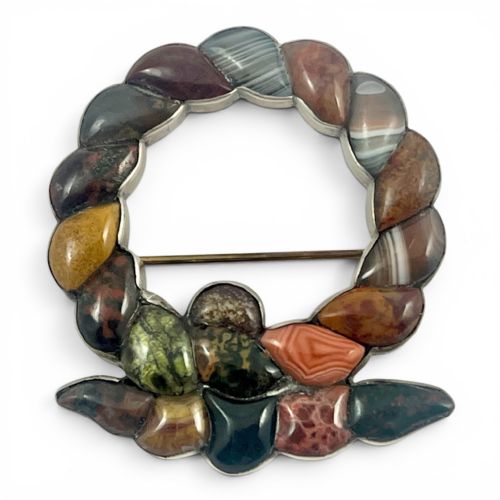
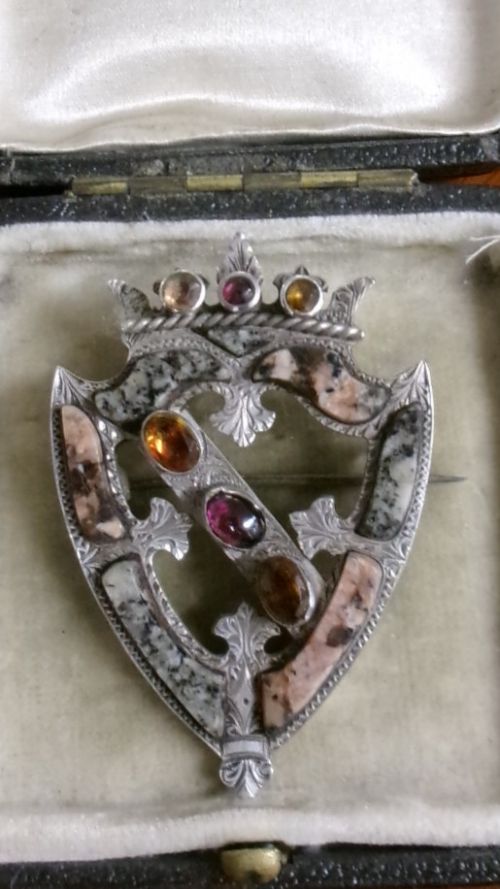
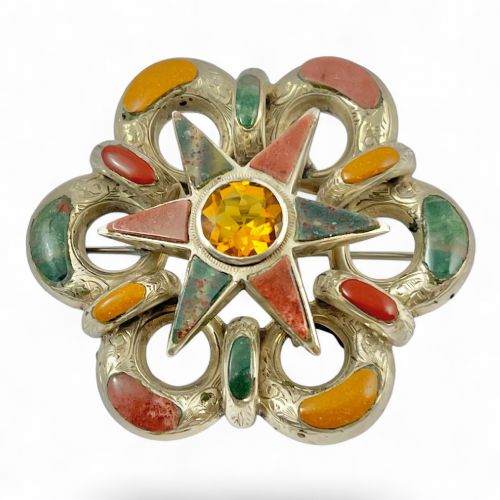
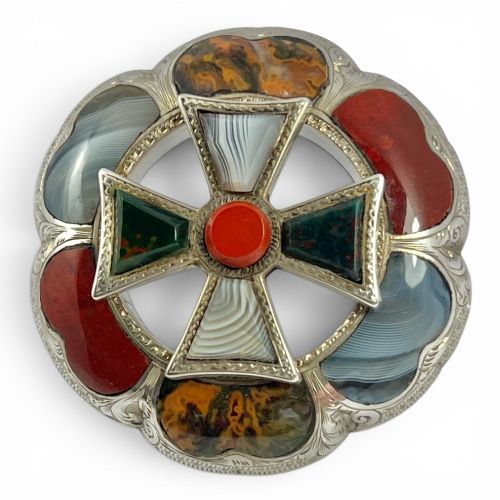
Victorian pebble jewellery encompasses distinct pieces of Scottish silver adornment, including braided plaid brooches and jewellery suites featuring matched earrings and brooches. These items originate from the Victorian period, specifically around eighteen sixty, reflecting the Victorian Scottish and Victorian Scottish Revival styles.
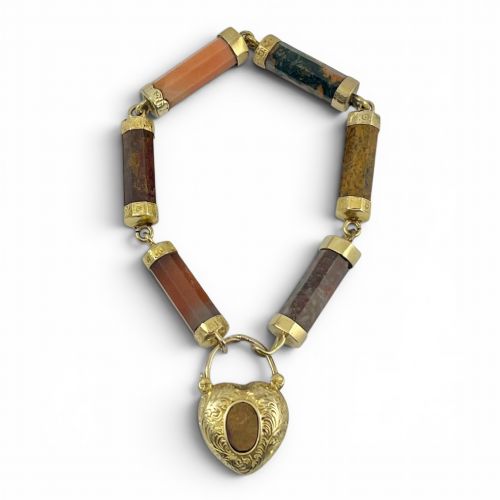
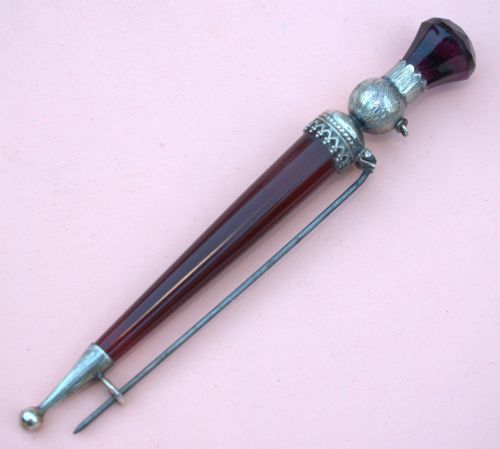
The forms typically available on this page include detailed brooches and pins alongside coordinated suites. Each item showcases regional lapidary traditions set in silver mounts.
How they were made
Craftsmen shaped natural stones including agate, jasper, and malachite into precise geometric or smooth cabochon forms. These polished pebbles were then hand-set into solid silver mounts, often featuring intricate metalwork such as braided designs found on plaid brooches.
The integration of varied mineral specimens required careful cutting and fitting to secure each stone within its silver framework, creating durable pieces intended for everyday fastening and display.
Listings for Victorian pebble jewellery exclusively feature silver paired with agate, jasper, and malachite across brooches, pins, and jewellery suites.
What varies in quality
The standard of a piece rests on the precision of the stone cutting and the complexity of the silver work. Finer examples display tightly fitted multi-coloured jaspers and agates with sharp polish, set within substantial braided or engraved silver frames.
Matched suites demonstrate superior design coherence when the individual stones across both earrings and brooches share consistent colour grading and pattern alignment within the metal settings.
The Victorian Pebble Jewellery Glossary
- Agate
- A cryptocrystalline variety of silica, mainly chalcedony, characterised by its fineness of grain and brightness of colour. It forms the primary colourful stone element in Scottish Victorian pieces.
- Jasper
- An opaque, impure variety of quartz, usually red, yellow, or brown, prized for its earthy tones in regional nineteenth-century lapidary work.
- Malachite
- A green copper carbonate hydroxide mineral displaying distinct banded patterns. It appears in select Victorian Scottish jewellery as a vibrant contrasting green stone.
- Plaid brooch
- A large circular Scottish brooch traditionally used to fasten a plaid or shawl over the shoulder. These functional dress items often feature extensive braided silver detailing.
Frequently Asked Questions
What is Victorian pebble jewellery?
Victorian pebble jewellery consists of regional Scottish ornaments made from silver and polished native stones like agate, jasper, and malachite. These items gained popularity during the nineteenth century, particularly through revival styles inspired by traditional Highland dress.
Makers mounted these hardstones into wearable forms such as plaid brooches and matched earrings. They remain collected today for their distinct local materials and historic associations.
How do I wear a plaid brooch?
A plaid brooch functions traditionally as a sturdy fastening for heavy woollen tartans and shawls. The long pin bridges across thick folds of fabric to hold garments securely in place.
Modern wearers also pin these larger brooches to coats, heavy scarves, or structured jackets. Their substantial silver frames provide the necessary weight and strength for thick textiles.
Are these pieces made of real silver?
The silver mounts on these items reflect the metal standards utilised by nineteenth-century Scottish silversmiths. They serve as durable settings designed to hold heavy hardstones securely.
Over time, the silver develops a natural patination that highlights the chased or braided details around the stones. Proper cleaning should preserve this historic surface character.
How do I identify Scottish revival pieces?
Victorian Scottish Revival pieces draw directly upon traditional Highland motifs, featuring elements like braided silver work and geometric stone arrangements. They date from the nineteenth century when interest in Scottish heritage surged.
The inclusion of specific stones like jasper and agate alongside characteristic forms such as plaid brooches helps distinguish these items from general Victorian jewellery.