


Scottish Agate Jewellery
Scottish agate jewellery brings together vibrant hardstones and gleaming silver or gold in wearable pieces from the nineteenth century.
Scottish Agate Jewellery
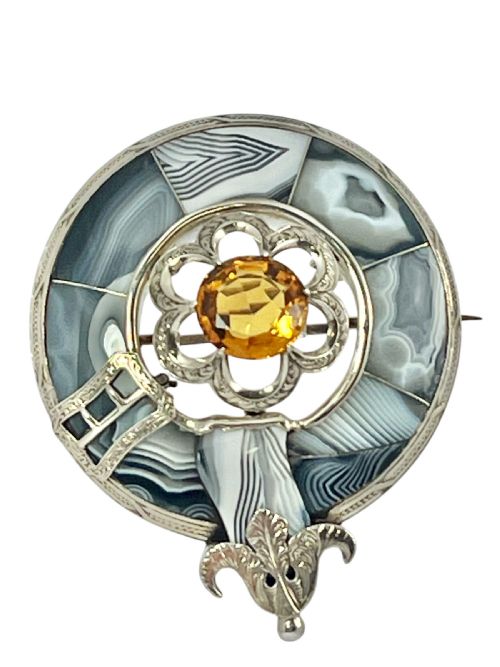
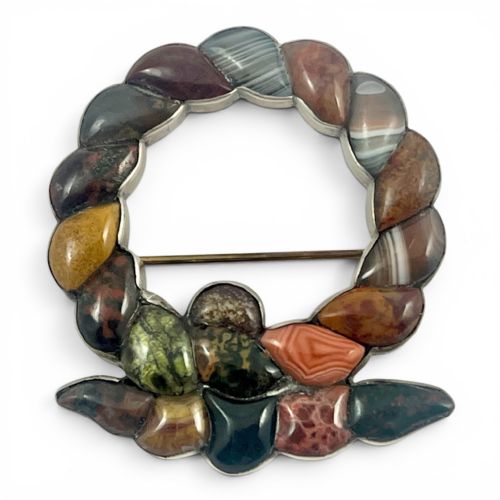
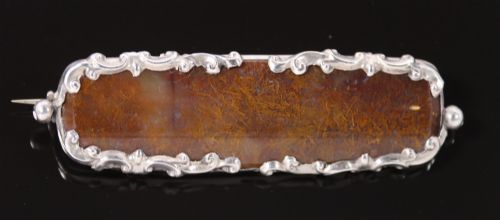
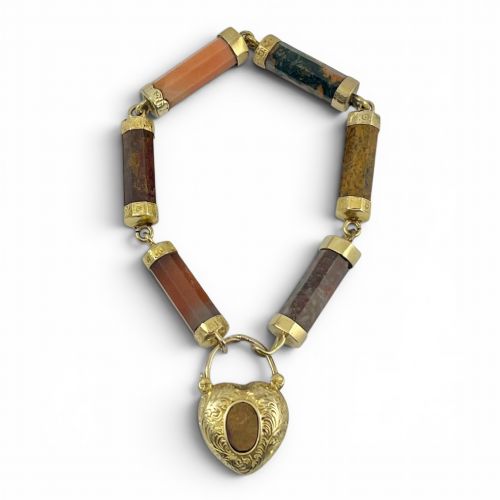
Scottish agate jewellery encompasses brooches, kilt pins, bracelets, snuff boxes and lockets fashioned from natural hardstones during the Georgian and Victorian eras. These items reflect a fascination with regional craftsmanship and local mineralogy popularised during the nineteenth century.
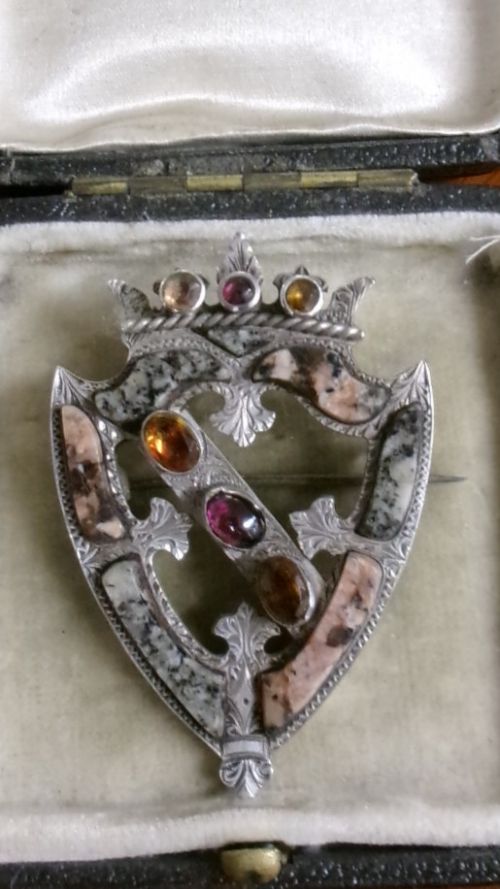
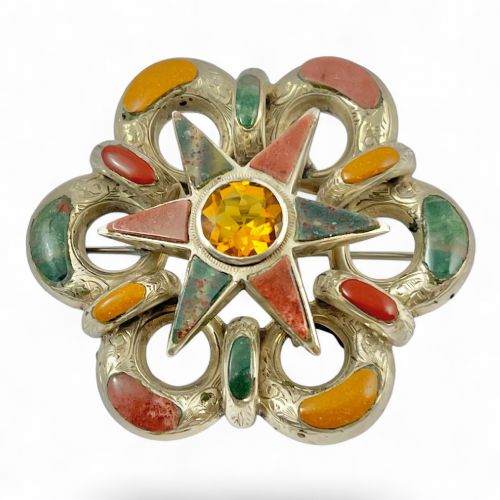
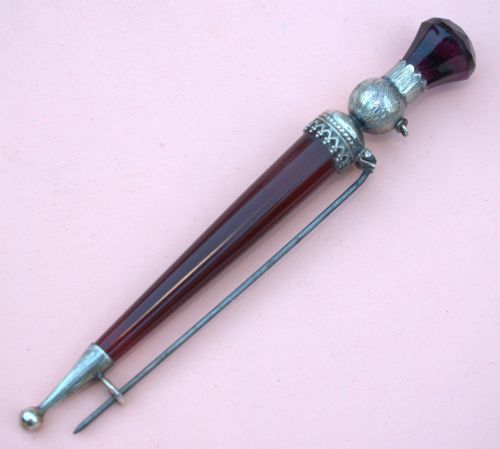
The most common form you will meet on this page is the silver brooch, often styled as a dirk, broadsword, shield or traditional pebble cluster. These pieces frequently incorporate citrine, jasper or bloodstone alongside patterned agates.
Originating largely from the Victorian period, these ornaments also appear in earlier Georgian iterations and extend through to the close of the century. They serve both decorative and functional purposes, historically securing plaid garments as well as adorning everyday attire.
Materials and construction methods
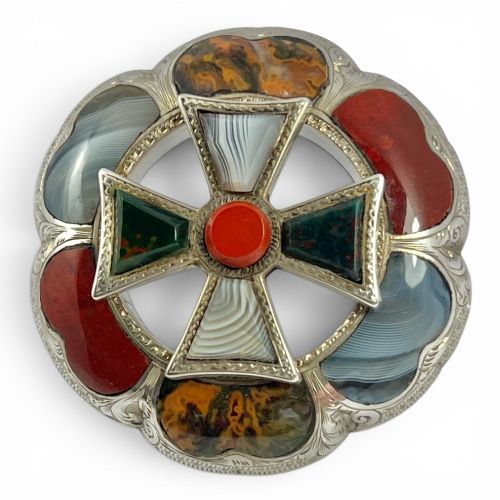
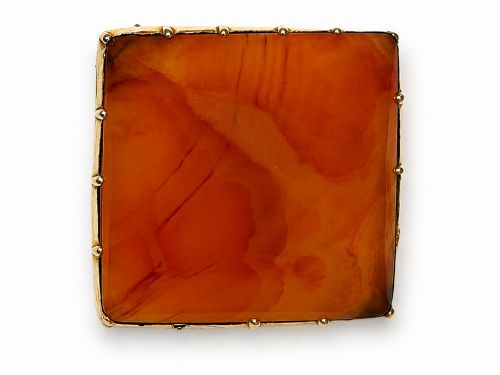
Craftsmen set polished hardstones including agate, Montrose agate, jasper and bloodstone into mounts of solid silver or 9ct gold. These stones were carefully cut and fitted together in geometric or naturalistic arrangements to highlight their inherent banding and colour.
Metalwork often involved detailed chasing, engraving and wirework, particularly in provincial workshops across Scotland. Stones were typically held securely within bezels or raised collets, surrounded by decorative silver pebble work or engraved thistle motifs.
Listings span the Georgian and Victorian eras, dominated by silver brooches set with agate, jasper and citrine.
Distinctions in craftsmanship and materials
Quality rests upon the stone selection and the precision of the lapidary work, where stones with striking natural banding and high polish distinguish finer examples from plain specimens. The variety and integration of complementary hardstones such as citrine and jasper also elevate a piece.
The complexity of the metal setting separates standard output from superior items, particularly where intricate silver or gold work forms elaborate shapes like broadswords, dirks or complete jewellery suites. Maker proficiency shows in the tight alignment of stones and the durability of the structural mount.
The Scottish Agate Jewellery Glossary
- Agate
- A cryptocrystalline variety of quartz characterised by its colourful bands and patterns. It forms the primary visual element in Scottish pebble jewellery.
- Kilt pin
- A large decorative fastening pin, often shaped like a sword or dirk, used to secure traditional highland wear. They are frequently set with multiple hardstones.
- Specimen brooch
- A piece designed to showcase various local mineral samples grouped together in a single mount. These items highlight the geological diversity of Scottish stones.
- Hardstone
- A semi-precious stone durable enough to be carved and polished for jewellery. Examples include jasper, bloodstone and carnelian.
Scottish Agate Jewellery: Frequently Asked Questions
What periods do these pieces date from?
The pieces span from the Georgian era through to the late Victorian period, with the majority originating in the nineteenth century.
Craftsmanship evolves from earlier Georgian designs into more elaborate Victorian Scottish Revival and pebble work styles as the century progresses.
How were these items worn historically?
Many items functioned as practical fastenings for plaid garments, shawls and kilts, utilising sturdy pins and broadsword forms.
Others served purely as decorative ornaments, including bracelets, lockets, snuff boxes and matched jewellery suites worn for social occasions.
What metals are typically used in the settings?
Silver is the predominant metal found in these listings, often paired with bright polished agates and citrines.
Gold, specifically 9ct gold, also appears in select bracelets, lockets and brooches, offering a warmer tone alongside the hardstones.
How do I identify different types of hardstones?
Agates display characteristic concentric banding, whereas jasper presents opaque, earthy colours and bloodstone exhibits distinct red spots upon a green background.
Citrine provides a bright yellow quartz contrast within the stone clusters.