





Georgian Carnelian Jewellery
Georgian carnelian jewellery brings together rich red-orange chalcedony and gold mounts in rings, fobs, and brooches that collectors prize for their intricate intaglio carvings.
Georgian Carnelian Jewellery
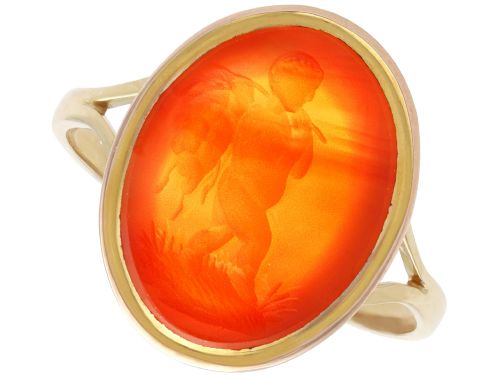
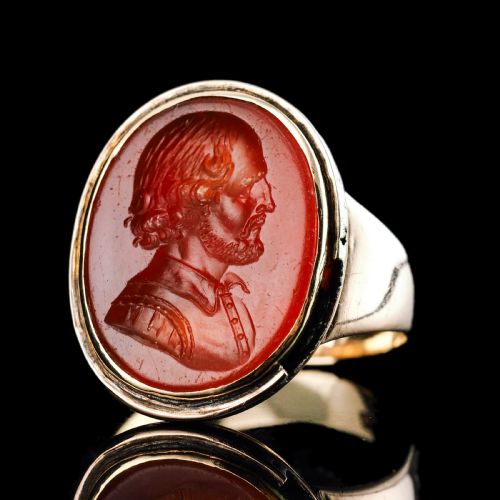
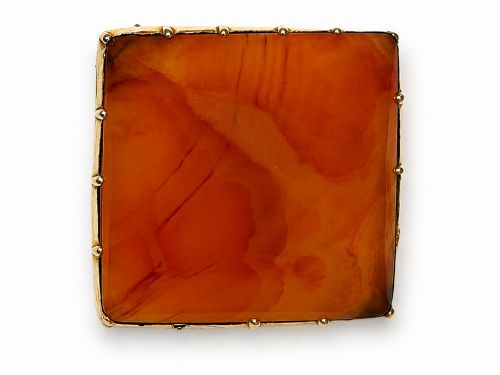
Georgian carnelian jewellery encompasses wearable pieces fashioned from deep reddish-orange chalcedony set in precious metals, spanning rings, fob seals, pendants, and brooches. When exploring georgian carnelian jewellery, buyers encounter items ranging from simple solitaire rings to elaborate swivel fob pendants and Scottish hardstone brooches.
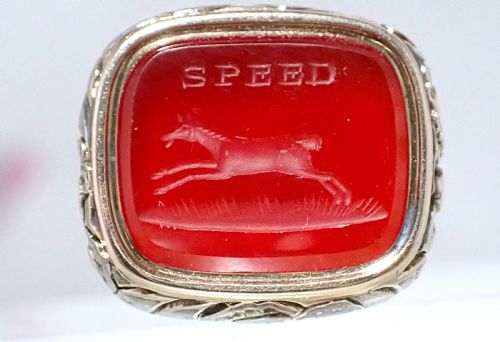
The pieces listed originate across the eighteenth and nineteenth centuries, with Victorian iterations also appearing alongside earlier Georgian examples. Forms include intaglio rings depicting classical figures, gentlemen, and allegorical subjects, alongside seals engraved with names, words, and motifs like horses.
How they were made
Craftsmen shaped and polished carnelian, often referred to as cornelian or carnelian agate, to showcase its warm reddish hues before mounting the stones into gold, 9ct gold, 18ct gold, or gold cased metal and gilt metal. Intaglio designs were meticulously hand-carved directly into the stone surface to create recessed portraits and emblems intended for use as wax seals.
Mounts and settings display the metalworking techniques of the period, securing the hardstones within bezels and swivel frames designed for fob seals and pendants.
Georgian Carnelian Jewellery Retail Price Guide 2026
Typical asking prices for georgian carnelian jewellery among the pieces listed under this phrase on Sellingantiques today, from the lower quarter to the upper quarter. They describe what is for sale here now, not the wider market.
Listings span the eighteenth and nineteenth centuries, featuring both Georgian and Victorian periods alongside materials like carnelian, 9ct gold, 18ct gold, and gilt metal.
What varies in quality
Quality in these items rests upon the precision and depth of the hand-carved intaglio work on the carnelian surface, where finer pieces display crisp detail in classical portraits, figures, and lettering. The choice of mounting metal also distinguishes the range, moving from gilt and gold cased metals to higher purity 9ct and 18ct gold settings.
The natural variation in the colour and clarity of the carnelian stone itself influences the overall visual appeal, alongside the structural preservation of the antique gold mounts and swivel mechanisms.
The Georgian Carnelian Jewellery Glossary
- Carnelian
- A brownish-red variety of the silica mineral chalcedony, commonly used in jewellery and seal engraving. It takes a high polish and ranges in hue from pale orange to deep red.
- Intaglio
- A gem or stone carved with a design that is recessed beneath the surface. This technique allows the carved stone to leave a raised impression when pressed into hot wax.
- Fob Seal
- A small pendant attached to a pocket watch ribbon or chain, featuring a carved stone matrix at the base for sealing documents. Many examples swivel to display different faces.
- Hardstone
- A semi-precious stone such as carnelian, agate, or jasper used for carving cameos and intaglios. Scottish hardstone jewellery often incorporates local varieties into regional designs.
- Gold Cased
- A method of manufacturing where a thin layer of gold is mechanically bonded to a base metal core. This technique provided the appearance of solid gold at a lower cost during the period.
Georgian Carnelian Jewellery: Frequently Asked Questions
How do I wear a antique fob pendant?
Antique fob pendants are typically suspended from a chain or ribbon worn around the neck or attached to a pocket watch. Swivel fobs allow the wearer to rotate the central stone to show different engraved faces.
Modern wearers often place them on substantial gold chains to showcase the detailed metalwork and carved carnelian stones.
What is the difference between carnelian and cornelian?
Carnelian and cornelian refer to the exact same brownish-red variety of chalcedony. The spelling variation simply reflects historical shifts in terminology used by makers and jewellers over the centuries.
Both terms describe the same hardstone utilised in Georgian and Victorian intaglio rings and seals.
Are these pieces made of solid gold?
The listings include a mix of solid gold standards, specifically 9ct and 18ct gold, alongside gold cased metal and gilt metal. Hallmarking practices varied widely during the Georgian era, meaning metal purity is often assessed through testing or construction.
Buyers should examine specific listings to determine whether a piece is solid gold or gold cased.