


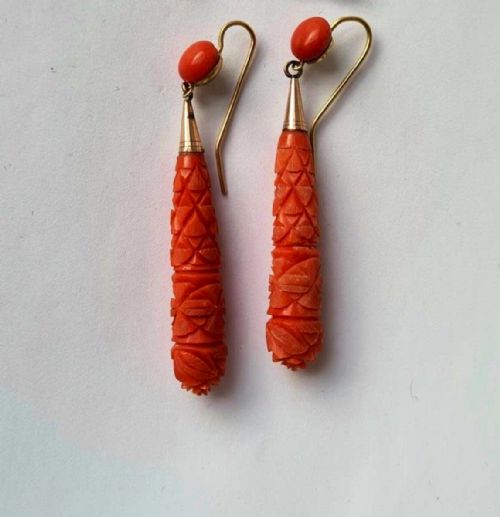
Antique Gold Ear Pendants
Antique gold ear pendants swing with every turn of the head, bringing light to the face through centuries of goldsmithing.
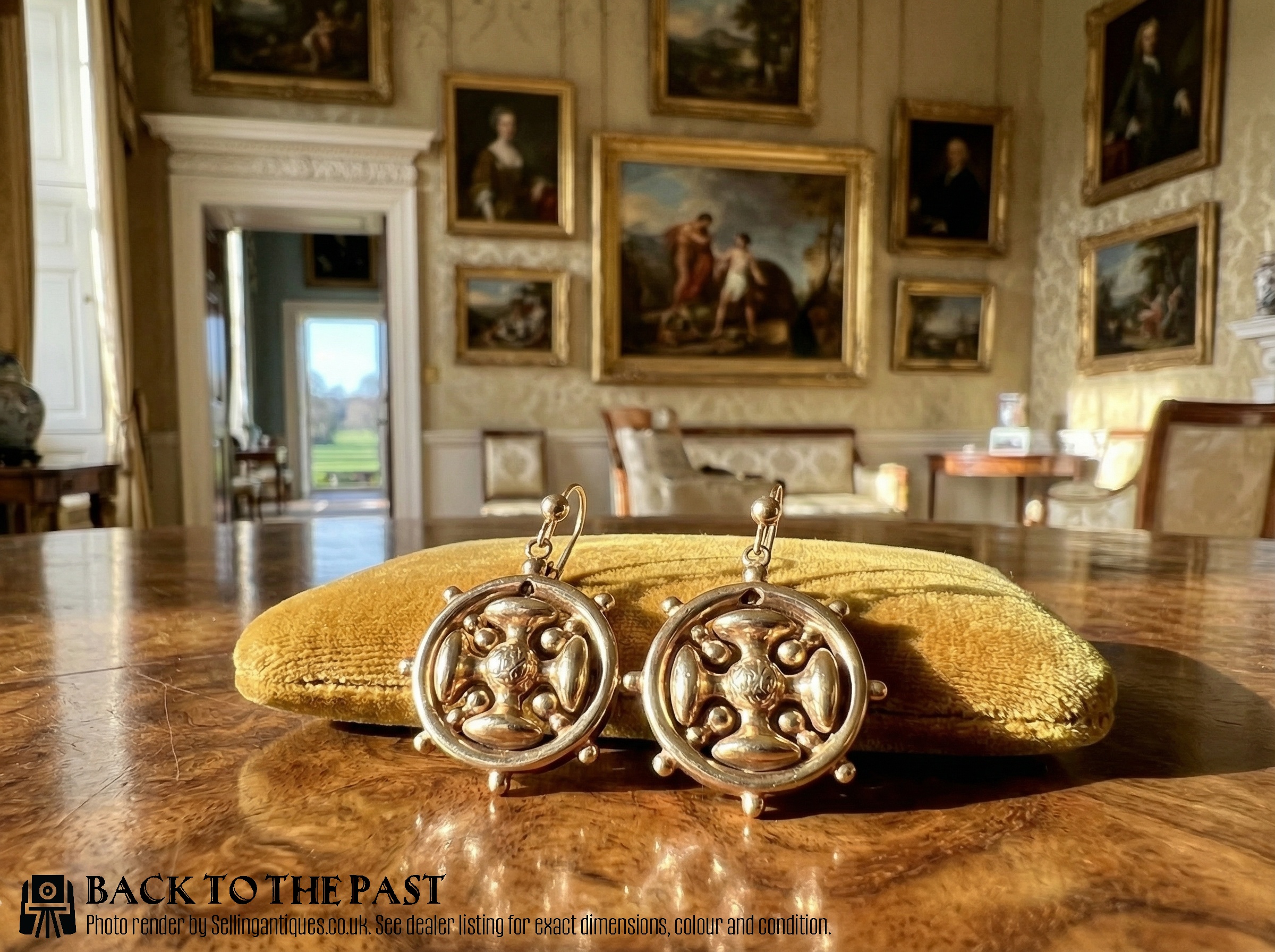
Antique Gold Ear Pendants
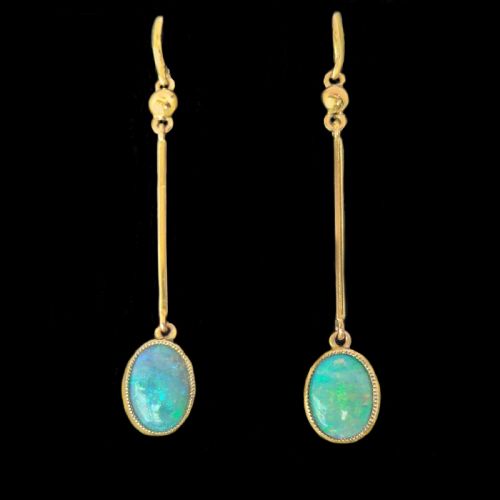
Antique gold ear pendants encompass drop earrings, cluster earrings, and day-to-night designs that hang below the earlobe. The listings on this page centre on Victorian, Edwardian, Georgian, and Art Deco pieces created in various forms of gold.
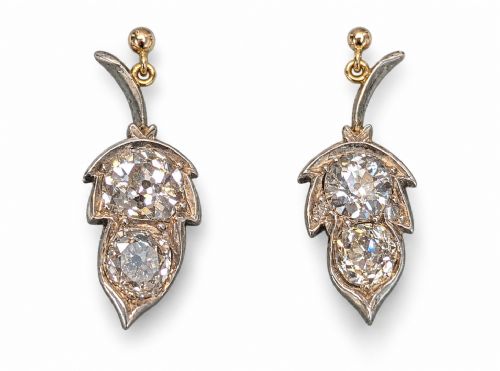
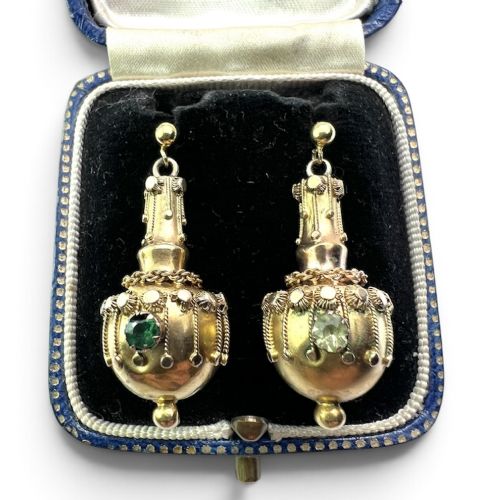
Victorian examples dominate the selection, ranging from Etruscan Revival amphora shapes to teardrops and convertible day-to-night settings. Alongside these sit Edwardian leaf drops, Georgian night and day designs, and geometric Art Deco cluster earrings.
Origins stretch from domestic British workshops to Chinese Export pieces, showing how global trade and local taste shaped what people wore. Buyers find everything from small daily wear to large, decorative rose and yellow gold statement drops.
How antique gold ear pendants were made
Goldsmiths worked primarily in nine-carat, fifteen-carat, and eighteen-carat yellow and rose gold, often combining gold with silver settings for gemstones. Platinum appears alongside gold in later twentieth-century Art Deco pieces.
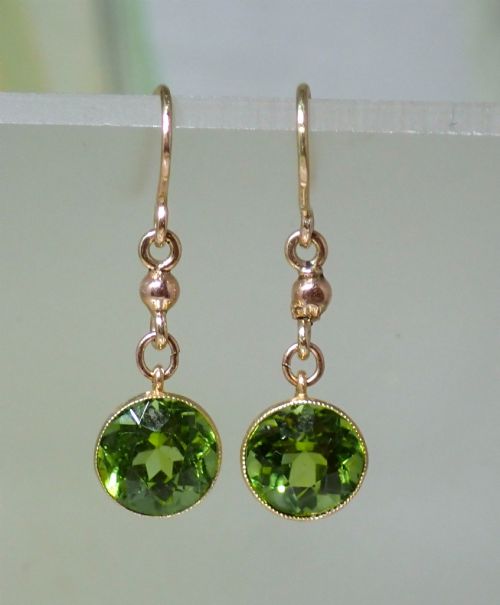
Gemstone mounting involved old cut diamonds, rose cut diamonds, aquamarines, peridots, and carved coral secured in intricate metalwork. Techniques included wirework, granulation for Etruscan revival styles, and convertible mechanisms for transforming day wear into night wear.
Some Victorian earrings doubled as miniature amphora vases, letting wearers carry tiny echoes of classical archaeology directly on their lobes.
What varies in quality
The standard of execution in gold ear pendants rests on the crispness of the chased or applied ornament and the security of the settings. Finer Victorian and Edwardian work displays meticulous granulation, balanced proportions, and well-matched natural stones.
Material purity also divides the range, moving from lower nine-carat alloys up to rich fifteen-carat and eighteen-carat gold. The sophistication of the mechanism in day-to-night or convertible drops marks the distinction between standard production and masterwork.
The Antique Gold Ear Pendants Glossary
- Day-to-night earrings
- Convertible jewellery designed with removable lower sections so the wearer could wear a simple drop by day and attach heavier clusters for evening. This clever engineering saved space in a travelling jewel case.
- Etruscan Revival
- A nineteenth-century design movement inspired by archaeological excavations in Italy. Jewellers used tiny gold granules and wire applied to flat surfaces to mimic ancient Etruscan artefacts.
- Old cut diamond
- A hand-faceted diamond shape popular before modern machine cutting developed in the twentieth century. These stones feature smaller tables and larger culets that catch candle and gas light softly.
- Rose cut diamond
- A dome-shaped diamond cut with flat bases and triangular facets arranged in a star pattern. They offer a translucent, shimmering quality distinct from brilliant cuts.
- Chinese Export
- Items manufactured in China specifically for Western markets during the nineteenth and twentieth centuries. They combine traditional local motifs with forms suited to European fashion.
Antique Gold Ear Pendants: Frequently Asked Questions
How do day-to-night earrings work?
These convertible pieces feature a detachable lower section that hooks or screws onto a simpler upper stud or drop. The wearer simply removes the heavy bottom cluster when evening ends.
This ingenious system allowed women to adapt their jewellery from understated daytime visits to grand evening dinners without changing their primary earrings.
What is Etruscan Revival goldwork?
Etruscan Revival refers to nineteenth-century jewellery inspired by ancient archaeological discoveries in Italy. Goldsmiths imitated ancient granulation and wirework techniques on gold surfaces.
Pieces from this movement showcase meticulous surface decoration and classical amphora or geometric shapes drawn from antiquity.
How can I date antique earrings?
Dating relies on combining the fastener type, the metal purity marks, the gemstone cuts, and the overall aesthetic style. Georgian pieces often use foil-backed stones and closed backs, while Victorian items show rich variety from Etruscan revival to sentimental motifs.
Edwardian and Art Deco pieces introduce platinum, geometric lines, and lighter open-work frames that reflect changing tastes of the twentieth century.
Are antique gold earrings heavy to wear?
Weight varies considerably depending on the period and the specific design. While some Victorian day-to-night drops and large leaf earrings have a noticeable presence, others utilise hollow construction or lightweight filigree to remain comfortable.
Buyers should examine the stated dimensions and design structure to understand how a particular pair will sit on the earlobe.