


Old Cut Diamond Bracelet
An old cut diamond bracelet brings together hand-faceted stones and precious metals from the Victorian, Edwardian, and Art Deco eras.
Old Cut Diamond Bracelet
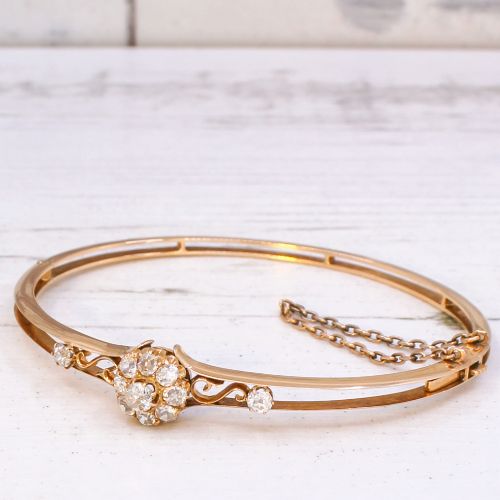
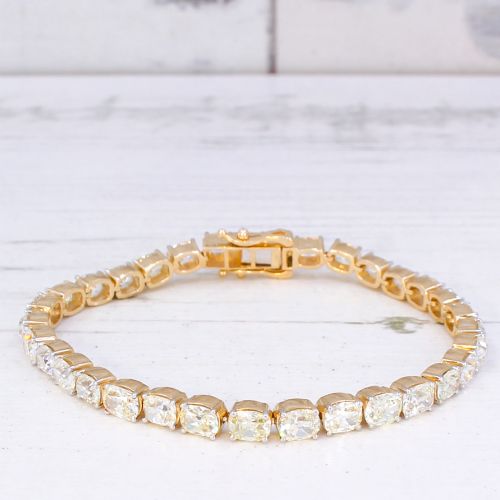
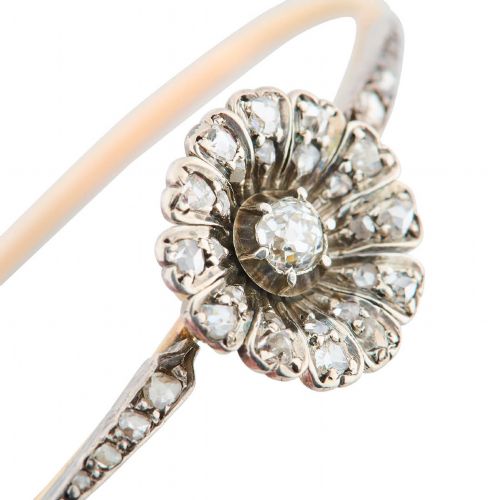
An old cut diamond bracelet is a piece of fine jewellery designed to wrap the wrist in stones cut by hand before modern machine precision took over. The pieces found here span the Victorian, Edwardian, and Art Deco periods, encompassing flexible tennis lines, hinged bangles, and gemstone-accented link structures. Buyers encounter everything from simple floral clusters to substantial multi-carat tennis formats.
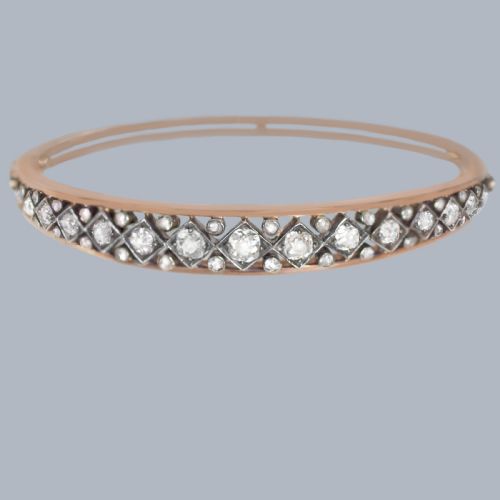
The most common formats on this page are Victorian and Edwardian bangles alongside Art Deco link bracelets. These objects often incorporate rubies, sapphires, pearls, or turquoise alongside the central diamonds. They reflect a history of design that stretches from the mid nineteenth century through to the early decades of the twentieth century.
Makers and designers from these periods utilised varied mountings, ranging from heavy 15ct gold to delicate platinum settings. A buyer searching for an old cut diamond bracelet looks for the distinct optical warmth of hand-cut facets that catch candle or low light differently than brilliant cuts of later decades.
How they were made
The construction of these pieces relies on precious metals such as silver, platinum, yellow gold, rose gold in 9ct, 15ct, and 18ct, combined with hand-cut diamonds. Victorian pieces frequently pair silver-topped gold settings to keep the metal colour bright against the stones while maintaining structural strength. Later Edwardian and Art Deco examples lean heavily on platinum and white gold to support intricate openwork and geometric designs.
Stones are secured using grain, bezel, or claw settings shaped entirely by hand by jewellers working before mass production. The metalwork often includes detailed cut-work, granulation, or engraved details such as floral motifs, celestial stars, or lover's knots. Each linkage or hinge requires precise manual adjustment to ensure flexibility and durability in daily wear.
Old Cut Diamond Bracelet Retail Price Guide 2026
Typical asking prices for old cut diamond bracelet among the pieces listed under this phrase on Sellingantiques today, from the lower quarter to the upper quarter. They describe what is for sale here now, not the wider market.
Listings feature items spanning Victorian, Edwardian, and Art Deco eras, constructed from silver, platinum, and varied gold purities including 9ct, 15ct, and 18ct.
What varies in quality
Quality in an old cut diamond bracelet rests upon the regularity of the hand-cutting and the integrity of the metal mount. Stones shaped by hand vary in symmetry and depth, so those with balanced proportions and lively light return command greater appreciation. The preservation of original box fittings and unpolished metal surfaces also marks the distinction between ordinary survivals and superior examples.
The sophistication of the metalwork further separates pieces across the range, from simple stamped links to elaborate pierced galleries set with calibré-cut sapphires or rubies. A robust hinge and secure clasp mechanism indicate superior workshop standards from the period. The harmony between the diamond weight and the weight of the gold, platinum, or silver setting completes the assessment of quality.
The Old Cut Diamond Bracelet Glossary
- Old mine cut
- An early form of diamond cutting featuring a near-square girdle, high crown, and a large culet facet. This shape predates the modern round brilliant and produces chunky flash patterns under ambient light.
- Old European cut
- A transitional round diamond shape characteristic of the late nineteenth and early twentieth centuries. It displays a small table, steep crown, and deep pavilion that yield a distinct pool of light.
- Bangle
- A rigid bracelet that slips over the hand or opens via a hinged mechanism with a secure clasp. These structures often feature cluster tops or engraved surface decoration.
- Tennis bracelet
- A flexible line of individual stones linked continuously around the wrist. In antique examples, these mount old cut diamonds in matched claw or bezel settings.
- Collet
- A small metal collar or band that surrounds and secures a gemstone within a piece of jewellery. Older hand-formed collets show subtle irregularities from the bench smith.
Old Cut Diamond Bracelet: Frequently Asked Questions
How do I wear an antique bracelet safely?
Wear these pieces with an awareness of their age, avoiding rigorous physical tasks or swimming while they remain on the wrist. Store them separately in lined boxes to prevent metal-on-metal scratching.
Check the security of the clasp and safety chains periodically before stepping out. Treat the delicate gold, platinum, and silver links with gentle care during everyday use.
What is the difference between old mine and old European cuts?
Old mine cut diamonds tend to have a squarish, pillow-like outline with hand-shaped facets reflecting a smaller table. They belong typically to Victorian and earlier manufacturing.
Old European cut stones possess a rounder girdle and emerged closer to the turn of the twentieth century. Both exhibit the characteristic open culet at the base when viewed under magnification.
Can I resize a vintage diamond bangle?
Resizing rigid bangles presents significant challenges because of integrated hinges, safety mechanisms, and continuous stone settings. Alterations often disrupt the structural balance and historical integrity of the piece.
Consult a specialist antique jeweller before attempting any modification. Flexible line bracelets offer more leeway for adjustment through the removal or addition of links.
How should I clean my old cut diamond jewellery?
Clean these items using warm water, mild soap, and a soft-bristled brush to remove everyday oils from beneath the stones. Avoid harsh chemical dips, ultrasonic machines, or abrasive cloths that harm softer metals or coloured gems like pearls and turquoise.
Dry the piece thoroughly with a lint-free cloth before storage. Regular maintenance helps preserve the original patina of the gold and silver.