


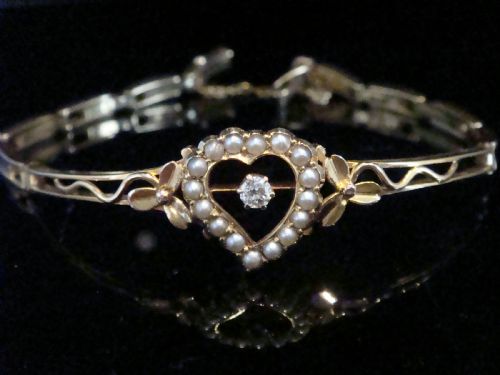


Victorian Diamond Bracelet
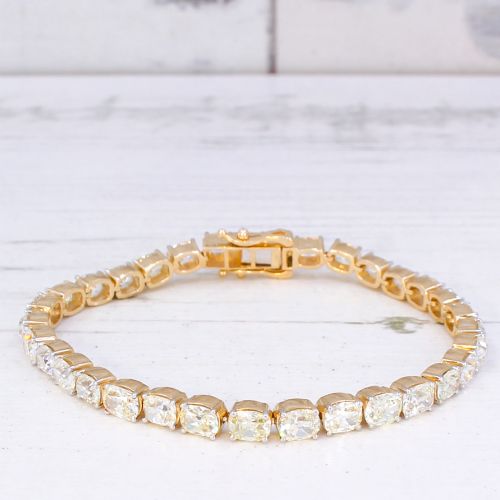
A victorian diamond bracelet brings together old mine or rose cut stones and yellow gold, silver, or platinum.
Victorian Diamond Bracelet
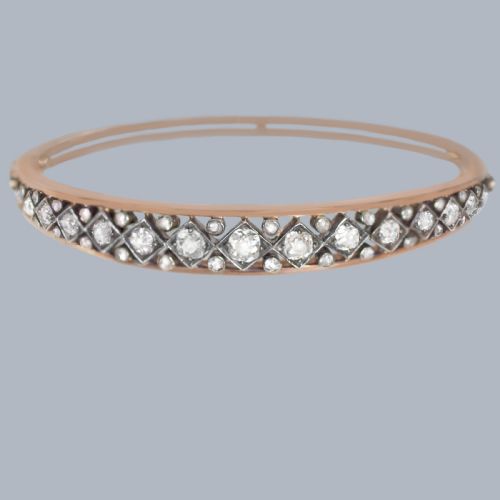
A victorian diamond bracelet spans rigid hinged bangles, flexible link lines, and charm-laden pieces set with diamonds alongside sapphires, rubies, and pearls. These jewels emerge from the nineteenth century into the early twentieth century, carrying the stylistic hallmarks of the Victorian and Edwardian periods.
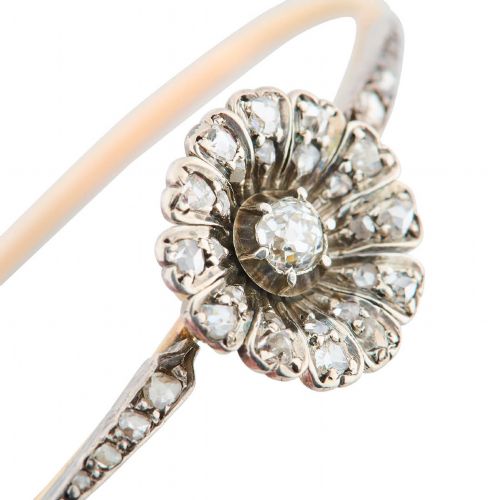
Rigid hinged bangles and tennis bracelet formats appear most frequently in this selection, often featuring cluster centres or floral motifs. Jewellers of the era frequently combined silver settings for stones with gold shanks to enhance the brilliance of the diamonds.
How they were made
Craftsmen utilised gold in various purities, notably 9ct, 15ct, and 18ct, alongside silver-topped mountings to securely hold the stones. Silver was frequently employed on the face of the jewellery to provide a bright, white backdrop that complemented the diamond facets.
Goldsmiths shaped metal into hollow or solid hinged bangles, weaving intricate patterns like lover knots, bows, and snake motifs. Stones were hand-set using early techniques that framed each gem individually within the metalwork.
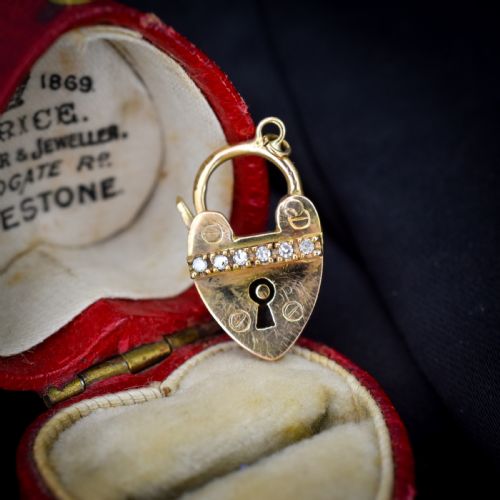
Some pieces incorporate tiny hidden hearts and serpent eyes to whisper affection across the centuries.
What varies in quality
The standard of a piece rests upon the calibre of the central stones, the weight of the precious metal, and the intricacy of the hand-made linkages. Substantial gold weight and robust hinge mechanisms distinguish finer examples from lighter, more delicate productions.
Artisanal skill shows in the symmetry of cluster arrangements and the secure integration of secondary gems like rubies, sapphires, or emeralds. Pieces that retain their original clasps and safety chains demonstrate superior preservation.
The Victorian Diamond Bracelet Glossary
- Old mine cut
- A diamond cut with a square shape, rounded corners, high crown, and a small table, typical of nineteenth-century jewellery. This facet arrangement catches candlelight and gaslight particularly well.
- Rose cut
- A diamond style featuring a flat base and a domed crown composed of triangular facets. It presents a soft, translucent sparkle rather than modern brilliant fire.
- Bangle
- A rigid bracelet that slides over the hand or opens via a hinged mechanism with a clasp. Many nineteenth-century examples incorporate safety chains for security.
- Silver-topped gold
- A historical technique where a thin layer of silver is soldered over gold metalwork. This method allowed jewellers to mount diamonds against a white background while retaining the strength of gold underneath.
Victorian Diamond Bracelet: Frequently Asked Questions
Are these bracelets made of solid gold?
The metal content varies across 9ct, 15ct, and 18ct yellow or rose gold, alongside silver-topped sections.
Some bangles utilise hollow construction to reduce weight on the wrist while maintaining visual volume.
What stones appear alongside diamonds?
Maker selections frequently paired diamonds with sapphires, rubies, emeralds, pearls, and turquoise.
Coloured gemstones added symbolic meaning and vibrant contrast to the bright diamond clusters.
How do I distinguish Victorian from Edwardian pieces?
Victorian items often feature heavier yellow or rose gold settings and naturalistic motifs like snakes and flowers.
Edwardian pieces tend to lean towards lighter mounts and whiter metals with delicate openwork detailing.