



Yellow Gold Diamond Cuff
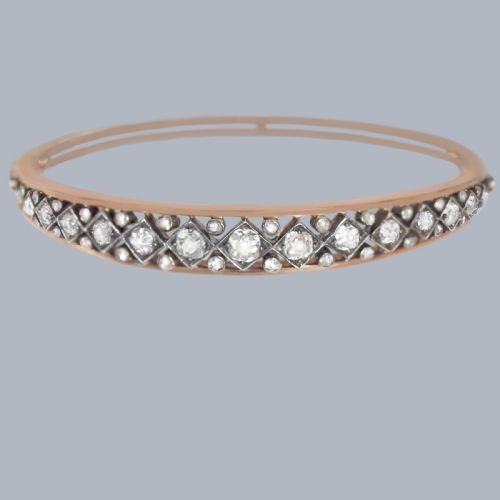
A yellow gold diamond cuff offers substantial wrist presence, combining precious metal weight with secure stone settings.
Yellow Gold Diamond Cuff
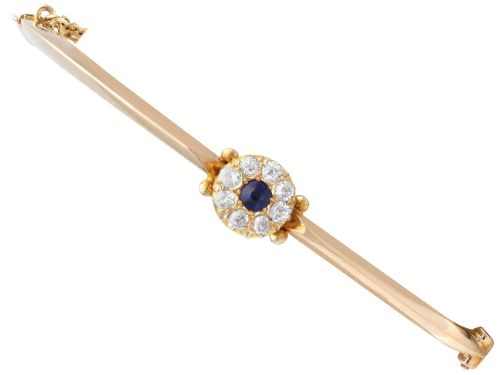
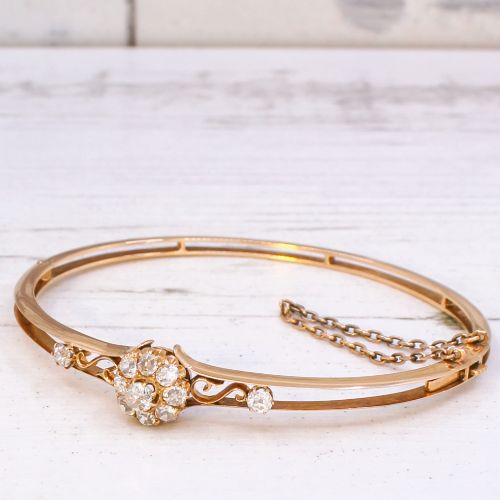
When you search for a yellow gold diamond cuff, you are looking at rigid or semi-rigid wrist ornaments designed to showcase central gemstones against warm metal. These pieces span historical periods from the Victorian era through the mid-twentieth century, encompassing both substantial bangles and articulated bracelets.
The selection extends to revivalist and retro designs, including Hellenistic Revival pieces by notable makers and French mid-century work. Forms range from chunky cluster bangles of considerable weight to delicate Edwardian star motifs and convertible brooch-bracelets.
How they were made
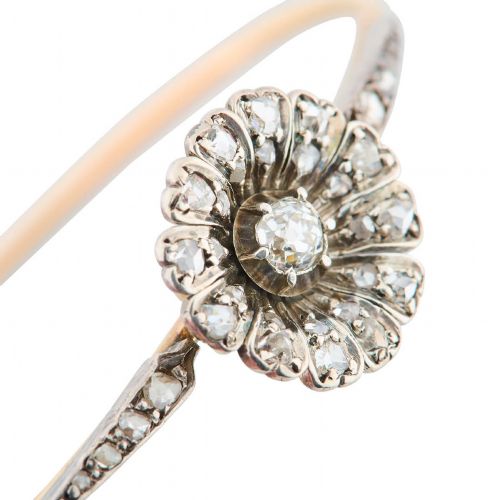
The construction relies heavily on high-carat yellow gold, specifically fifteen-carat and eighteen-carat alloys, supplemented by nine-carat variants in later twentieth-century examples. Goldsmiths frequently combined yellow gold with silver toppings on the face of the piece to enhance the brilliance of early diamond cuts against a pale metal background.
Gemstone setting techniques dictate the structural character of each piece, utilising grain settings, star settings, and raised cluster platforms. Stones such as old mine cut diamonds, rose cut diamonds, sapphires, and seed pearls are integrated directly into the metal framework or mounted on articulated sections to ensure structural integrity.
Yellow Gold Diamond Cuff Retail Price Guide 2026
Typical asking prices for yellow gold diamond cuff among the pieces listed under this phrase on Sellingantiques today, from the lower quarter to the upper quarter. They describe what is for sale here now, not the wider market.
Listings feature periods spanning the Victorian era, the Edwardian years, and the mid-twentieth century including the 1940s and 1950s.
What varies in quality
The distinction between tiers rests upon the heft of the goldwork and the integrity of the structural joints in rigid bangles and hinges. Substantial metal weight, as seen in heavy cluster bangles and designer workshop pieces, indicates superior original manufacture compared to lighter commercial output.
Quality also manifests in the selection and integration of the gemstones, where well-matched old mine cuts or specific decorative stones like rubies and sapphires elevate the piece. The finesse of hand-applied details, such as matt finishes or enamel work, separates standard production from exceptional artistry.
Ilias Lalaounis
The Yellow Gold Diamond Cuff Glossary
- Old Mine Cut
- An early diamond cut characterised by a near-square cushion outline, high crown, and large culet. This cut typifies nineteenth-century stones.
- Rose Cut
- A dome-shaped diamond cut with a flat base and triangular facets meeting in a point. It provides a soft, translucent gleam rather than modern brilliance.
- Bangle
- A rigid bracelet that slips over the hand or fastens with a hinge and clasp. Many historical examples rely on this secure, solid form.
- Seed Pearl
- Very small, natural or cultured pearls used to accent floral or geometric patterns. They appear frequently in Victorian and Edwardian clusters.
- Cross-Over
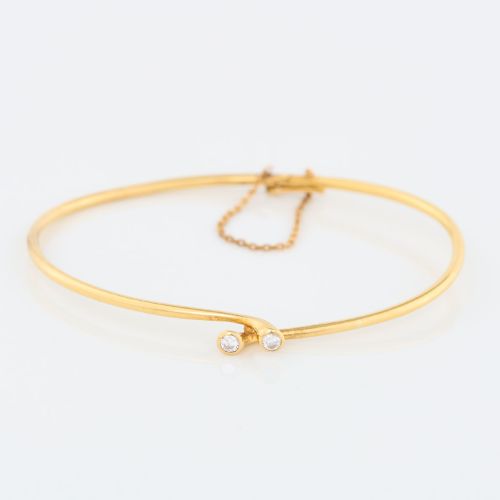
- A ring or bangle design where the ends sweep together and cross over the top of the wrist or finger. This style accentuates twin feature stones.
Yellow Gold Diamond Cuff: Frequently Asked Questions
How do I wear a vintage bangle?
These rigid bracelets slip directly over the wrist or secure via integrated box clasps and safety chains. Ensure the hinge and clasp mechanisms are properly engaged before daily wear.
Because historical gold and gemstones can be delicate, avoid wearing them during physical tasks or while swimming. Pair them alone for a striking focal point or alongside simple bands.
Are these pieces made of solid gold?
The pieces utilise solid gold alloys, typically graded at nine, fifteen, or eighteen carats depending on the period of manufacture. These traditional alloy standards provide the necessary durability for daily structural wear.
Some nineteenth-century examples combine yellow gold shanks with silver-topped settings on the face to showcase the diamonds. This dual-metal technique is entirely authentic to the period.
How can I tell a Victorian piece apart?
Victorian examples often feature distinct material combinations such as fifteen-carat gold paired with silver, along with characteristic stones like old mine cut diamonds and seed pearls. The metalwork frequently incorporates hand-applied details, floral motifs, or convertible brooch mechanisms.
Later twentieth-century iterations tend toward heavier cast gold weights, different alloy stamps, and streamlined geometric or retro styling. Examining the construction of the hinge and the cut of the diamonds clarifies the era.