


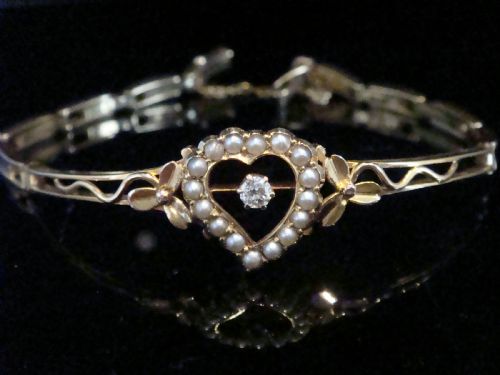

Victorian Diamond Bangle
A victorian diamond bangle brings together nineteenth-century craftsmanship and old-cut stones, offering a wrist ornament of distinct character and enduring appeal.
Victorian Diamond Bangle
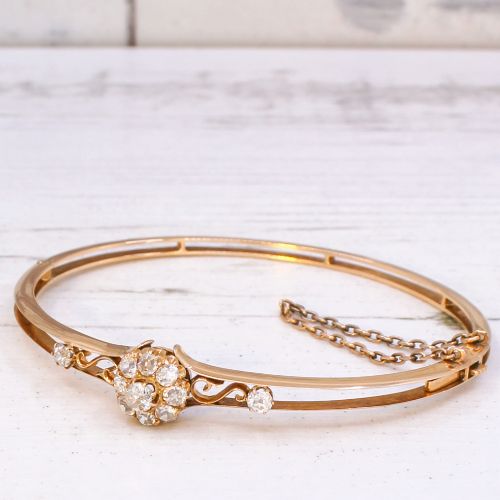
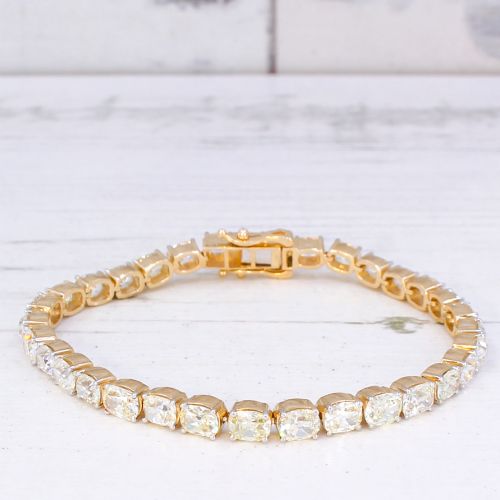
A victorian diamond bangle is a rigid wrist ornament typically dating from the nineteenth century, featuring old-cut diamonds set alongside precious gems or pearls. These pieces encompass hinged bracelets and floral clusters originating primarily from the Victorian and Edwardian periods.
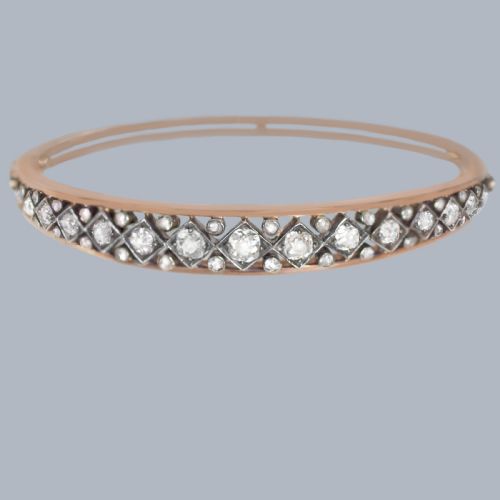
The most common examples on this page are hinged bangles fashioned in yellow gold, rose gold, or silver-topped gold, often incorporating sapphires, rubies, or turquoise alongside the central diamonds.
How they were made
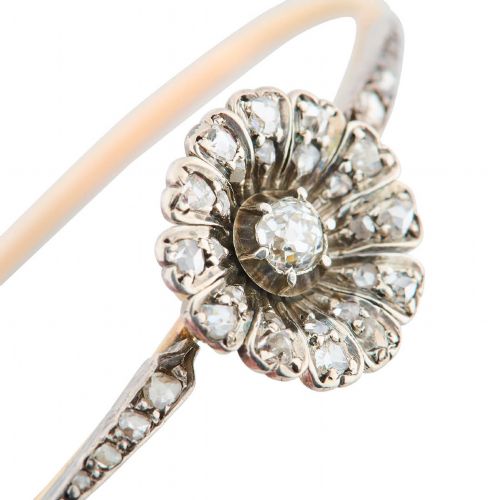
Jewellers of the period utilised combinations of 15ct gold, 18ct yellow and rose gold, and silver settings to showcase the stones. Diamonds were predominantly old mine cut or rose cut by hand, imparting a softer brilliance than modern cuts.
Victorian Diamond Bangle Retail Price Guide 2026
Typical asking prices for victorian diamond bangle among the pieces listed under this phrase on Sellingantiques today, from the lower quarter to the upper quarter. They describe what is for sale here now, not the wider market.
Listings feature yellow gold, rose gold, silver, and platinum alongside diamonds, sapphires, rubies, opals, and seed pearls from the Victorian and Edwardian periods.
What varies in quality
Quality rests upon the weight and proportions of the old-cut diamonds, the richness of accompanying stones like rubies and sapphires, and the integrity of the gold or silver mount. Heavier gram weights and robust hinged mechanisms indicate superior manufacture.
The finesse of the chased or floral metalwork and the harmonious arrangement of secondary gems such as pearls or turquoise further separate standard production from finer artisan pieces.
Chauvet
The Victorian Diamond Bangle Glossary
- Old mine cut
- An early diamond cut characterised by a cushion shape, high crown, and small table, designed under candlelight to catch warm illumination. These stones display distinctive hand-faceted proportions unique to antique jewellery.
- Rose cut
- A flat-bottomed diamond style topped with a dome of triangular facets resembling an opening rosebud. This historic cut produces a subtle, translucent shimmer rather than modern brilliance.
- Silver-topped gold
- A technique where jewellers mounted diamonds in silver over a gold backing, taking advantage of silver's dark reflective properties to enhance stone whiteness while retaining gold's structural strength.
- Hinged bangle
- A rigid circular bracelet joined by a hinge and secured with a clasp and safety chain, allowing the piece to fit snugly around the wrist.
- Lovers knot
- A decorative motif formed of interlaced ribbons or cords symbolising affection, frequently utilised in Victorian bangle design.
Victorian Diamond Bangle: Frequently Asked Questions
How do I wear a antique bangle safely?
Slide the piece over the wrist and secure both the clasp and any attached safety chain before moving about. These historic items benefit from gentle handling during daily wear.
Avoid wearing them during rigorous physical tasks to protect the delicate gold work and old-cut stones from impact.
Are these bracelets sized for modern wrists?
Most nineteenth-century bangles feature standard inner diameters designed to fit average adult wrists comfortably. Hinged designs open outward to assist with placement.
Review the specific internal circumference measurements in the details before selecting an item for purchase.
What stones accompany the diamonds?
Sapphires, rubies, opals, turquoise, and seed pearls frequently appear alongside the diamonds in these nineteenth-century designs. Coloured gems were often used to create floral or cluster motifs.
These complementary stones reflect the Victorian preference for polychromatic jewellery arrangements.
How do I date a piece correctly?
Dating relies on stylistic markers such as cluster configurations, metal combinations like silver-topped gold, and the specific characteristics of the diamond cuts. Periods span from the mid-nineteenth century through the Edwardian era.
Archival records and construction techniques provide further confirmation of the likely decade of manufacture.