

Antique Platinum Jewellery
Antique platinum jewellery brings together the enduring strength of the white metal and the distinct aesthetics of the early twentieth century.
Antique Platinum Jewellery
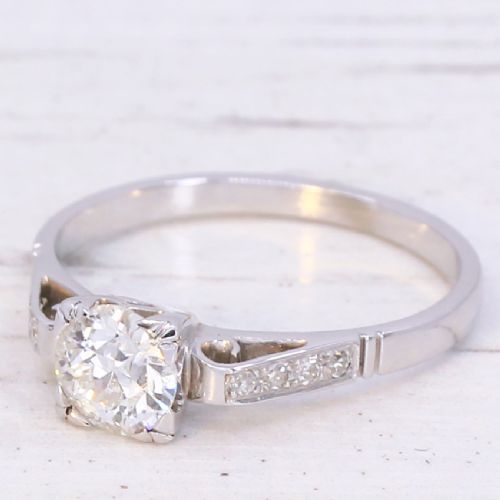
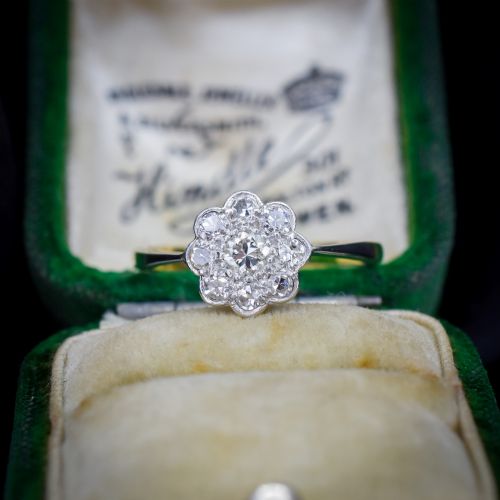
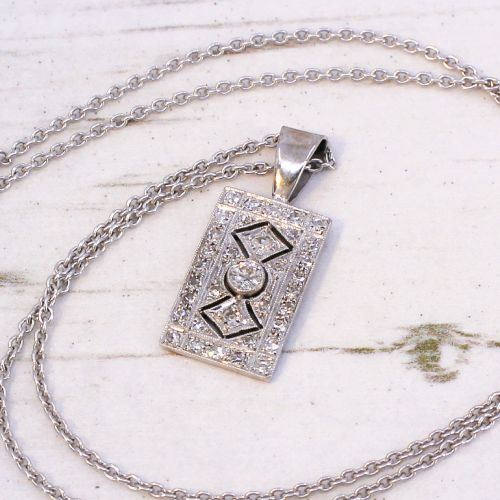
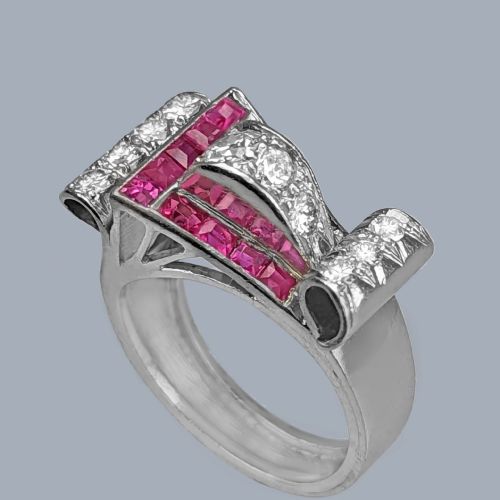
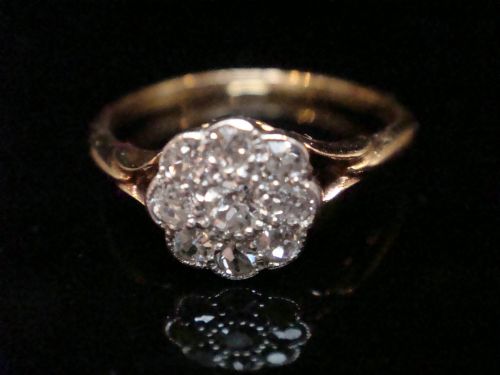
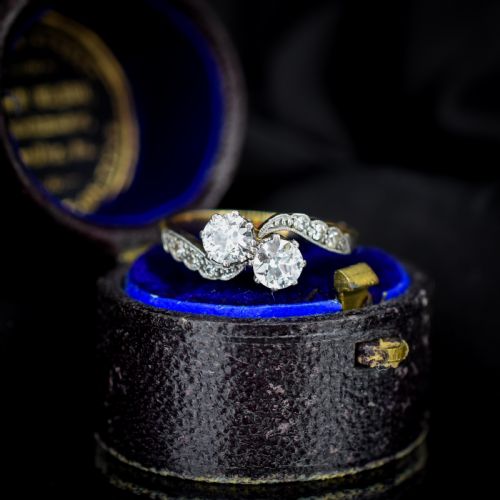
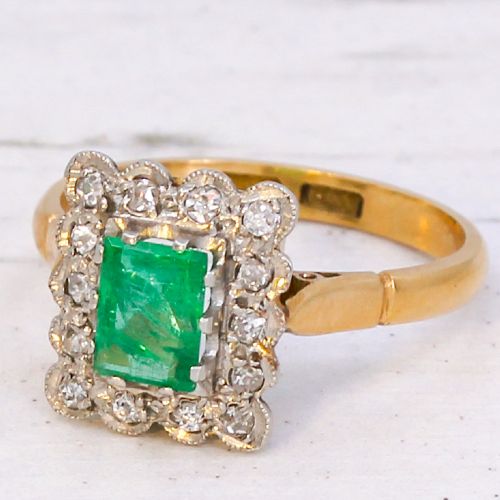
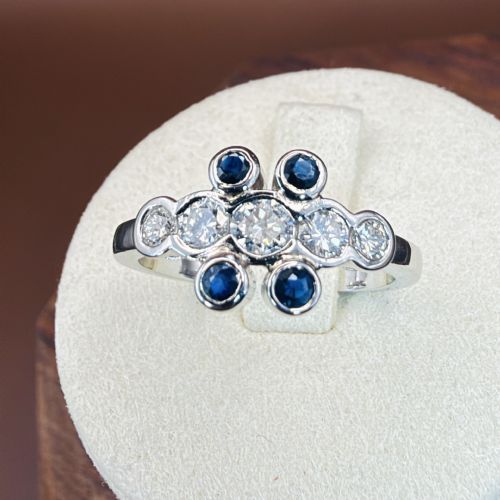
Antique platinum jewellery consists largely of rings, brooches, pendants, earrings, and necklaces created across the Edwardian, Art Deco, and mid-century periods. The phrase encompasses engagement rings, cluster designs, and gemstone pieces featuring diamonds, rubies, sapphires, and emeralds set in durable metal.
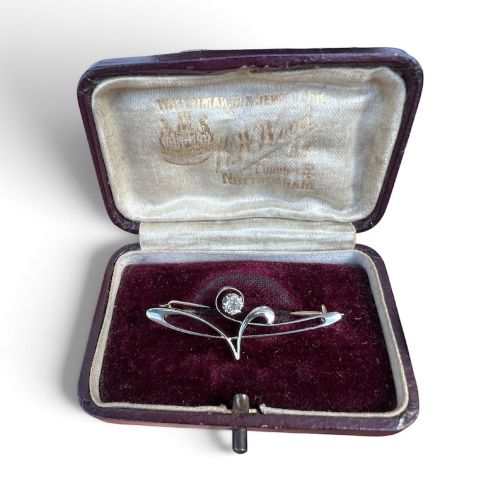
Buyers browsing this selection encounter numerous engagement rings and cluster rings alongside geometric Art Deco bar brooches and drop earrings. Many pieces combine platinum settings with 18ct yellow gold or white gold shanks, bridging Victorian traditions with twentieth-century design.
The objects stem from distinct aesthetic movements, ranging from the flowing lines of Art Nouveau and Edwardian ornamentation to the precise geometry of Art Deco. Each form reflects the technical capacity of the metal to hold stones securely with minimal visible framing.
Materials and construction methods
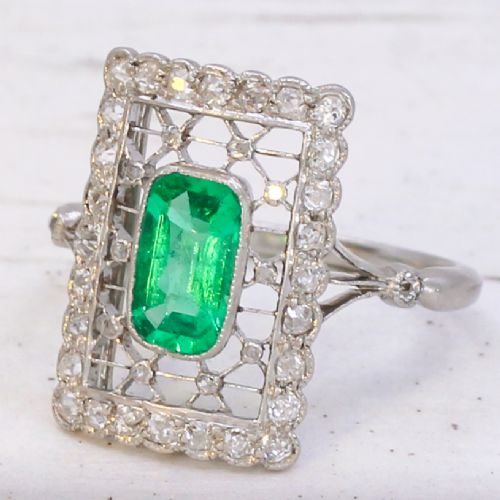
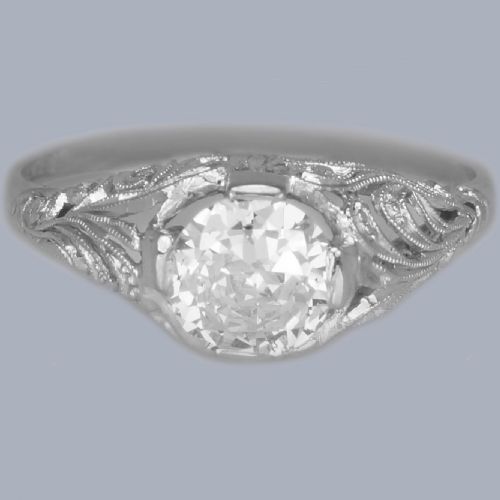
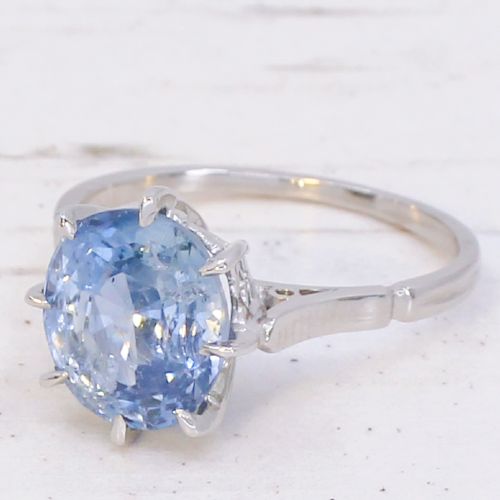
Makers utilised the high tensile strength of platinum to fashion delicate, lace-like settings that secured diamonds and coloured gemstones with fine claws and millegrain edges. This physical property allowed workshops to reduce metal bulk while increasing the security of old cut diamonds.
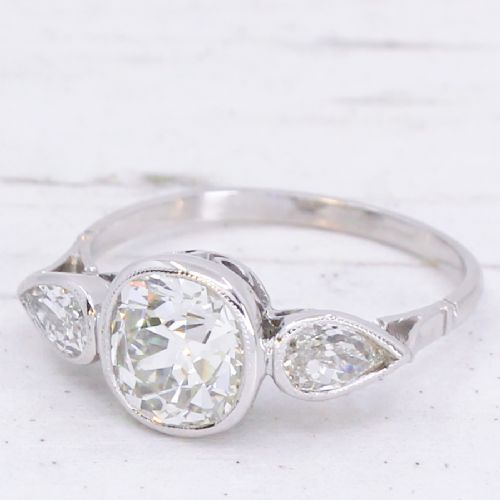
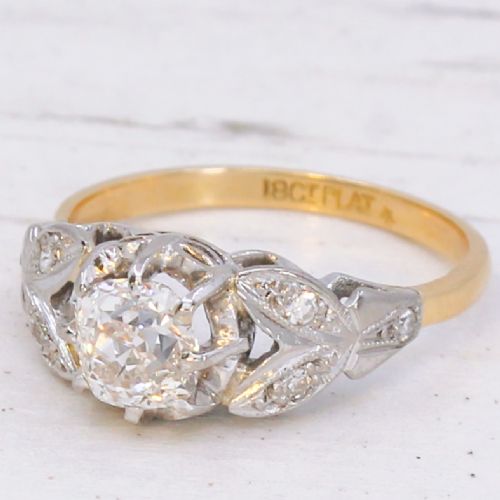
Many items employ a combination of platinum for the stone-setting face and 18ct yellow gold for the band or reverse, a standard practice of the Edwardian and Art Deco eras. Stones such as old cut diamonds, cushion cuts, and pear cuts are integrated alongside unheated rubies, sapphires, and emeralds.
Antique Platinum Jewellery Retail Price Guide 2026
Typical asking prices for platinum jewellery among the pieces listed under this phrase on Sellingantiques today, from the lower quarter to the upper quarter. They describe what is for sale here now, not the wider market.
Old cut diamonds were shaped by hand by candlelight, giving them a distinctive soft glow that modern brilliant cuts simply cannot replicate.
Distinctions in craftsmanship and materials
Quality rests upon the precision of the metalwork, particularly the fineness of the millegrain beaded edges and the symmetry of openwork gallery designs. Superior examples maintain structural integrity without sacrificing the illusion of lightness.
The choice and condition of the central gems, such as unheated sapphires or old cut diamonds with minimal inclusions, separate standard workshop output from exceptional creations. Original settings that show no evidence of later alteration retain higher integrity.
The Antique Platinum Jewellery Glossary
- Platinum
- A dense, ductile, and malleable white precious metal that gained widespread use in fine jewellery making during the Edwardian period due to its strength.
- Millegrain
- A decorative technique involving a row of tiny raised metal beads along the edge of a setting, characteristic of Edwardian and Art Deco design.
- Old Cut Diamond
- A diamond cut by hand before modern machinery, typically featuring a small table, high crown, and large culet that produce a softer candlelit sparkle.
- Toi Et Moi
- A French term meaning you and me, describing a ring featuring two principal gemstones set close together in a twist or parallel arrangement.
- Navette
- A boat-shaped gemstone setting or ring face that tapers to points at either end, popular during the Edwardian and Art Deco eras.
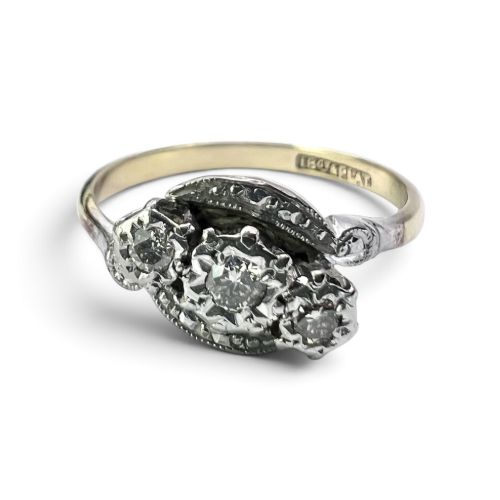
- Trilogy Ring
- A ring featuring three principal stones, often interpreted as representing the past, present, and future.
Antique Platinum Jewellery: Frequently Asked Questions
What periods do these pieces date from?
The inventory spans the late Victorian era through the Edwardian period, Art Nouveau, Art Deco, and into the 1940s vintage and mid-century years. Most items originate in the first half of the twentieth century when platinum became the preferred metal for fine gemstone mounting.
Specific decades represented include the 1900s, 1910s, 1920s, 1930s, and 1940s, each carrying distinct stylistic traits from ornate garlands to geometric symmetry.
Are these rings suitable for daily wear?
Platinum possesses exceptional durability and resistance to wear, making it well-suited for everyday items like engagement rings and wedding bands. Its strength allows thin claws to hold stones securely over decades of use.
Prong integrity and gemstone security should still be checked periodically by a professional, particularly on antique pieces with delicate Edwardian openwork.
How do I identify an Edwardian piece?
Edwardian items typically feature light, airy openwork designs resembling lace or garlands, frequently executed in platinum-topped gold. Stones are often set with fine millegrain borders using old cut diamonds and occasional pearls or soft-hued gemstones.
By contrast, Art Deco pieces adopt bold geometric lines, symmetry, and high-contrast combinations like rubies or sapphires paired with diamonds.
Why are some rings combined with gold?
Many Edwardian and Art Deco rings use platinum for the upper setting to showcase white diamonds against a neutral backdrop while utilising 18ct yellow gold for the shank. This technique provided the durability of platinum where needed while maintaining traditional warmth on the band.
Such hybrid construction is a reliable indicator of early twentieth-century manufacturing methods rather than a later repair.