



Art Deco Diamond Pin
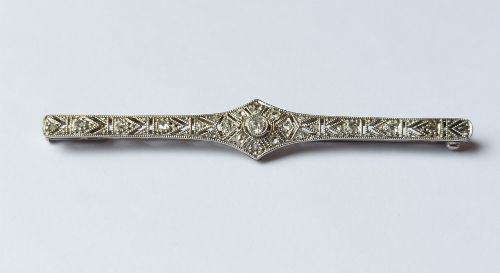
An art deco diamond pin secures a lapel or holds a scarf with geometric clarity and bright old-cut stones.
Art Deco Diamond Pin
An art deco diamond pin comprises bar brooches, jabot pins, and floral spray clips designed during the interwar decades. Makers favoured symmetrical geometry alongside natural motifs rendered in precious metals.
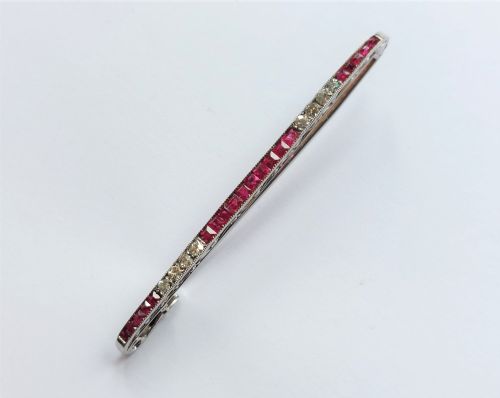
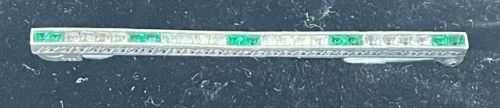
Most examples combine diamonds with platinum or white gold, often incorporating calibré-cut rubies, sapphires, or black onyx to heighten the contrast. These jewels range from slim linear dress clips to substantial multi-carat centrepieces.
Surviving pieces reflect the design vocabulary of the nineteen-twenties and nineteen-thirties, though similar forms extend into adjacent mid-century decades. Buyers encounter both delicate French bar pins and robust geometric panels.
Materials and technique
Jewellers predominantly mounted stones in platinum or eighteen-carat white gold, which provided a durable, bright setting that complemented the colourless sparkle of old-cut diamonds. Millegrain edges - tiny raised metal beads - frequently bordered the settings to soften the geometric lines.
Coloured gemstones such as sapphires, rubies, and onyx were often channel-set or precisely cut to fit angular channels, creating sharp colour contrasts against the central diamonds. Fabrication relied on bench-work techniques that combined pierced openwork frames with solid pin stems.
Art Deco Diamond Pin Retail Price Guide 2026
Typical asking prices for art deco diamond pin among the pieces listed under this phrase on Sellingantiques today, from the lower quarter to the upper quarter. They describe what is for sale here now, not the wider market.
Listings feature platinum, yellow gold, and white gold settings housing diamonds paired with onyx, rubies, sapphires, and pearls.
Judging quality
Quality rests on the precision of the metalwork and the uniformity of the set stones, where hand-pierced gallery work and secure flush settings distinguish superior output. Pieces signed by established makers command attention for their rigorous design discipline.
The choice of secondary materials also alters the character of the piece, as natural pearls, fine rubies, and heavy platinum foundations elevate the importance of the work above standard commercial production.
Cartier Paris·Liberty London
The Art Deco Diamond Pin Glossary
- Bar brooch
- A slender horizontal pin featuring a central stone or decorative motif. This form dominated everyday wear during the early twentieth century.
- Old-cut diamond
- A stone faceted by hand with a high crown and small table, producing broad flashes of light rather than modern brilliant sparkle.
- Calibré-cut
- Small gemstones cut to specific geometric shapes to fit tightly into a channel or border.
- Millegrain
- A decorative border of tiny raised metal beads running along the edge of a platinum or gold mount.
- Jabot pin
- An ornamental pin originally designed to fasten folds of lace or fabric on traditional eighteenth-century neckwear, revived during the art deco period.
Art Deco Diamond Pin: Frequently Asked Questions
How do I wear an art deco diamond pin today?
These pins attach securely to coat lapels, heavy knit sweaters, or silk scarves using traditional pin-stem and safety catches. Placing a small backing pad behind thick fabrics helps distribute the weight evenly.
For formal wear, they fasten neatly to evening wraps or dress necklines, adding targeted points of light without pulling delicate materials.
What is the difference between platinum and white gold in these pieces?
Platinum offers natural white strength and density, allowing jewellers to create ultra-fine wire structures that hold stones securely without heavy metal bulk. White gold alloy mixes yellow gold with white metals to achieve a similar silver tone.
Over decades, platinum retains its hue without plating, whereas early white gold often shows a warmer underlying tint.
Are these pins suitable for daily wear?
While platinum and gold provide durable mountings, the delicate box catches or pin stems require careful handling during fastening and removal. Regular checks by a jeweller ensure the stone settings remain secure.
Avoiding exposure to harsh chemicals and storing them in dedicated boxes preserves the integrity of the metal and fragile calibré-cut stones.
How can I tell if the gemstones are original?
Original stones display hand-cut facets matching the period's production methods, such as old European cuts with open culets. Examining the bezels under magnification reveals consistent wear and secure metalwork that has not been recently rebuilt.
Colour consistency and matching inclusions across accent stones like sapphires or onyx further confirm period assembly.