

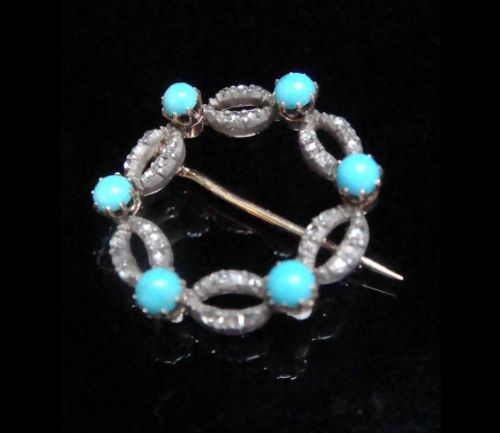


Vintage Diamond Pin
A vintage diamond pin brings together lasting sparkle and wearable history, offering timeless adornment for lapels, scarves, and hats.
Vintage Diamond Pin
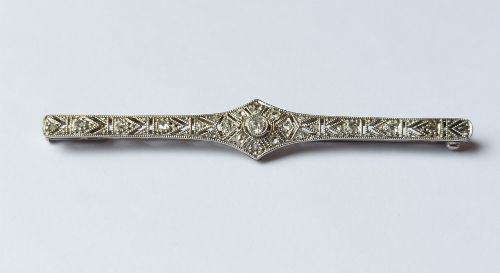
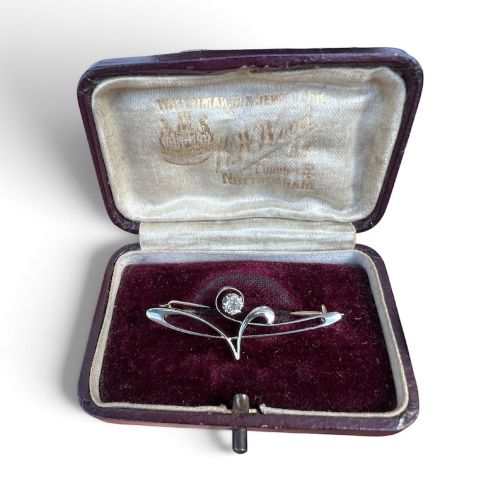
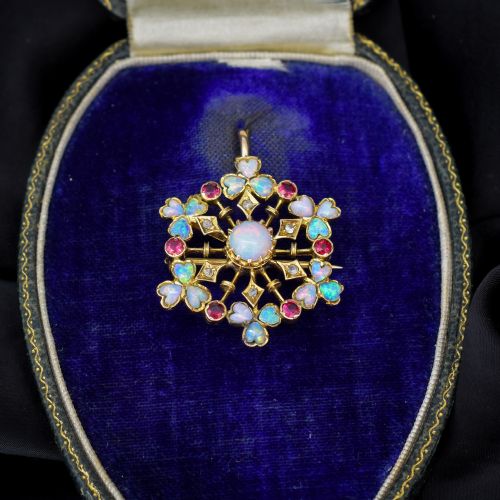
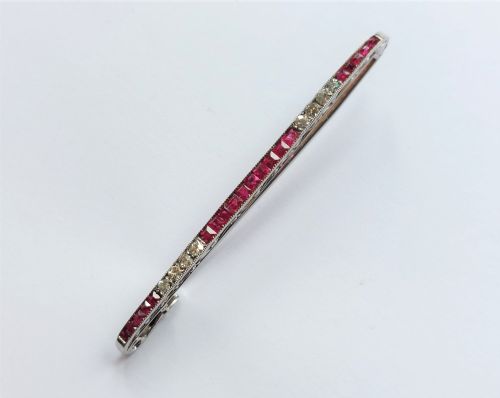
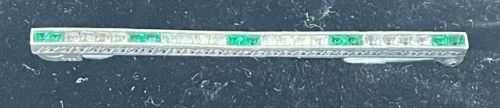
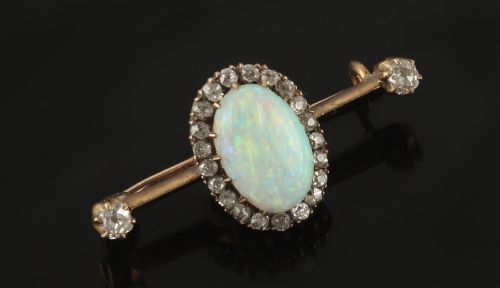
The selections available range from linear Art Deco diamond settings to whimsical Edwardian insect motifs and substantial mid-century gemstone clusters. Most examples function primarily as dress clips or lapel fastenings, frequently incorporating secondary coloured stones such as rubies, sapphires, emeralds, and pearls alongside the central diamonds.
Victorian and Edwardian versions often employ yellow gold combined with silver settings to enhance the brilliance of early cut stones. Later twentieth-century items lean towards platinum and white gold, prioritising clean geometric lines and openwork frame structures.
Materials and Construction
Metals such as platinum, 18ct gold, 9ct gold, and silver form the structural foundations of these jewels, often paired together in older pieces where silver was laid over gold to hold stones securely. Platinum gained widespread favour during the Art Deco era due to its tensile strength, which permitted fine, lace-like metalwork without risking the security of the gems.
Gems are typically set using grain, bezel, or millegrain techniques, the latter adding a delicate beaded border of metal along the edges of the setting. Stones encountered include old-cut, rose-cut, and step-cut diamonds, frequently complemented by calibrated rubies, sapphires, and natural pearls.
Vintage Diamond Pin Retail Price Guide 2026
Typical asking prices for vintage diamond pin among the pieces listed under this phrase on Sellingantiques today, from the lower quarter to the upper quarter. They describe what is for sale here now, not the wider market.
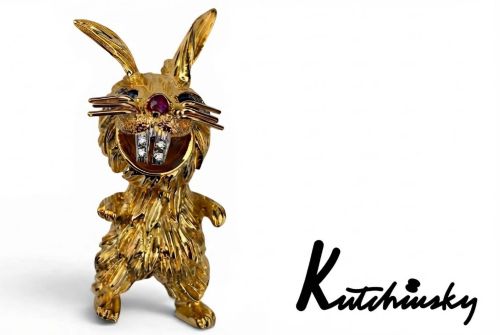
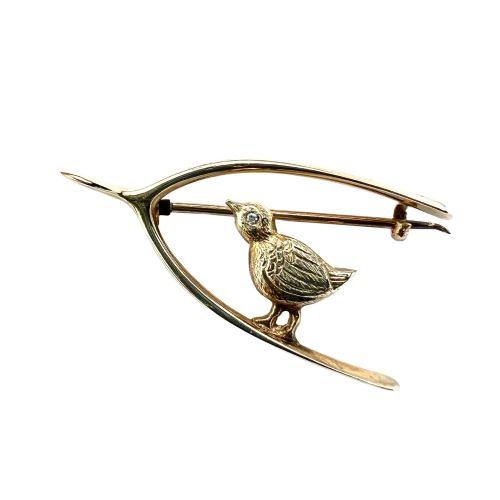
Among the fauna represented in the metalwork are rabbits, chicks, swallows, and bicycles.
Assessing Quality and Craftsmanship
Superior examples display meticulous metal fabrication where the reverse of the piece receives as much attention to finishing as the front. The alignment and matching of the diamonds, whether old-cut or baguette, dictate the visual harmony and overall refinement of the design.
Maker signatures and hallmarks stamped into the metal add significant context, distinguishing mass-produced commercial items from workshop-produced or branded jewels. The crispness of millegrain borders and the structural integrity of pin stems and safety catches also separate standard examples from finer works of art.
Kutchinsky·Ben Rosenfeld·Van Cleef Arpels
The Vintage Diamond Pin Glossary
- Bar Brooch
- A horizontal pin featuring a slender bar shape, often mounted with a central diamond cluster or gemstone motif.
- Millegrain
- A decorative jewellery technique involving a textured edge of tiny raised metal beads along the border of a setting.
- Old-Cut Diamond
- A diamond cut by hand before modern machine precision, characterised by a high crown, small table, and deep pavilion.
- Platinum
- A dense, white precious metal prized for its strength, durability, and ability to hold fine gemstone settings securely.
- Rose-Cut Diamond
- An antique stone shape featuring a domed top with triangular facets and a flat base, resembling an unopened rosebud.
Vintage Diamond Pin: Frequently Asked Questions
How do I wear a vintage diamond pin safely?
Secure the pin through a tightly woven fabric or add a modern locking clutch to the stem behind the garment for extra security. Heavy brooches sit best on structured lapels, heavy coats, or thick wool scarves.
Position the pin near your left shoulder or lapel for a traditional placement, or use smaller bar pins to fasten cardigan collars and silk neckties.
What periods do these diamond pins cover?
The pieces span the Victorian, Edwardian, Art Nouveau, Art Deco, and mid-century eras, reflecting changing design aesthetics from the nineteenth century onwards.
Early pieces often feature yellow gold and rose-cut stones, while later decades favour platinum frames, geometric white gold, and brilliant-cut diamonds.
Can a brooch also be worn as a pendant?
Many antique and vintage pieces feature hidden loops or fold-down bails on the reverse that allow them to transition seamlessly between a lapel pin and a necklace pendant.
This convertible design was especially popular during the Edwardian and Art Deco periods, giving versatility to larger multi-gem ornaments.
How should I clean my vintage diamond jewellery?
Soak the piece in warm water mixed with a mild dish detergent, then gently brush around the settings with a very soft toothbrush to remove accumulated dust.
Avoid harsh chemical dips, ultrasonic cleaners, and abrasive cloths, particularly if the item incorporates softer gems like pearls, opals, or emeralds.