
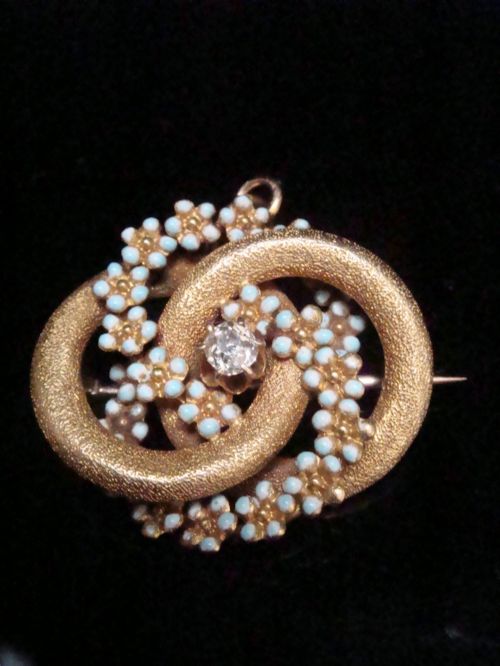


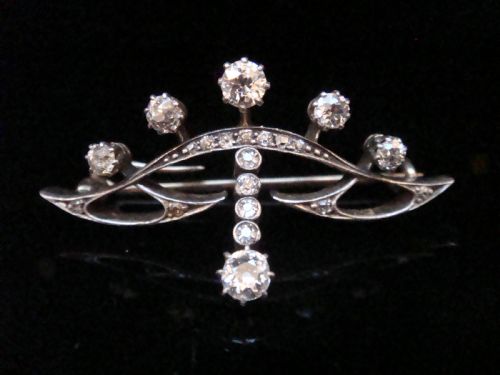
Old Cut Diamond Brooch
An old cut diamond brooch brings together hand-faceted stones and historic metals, offering wearable historic craftsmanship with distinct character.
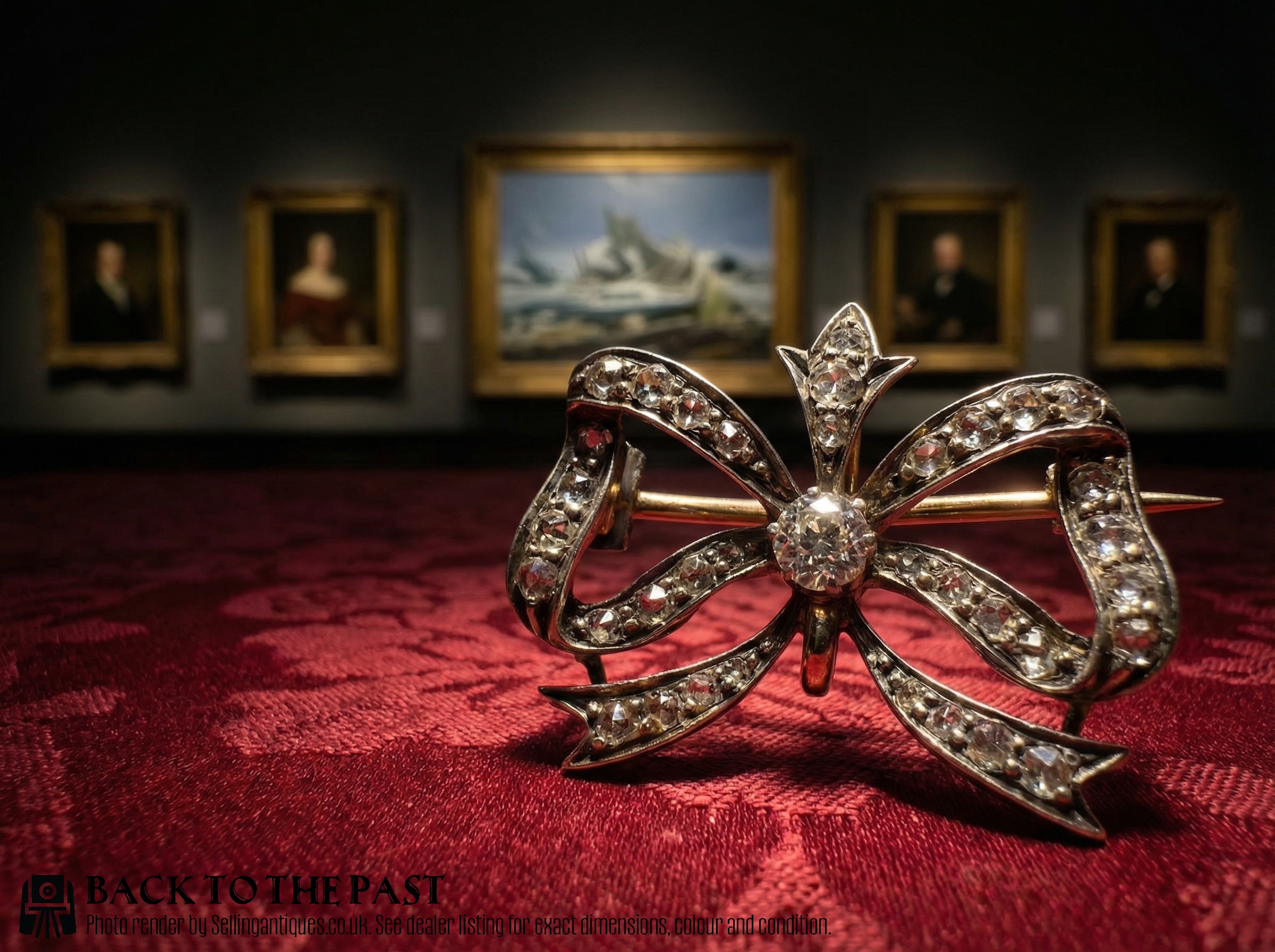
Old Cut Diamond Brooch
An old cut diamond brooch encompasses cluster pins, convertible pendants, and starbursts created during the Victorian, Edwardian, and Art Deco eras.
Victorian examples frequently showcase celestial motifs, floral sprays, or entwined ribbons set in gold and silver, while later Edwardian and Art Deco pieces favour platinum and geometric arrangements.
Many survivors double as pendants, offering versatile ways to wear antique stones set alongside pearls, sapphires, or tourmalines.
How they were made
Early workshops commonly utilised silver-topped gold settings, mounting diamonds in silver to reflect candlelight while supporting them with heavier gold backing for structural strength.
Transitioning into the twentieth century, platinum emerged to hold delicate pierced galleries and millegrain edges without requiring excessive metal bulk.
Gems were hand-cut with deeper pavilions and smaller tables, producing softer fire than modern brilliant cuts.
Old Cut Diamond Brooch Retail Price Guide 2026
Typical asking prices for old cut diamond brooch among the pieces listed under this phrase on Sellingantiques today, from the lower quarter to the upper quarter. They describe what is for sale here now, not the wider market.
Listings feature silver, platinum, yellow gold, and 18ct gold spanning the Victorian, Edwardian, and Art Deco periods.
What varies in quality
The standard of an old cut diamond brooch rests on the symmetry of the hand-shaped stones and the crispness of the metalwork surrounding them.
Superior examples maintain original pin mechanisms, clean collet settings, and harmonious gemstone grading across all mounted diamonds.
Versatility also plays a role, as pieces engineered to detach cleanly from brooches into pendants demonstrate advanced Victorian and Edwardian jeweller craftsmanship.
The Old Cut Diamond Brooch Glossary
- Old European cut
- A round diamond cut popular from the late nineteenth into the early twentieth century featuring a small table, high crown, and large culet.
- Silver-topped gold
- A historical technique where silver is soldered to a gold backing to provide a bright white surface for diamond settings while keeping durable gold underneath.
- Millegrain
- A decorative border of tiny raised metal beads running along the edges of jewellery mounts, typical of Edwardian and Art Deco design.
- Cannetille
- A fine wirework technique resembling twisted gold embroidery, popular in mid nineteenth-century Victorian pieces.
- Conversion piece
- An antique item, such as a brooch fitted with a removable bail, adapted to serve multiple functions like a pendant or pin.
Old Cut Diamond Brooch: Frequently Asked Questions
Can I wear an old cut diamond brooch as a pendant?
Many historical pins feature hidden loops or detachable bails designed specifically for this dual purpose.
Checking the reverse of the setting will reveal whether a conversion has been made or if the piece was originally built to serve both functions.
How do I date an antique brooch?
Stylistic clues such as celestial motifs or cannetille wirework point toward Victorian origins, while platinum settings and geometric lines indicate Edwardian or Art Deco periods.
Examining the metal combinations and pin findings provides further confirmation of the manufacturing era.
Why do old cut diamonds look different?
Hand-cut stones feature asymmetrical facets and open culets that catch ambient candlelight rather than harsh modern electrical illumination.
This shaping produces broader, gentler flashes of light rather than the precise brash brilliance of contemporary diamond cuts.
What metals were used in these pieces?
Victorian examples heavily rely on yellow gold paired with silver face-sets, whereas Edwardian and Art Deco items shift toward white gold and platinum.
These material shifts reflect changing metallurgical capabilities and stylistic preferences for brighter, whiter mountings.