


Vintage Platinum Pin
A vintage platinum pin offers the quiet strength and bright sparkle of early twentieth-century design.
Vintage Platinum Pin
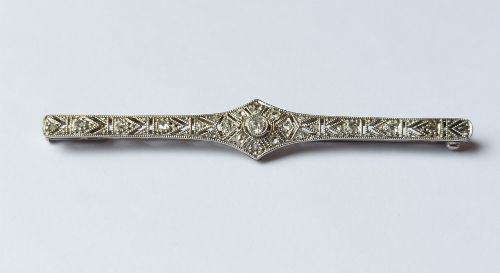
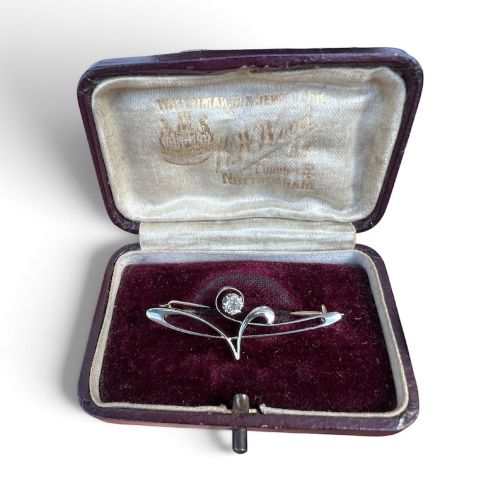
A vintage platinum pin encompasses sophisticated brooches, bar pins, jabot pins and stickpins created across the Edwardian, Art Deco and mid-century periods. These ornaments range from geometric bar designs to figurative motifs like ducks, owls and butterflies set with precious stones.
Buyers searching for a vintage platinum pin will most frequently encounter Art Deco bar brooches and diamond-set pieces dating from the 1920s and 1930s. These items frequently combine platinum settings with yellow gold, white gold or silver backs.
The selection also reaches back to Victorian and Edwardian origins, alongside occasional mid-century examples. These pieces served primarily as fastenings or lapel ornaments for garments during periods when platinum became the favoured metal for fine jewellery.
How they were made
The construction of these pieces relies heavily on platinum, chosen for its strength and malleability which allowed artisans to fashion exceptionally fine millegrain edges and intricate pierced galleries. This durable metal held stones securely while minimising the visible weight of the setting.
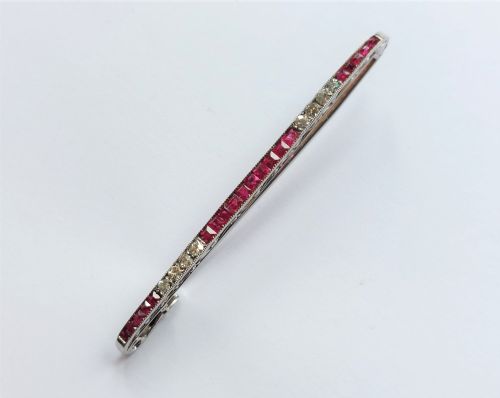
Diamonds dominate the ornamentation, frequently paired with calibré-cut rubies, sapphires, emeralds, onyx and pearls. Stones were secured using early brilliant, old cut or rose cut techniques that created a softer, deeper candlelit refraction compared to modern brilliant cuts.
Listings feature platinum pieces from the Edwardian, Art Deco, Victorian and mid-century eras, incorporating diamonds, onyx, sapphires and pearls.
What varies in quality
The standard of these pieces depends upon the precision of the metalwork and the integration of the stones. Finer examples display crisp piercing, even millegrain beading and hand-forged pins that maintain their spring.
Stone selection divides the everyday from the exceptional, with well-matched calibré-cut gemstones and lively old cut diamonds elevating the work of a piece. The harmony between the platinum mount and secondary metals such as gold or silver also dictates the integrity of the construction.
Cartier Paris
The Vintage Platinum Pin Glossary
- Millegrain
- A decorative technique involving a row of tiny raised metal beads along the edge of a setting. This detail softens the transition between metal and stone.
- Bar brooch
- A slender horizontal pin that spans across a garment lapel or fastening. These forms frequently showcase geometric Art Deco patterns.
- Old cut diamond
- A hand-faceted diamond cut before modern optical standards were established in the early twentieth century. They feature smaller tables and larger culets.
- Jabot pin
- A decorative ornamental pin originally designed to secure the folds of a jabot cravat. They often feature matching jewelled terminals at both ends.
- Calibré-cut
- Small gemstones specially cut in precise geometric shapes to fit snugly within a specific channel or border setting. This technique defines high-end Art Deco jewellery.
Vintage Platinum Pin: Frequently Asked Questions
How do I wear a vintage pin?
These pieces suit coat lapels, heavy knitwear or silk scarves where the weight of the platinum mount is properly supported by the fabric.
Securing the safety clasp or rolling catch ensures the pin remains firmly positioned throughout the day.
How do I date a platinum pin?
Dating relies on stylistic clues, such as the geometric symmetry of the 1920s or the softer garlands of the Edwardian era.
Metal combinations, such as platinum top-layers fused to yellow gold or silver backs, also point to specific manufacturing decades.
Are these pins made of solid platinum?
Many pieces feature a solid platinum front section that holds the diamonds and gemstones securely in place.
To accommodate manufacturing methods of the time, the reverse or pin stem is frequently fashioned from 15ct gold, 18ct white gold or yellow gold.
What is an old cut diamond?
An old cut diamond refers to stones shaped by hand prior to the invention of modern automated diamond-cutting machinery.
These stones exhibit smaller tabletops and deep pavilions that produce a distinctive, warm glimmer under artificial light.