


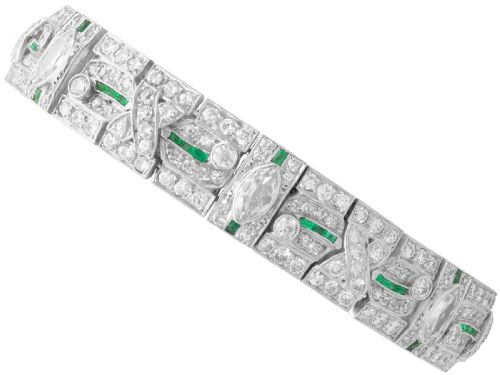


Art Deco Platinum Bracelet
An art deco platinum bracelet offers the clean geometric lines and exceptional diamond work that define twentieth-century luxury.
Art Deco Platinum Bracelet
An art deco platinum bracelet combines bright white metal with brilliant gemstones to create striking wrist jewellery. These pieces date principally from the nineteen twenties and nineteen thirties, reflecting the modernist tastes of the interwar period.
Buyers encounter classic geometric link construction and channel settings designed to showcase substantial stone weights. The focus remains squarely on bright diamonds and occasional rich green emerald accents.
How they were made
Master jewellers utilised platinum for its strength and malleability, allowing for delicate pierced galleries and secure claw or bezel settings. This dense metal supports heavy stone configurations without requiring bulky frames.
Goldsmiths set French cut emeralds and numerous round or graduated diamonds by hand into intricate link patterns. Certain pieces combine platinum with gold components to achieve structural balance and varied tone.
Art Deco Platinum Bracelet Retail Price Guide 2026
Typical asking prices for art deco platinum bracelet among the pieces listed under this phrase on Sellingantiques today, from the lower quarter to the upper quarter. They describe what is for sale here now, not the wider market.
Listings feature platinum and gold items set with diamonds and emeralds from the nineteen twenties and thirties.
What varies in quality
The calibre of stone cutting and total carat weight separate standard examples from exceptional masterworks. Large diamond configurations and precise French cut emeralds elevate the overall standard.
Artisanal skill shows in the suppleness of the articulation and the crispness of the geometric piercing. Well-executed pieces maintain rigid structural integrity while remaining fluid around the wrist.
The Art Deco Platinum Bracelet Glossary
- Platinum
- A dense, durable white precious metal favoured in jewellery making for its strength and resistance to tarnish. It holds small gemstones securely in fine settings.
- French Cut
- A square or rectangular gemstone cut featuring a high crown and a small table, often used in geometric line work. This style creates continuous linear flashes of light.
- Graduated
- A design arrangement where stones increase in size steadily towards the centre of the piece. This draws the eye to the primary focal point of the jewellery.
- Cocktail Watch
- A timepiece integrated directly into an elaborate jewelled bracelet designed for evening wear. These functional items double as high-status ornamental accessories.
Art Deco Platinum Bracelet: Frequently Asked Questions
What is an art deco platinum bracelet?
These items are period wrist ornaments manufactured during the nineteen twenties and nineteen thirties using durable platinum and precious stones. They feature geometric link designs that showcase diamonds and emeralds.
Craftsmanship from this era prioritised clean architectural lines and innovative metalwork. Each piece serves as a wearable example of modernist design principles applied to fine jewellery.
How do I wear an antique bracelet?
These flexible line bracelets and cocktail watches pair easily with formal evening attire or tailored modern garments. Their low profile allows them to sit comfortably against the wrist.
Take care to secure the clasp properly before wearing them out. Storing the piece flat in a lined box prevents unnecessary strain on the articulated links.
How do I date these bracelets?
Dating relies on stylistic markers such as strict geometric motifs, platinum construction, and specific gemstone cuts like the French cut. The manufacturing techniques align closely with the interwar decades.
Archival records and French control marks often provide further chronological context. Examining the construction of the link hinges helps confirm the period of production.
Are these bracelets durable for daily wear?
Platinum provides a robust framework that resists daily wear better than softer precious metals. However, the intricate settings and high diamond counts require sensible care.
Owners should remove such jewellery during heavy physical activities to protect the delicate stone settings. Periodic professional inspection ensures the individual links and claws remain secure.