


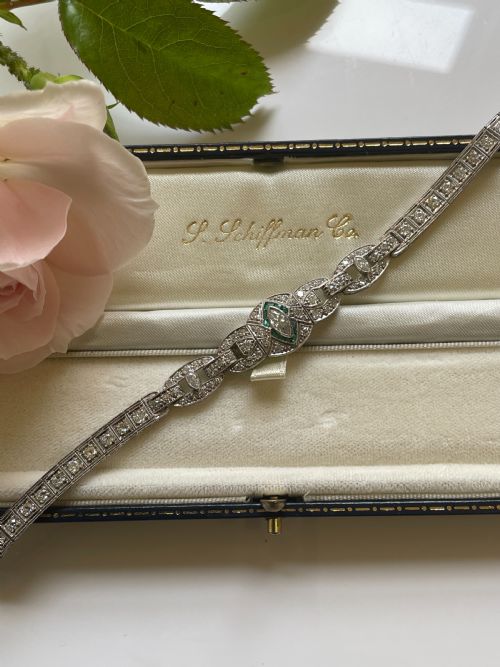
1930s Diamond Bracelet
A 1930s diamond bracelet combines geometric mastery with brilliant stones, offering lasting elegance for the discerning wrist.
1930s Diamond Bracelet
A 1930s diamond bracelet is a piece of arm jewellery defined predominantly by the geometric severity and linear grace of the Art Deco style. These items span bracelets and cocktail watches, bringing period charm straight to the wearer.
Most examples you encounter on this page date from the 1930s, alongside related pieces stretching from the 1920s to the 1940s. They frequently incorporate platinum or various tones of gold to frame their stones.
Makers paired diamonds with contrasting sapphires, emeralds, pearls, and glass to create striking visual rhythms. These configurations range from delicate line bracelets to heavy, stone-laden statement pieces.
How they were made
Craftsmen built these bracelets using robust metals like platinum, white gold, yellow gold, rose gold, and 18ct gold to support intricate stone settings. Mesh bracelets demonstrate specialised metalwork, creating a flexible and tactile fabric from tiny gold links.
Goldsmiths and platinum-smiths set diamonds alongside emeralds, sapphires, pearls, and glass using precise geometric layouts. The metalwork acts as a discreet armature designed to maximise the light passing through each gemstone.
What varies in quality
The sophistication of the metalwork and the integration of secondary stones like sapphires, emeralds, and pearls dictate the upper tier of these bracelets. Heavier carat weights and platinum settings generally separate substantial pieces from lighter gold and rose gold alternatives.
Artisanal execution in mesh construction and stone calibration defines the distinction between standard production and masterworks. Pieces carrying signatures from known makers elevate the standing of a bracelet significantly.
Bucherer·Asprey
The 1930s Diamond Bracelet Glossary
- Art Deco
- A design style characterised by sleek geometric shapes, streamlined forms, and stylized ornamentation. It dominated decorative arts during the interwar period.
- Platinum
- A dense, durable, and naturally white precious metal favoured for secure gemstone settings. It allows for delicate prongs that hold diamonds firmly without heavy metal bulk.
- Cocktail watch
- A small timepiece disguised as an ornate bracelet, intended for formal evening wear. These incorporate hidden dials beneath diamond-set covers.
- Mesh bracelet
- A flexible strap woven from tiny metal wires or links into a fabric-like texture. This technique provides comfort and fluidity around the wrist.
- Tennis line
- A symmetrical bracelet comprising a continuous line of individual diamonds or coloured stones. This format offers a flexible, uniform band of brilliance.
1930s Diamond Bracelet: Frequently Asked Questions
Are 1930s diamond bracelets suitable for daily wear?
These historical pieces require thoughtful care due to their age and delicate settings, making them better suited to special occasions rather than rough daily tasks.
Platinum and gold structures are robust, but intricate mesh and old stone settings benefit from gentle treatment and periodic checks by a specialist jeweller.
How do I identify an authentic Art Deco bracelet?
Authentic pieces typically display signature geometric motifs, symmetrical patterns, and the use of platinum or white gold alongside diamonds and calibre-cut coloured stones.
Examining the reverse reveals hand-finishing and construction methods consistent with interwar manufacturing techniques rather than modern casting.
What is the difference between a bracelet and a cocktail watch?
A standard bracelet serves purely as decorative arm jewellery, whereas a cocktail watch integrates a functional timepiece face concealed beneath a hinged or sliding diamond-set cover.
Both items share the same design vocabulary of the period, often utilising identical platinum mesh or gemstone arrangements.
Did these bracelets use other stones besides diamonds?
Designers frequently combined diamonds with sapphires, emeralds, pearls, and occasionally glass to create high-contrast chromatic effects.
These coloured elements accent the dominant white sparkle of the diamonds, adhering strictly to the vibrant palette of the period.