



Blue Sapphire Bracelet
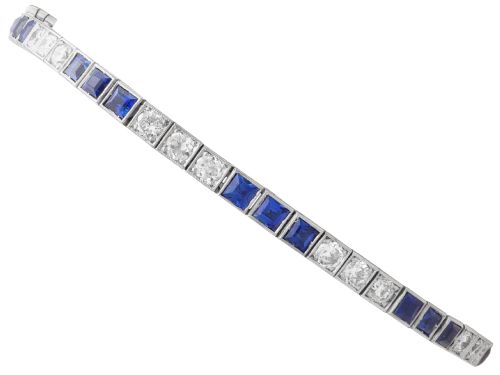
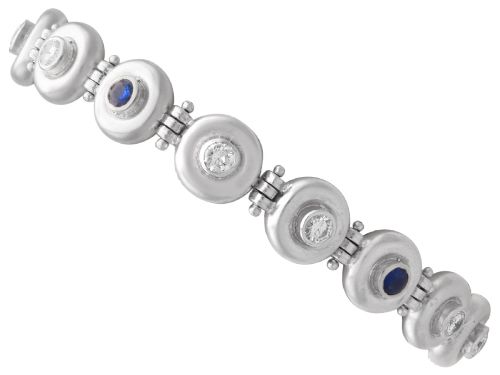
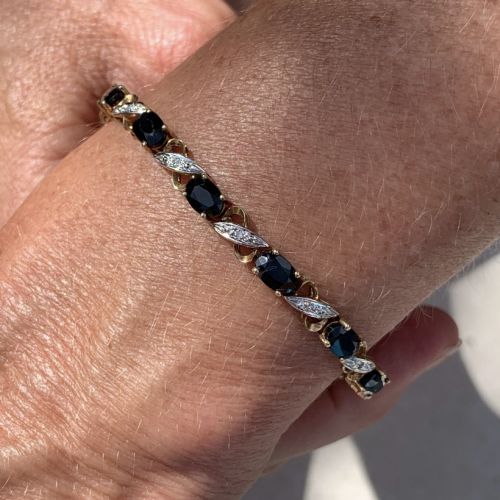
A blue sapphire bracelet brings together deep blue stones and precious metals across periods from Victorian to Mid-Century.
Blue Sapphire Bracelet
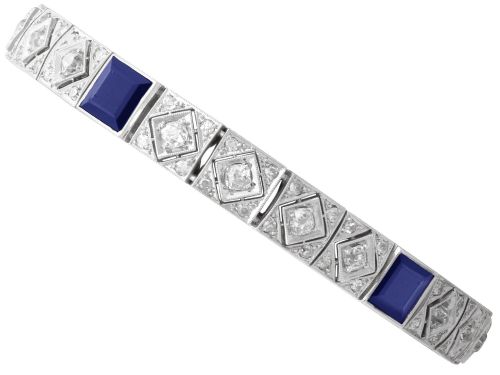
When you search for a blue sapphire bracelet, you encounter pieces spanning the Victorian, Edwardian, Art Deco, and Mid-Century eras. These items range from delicate seed pearl designs to substantial diamond and platinum line bracelets.
The most frequent examples on this page pair sapphires with diamonds in mountings of platinum, 18ct yellow gold, 18ct white gold, or 9ct gold. Forms include classic tennis bracelets and geometric Art Deco creations.
How they were made
The materials recorded in these pieces rely heavily on natural sapphires and diamonds set in platinum, 18ct yellow gold, 18ct white gold, 9ct rose gold, and standard 9ct gold. Pearls and seed pearls also appear as accent materials in earlier Victorian and Edwardian examples.
Goldsmiths and platinum workers utilised gemstone settings that secure central blue sapphires alongside diamond pavé or channel arrangements. Metalwork varies from heavy cast gold links to intricate platinum line structures typical of the 1920s and 1930s.
Blue Sapphire Bracelet Retail Price Guide 2026
Typical asking prices for blue sapphire bracelet among the pieces listed under this phrase on Sellingantiques today, from the lower quarter to the upper quarter. They describe what is for sale here now, not the wider market.
Materials documented across the pieces include sapphire, diamond, platinum, 18ct yellow gold, 9ct gold, 18ct white gold, and pearl.
What varies in quality
The distinction between standard examples and top tier pieces rests on gemstone weight, diamond carat totals, and the presence of certification for natural unheated stones such as Ceylon origins. Metal choice also dictates character, moving from heavier 9ct gold alloy settings up to fine platinum work.
Artistry in period pieces shows in the precision of geometric Art Deco mounting and the integration of substantial diamond carat weights alongside deep blue sapphire focal points.
The Blue Sapphire Bracelet Glossary
- Line bracelet
- A symmetrical bracelet featuring a continuous line of gemstones, often diamonds and sapphires set in platinum or gold. This style gained immense popularity during the Art Deco period.
- Ceylon sapphire
- A sapphire originating from Sri Lanka, known for a characteristic vivid blue hue. These stones frequently appear in mid-century and vintage fine jewellery.
- Seed pearl
- A very small, naturally occurring or cultured pearl used as an accent in Victorian and Edwardian jewellery. They provide a delicate contrast to deeper blue sapphires.
- Platinum
- A dense, durable precious metal utilised extensively in twentieth-century fine jewellery for secure gemstone settings. Its bright white lustre complements both diamonds and sapphires.
Blue Sapphire Bracelet: Frequently Asked Questions
How do I clean a sapphire bracelet?
Warm soapy water and a soft brush remove everyday debris from the metal and stones safely.
Avoid harsh chemical dips that might damage softer accent pearls or alter antique settings.
Are these sapphires treated?
Some listings specify natural unheated stones, while others feature standard historical gemstone treatments.
Certification details in specific listings provide exact laboratory findings regarding stone origins.
Can I wear an antique bracelet daily?
Sturdy platinum and gold mountings from the Edwardian and Art Deco eras handle regular wear with sensible care.
Pieces incorporating delicate seed pearls require more mindful handling during daily activities.
How do I identify an Art Deco bracelet?
Geometric symmetry, platinum settings, and linear diamond arrangements define the classic 1920s aesthetic.
Blue sapphires are frequently cut into square or baguette shapes to enhance this architectural style.