
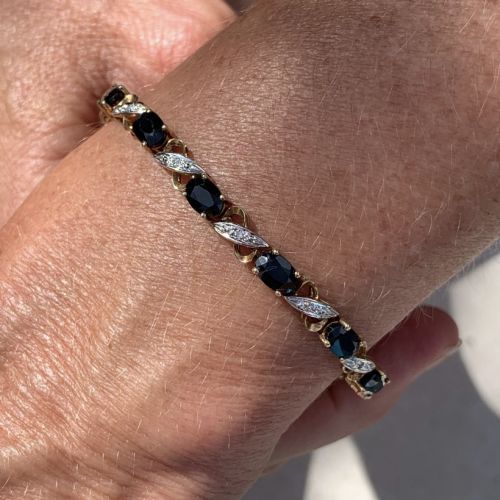


Antique Sapphire Bangle
An antique sapphire bangle brings together deep blue gems and precious metals across the Victorian, Edwardian, and Art Deco periods.
Antique Sapphire Bangle
An antique sapphire bangle offers a wrist ornament set with blue corundum, appearing across Victorian, Edwardian, and mid-century periods. These pieces range from hinged gold bangles set with seed pearls or diamonds to platinum line bracelets from the 1920s.
The selection includes pieces featuring natural unheated Ceylon stones, Burmese gems, and basaltic sapphires alongside accent diamonds and rubies. Forms span solid gold hoops to articulated gemstone lines spanning the decades from 1900 to 1950.
How they were made
Maker techniques combine gemstone setting with precious metal work in platinum, 9ct gold, 15ct gold, 18ct yellow gold, and rose gold. Stones are secured in claw or channel settings alongside old cut diamonds, pearls, and rubies.
Early twentieth-century pieces utilise platinum for intricate geometry, whilst Victorian and Edwardian examples employ yellow and rose gold to frame central sapphire clusters and star motifs.
The listings span from 1900 through to the 1950s, recording platinum, 9ct, 15ct, and 18ct golds paired with sapphires, diamonds, pearls, and rubies.
What varies in quality
Quality rests in the origin and clarity of the sapphire, from unheated Ceylon stones to standard commercial grades, paired with the carat weight and cut of accompanying diamonds. Metal selection also dictates grade, with platinum and higher-carat golds commanding greater substance.
Design complexity separates standard production from finer creations, evident in integrated multi-stone platinum layouts versus simpler nine-carat gold bands.
The Antique Sapphire Bangle Glossary
- Ceylon sapphire
- A sapphire originating from Sri Lanka, often noted for a vibrant cornflower blue hue. These stones frequently appear in mid-century and art deco pieces.
- Old cut diamond
- A diamond cut by hand before modern machinery, featuring a smaller table and higher crown. They display a characteristic softer candlelight sparkle in antique settings.
- Seed pearl
- A very small natural or cultured pearl, often used in clusters or borders around sapphires. Victorian and Edwardian pieces frequently incorporate them.
- Platinum
- A dense, durable white metal popular in fine jewellery from the Edwardian period onwards. It allows for delicate settings that securely hold diamonds and sapphires.
- Basaltic sapphire
- A sapphire originating from alkali basaltic rock sources, typically displaying deeper, darker blue tones. These stones appear in pieces from the nineteen-twenties.
Antique Sapphire Bangle: Frequently Asked Questions
How do I date an antique sapphire bangle?
Dating relies on the combination of metal choice, gemstone cut, and overall style. Platinum and geometric layouts point towards the nineteen-twenties and thirties, whilst yellow gold with seed pearls suggests Victorian or Edwardian origins.
Maker marks and gold carat stamps also assist in narrowing down the decade of production. Examining the construction of the hinge and clasp provides further clues to the period.
Are all sapphires in these bangles natural?
The pieces feature natural sapphire varieties, including unheated Ceylon stones and basaltic origins. Certification or historical descriptions often detail the specific geographical origin and treatment status of the gem.
Each stone reflects the geological sources utilised by jewellers across the Victorian, Edwardian, and mid-century eras. Testing confirms the natural formation of these blue corundum crystals.
What metals were commonly used?
Jewellers utilised platinum alongside 9ct, 15ct, and 18ct yellow and rose gold. Platinum gained prominence during the Edwardian and Art Deco periods for its strength and white lustre.
Earlier Victorian pieces rely heavily on various grades of gold to provide a warm backdrop for sapphires and diamonds. The choice of metal directly influences the weight and colour profile of the jewel.
How should I care for my bangle?
Preserving the piece involves gentle cleaning with warm soapy water and a soft brush, avoiding harsh chemical dips that might harm pearls or softer stones. Storage in a dedicated lined box prevents scratches from other jewellery.
Regular checks by a jeweller ensure the claws holding the sapphires and diamonds remain secure. Minimising exposure to knocks protects the structural integrity of antique hinges and fine metalwork.