
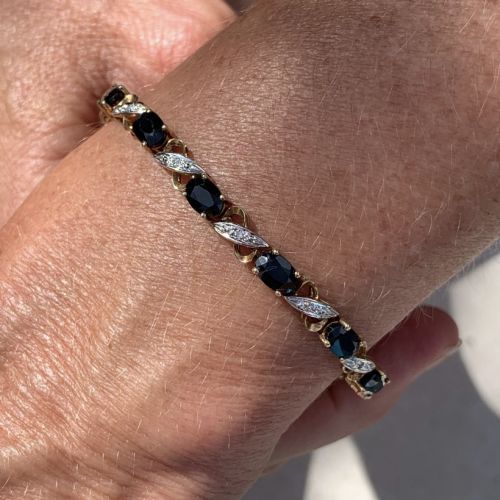


Sapphire Line Bracelet
A sapphire line bracelet brings together a continuous stream of matched stones in precious metal, offering wrist-bound colour that transitions easily from day to night.
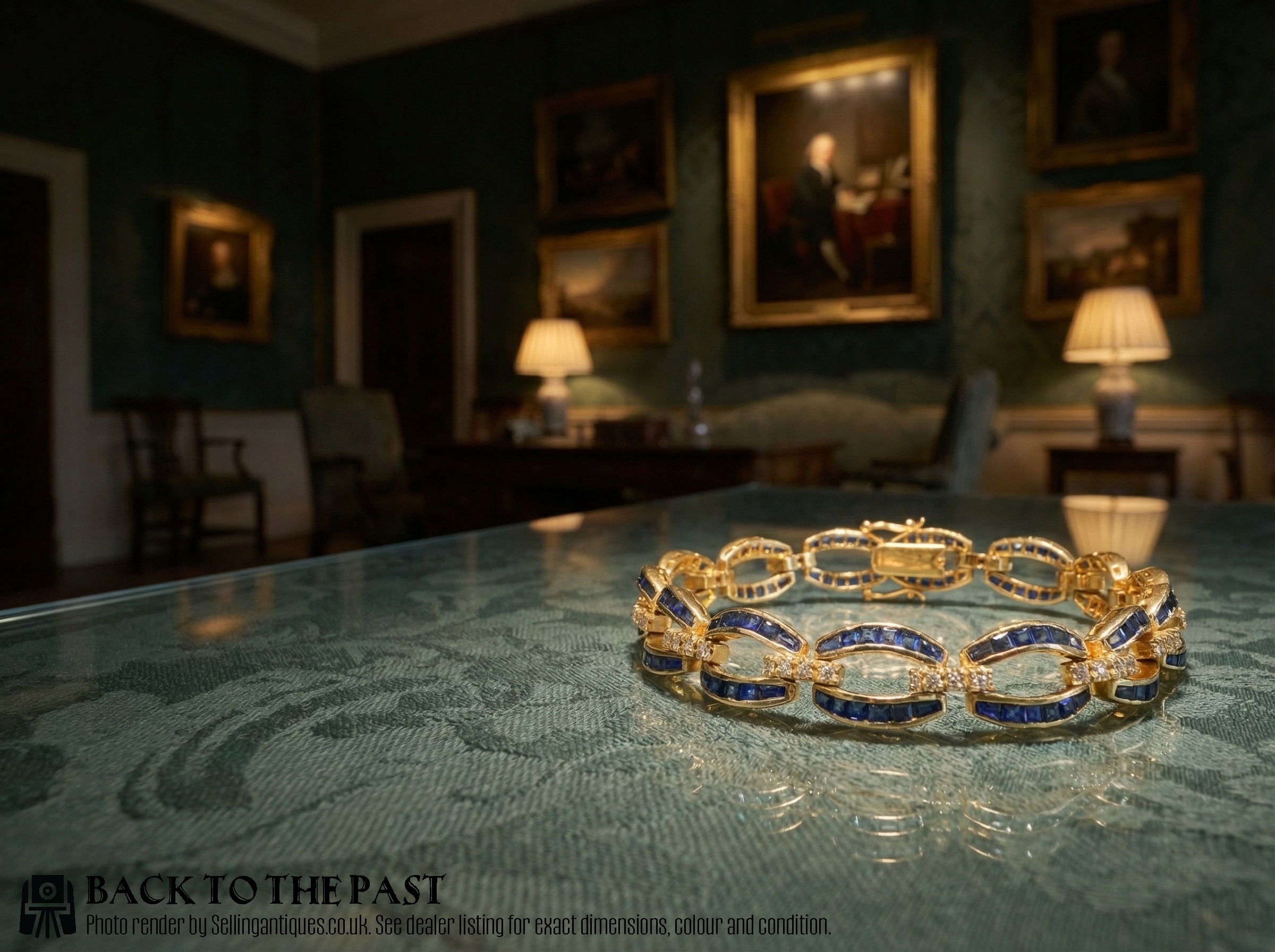
Sapphire Line Bracelet
A sapphire line bracelet spans several distinct historical eras, appearing in Victorian, Edwardian, and Art Deco designs alongside later mid-century iterations. Buyers searching for a sapphire line bracelet encounter continuous rows of calibrated stones set into precious metal frameworks designed to drape flexibly around the wrist.
The pieces on this page range from early twentieth-century platinum mounts to 9ct and 18ct gold settings. Forms vary from geometric Art Deco patterns to simpler ribbon mounts, incorporating diamonds alongside the central blue stones.
Assessing quality and craftsmanship
Quality rests upon the uniformity of the sapphires and the precision of the metalwork connecting each link. Better examples display matched colour saturation across every stone, coupled with secure articulating joints that prevent the bracelet from kinking or twisting during wear.
The integration of secondary diamond work also dictates the tier of the piece, with heavier carat weights and certified natural stones elevating the sophistication of the mount. Master jewellers ensured that the reverse of each link received the same careful finishing as the front.
Sapphire Line Bracelet Retail Price Guide 2026
Typical asking prices for sapphire line bracelet among the pieces listed under this phrase on Sellingantiques today, from the lower quarter to the upper quarter. They describe what is for sale here now, not the wider market.
Materials documented across the available inventory include platinum, 9ct gold, 18ct yellow gold, 18ct white gold, and rose gold.
The Sapphire Line Bracelet Glossary
- Line bracelet
- A continuous string of gemstones linked flexibly around the wrist. This format gained immense popularity during the twentieth century for its sleek silhouette.
- Art Deco
- A design style spanning the 1920s and 1930s characterised by geometric symmetry, stylised motifs, and extensive use of platinum. Pieces from this period favour sharp lines over flowing curves.
- Edwardian
- An ornate jewellery period lasting from the early 1900s until the First World War. Designs often mimic lace and garland work using platinum and delicate gold wire.
- Unheated sapphire
- A natural gemstone that has undergone no thermal enhancement to improve its colour or clarity. These stones are prized by collectors for their untutored geological origin.
- Calibrated stones
- Gemstones cut to uniform dimensions to fit precisely into a designed channel or cluster. This technique ensures a seamless visual flow without gaps in the metal.
Sapphire Line Bracelet: Frequently Asked Questions
How do I wear a line bracelet daily?
These flexible bands sit comfortably against the wrist, pairing easily with modern attire or evening wear. Their low profile makes them practical for regular use when secured with a reliable clasp and safety chain.
Store the piece flat in a lined box away from harder gems to prevent scratching the gold or platinum links.
What is the difference between Edwardian and Art Deco pieces?
Edwardian designs rely on intricate, lacy platinum work and delicate filigree that echoes nineteenth-century aesthetics. Art Deco pieces shift toward bold geometric patterns, stark symmetry, and streamlined architectural shapes.
Both styles utilise diamond and sapphire combinations, but the mounting techniques reflect the changing tastes of their respective decades.
Are these bracelets made from natural sapphires?
The inventory includes natural gemstones, with specific listings noting unheated origins or certified origins such as Ceylon. These stones display organic growth characteristics rather than laboratory creation.
Documentation provided with individual pieces often details the carat weight and gemological findings.
How can I tell the gold purity of my bracelet?
Goldsmiths typically stamped hallmarks onto the clasp or tongue of the bracelet to denote metal fineness such as 9ct or 18ct gold. Platinum mounts often bear distinct purity marks indicating their high metal density.
Examining these tiny stamps under magnification clarifies the material composition used by the original maker.