


Red Stone Necklace
A red stone necklace brings a flash of deep crimson to the collarbone, and these pieces offer genuine period character from the Victorian era onwards.
Red Stone Necklace
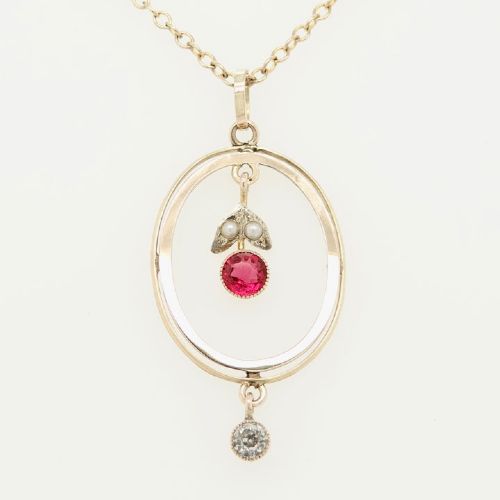
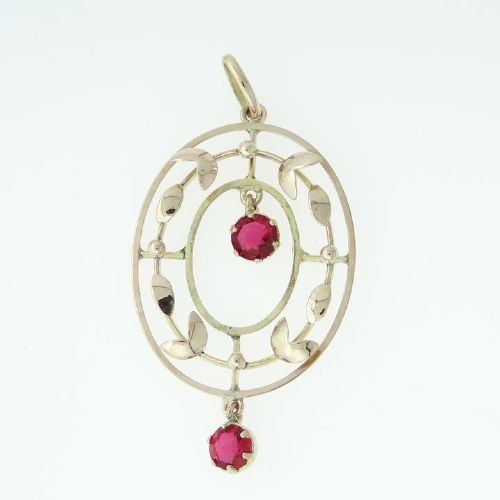
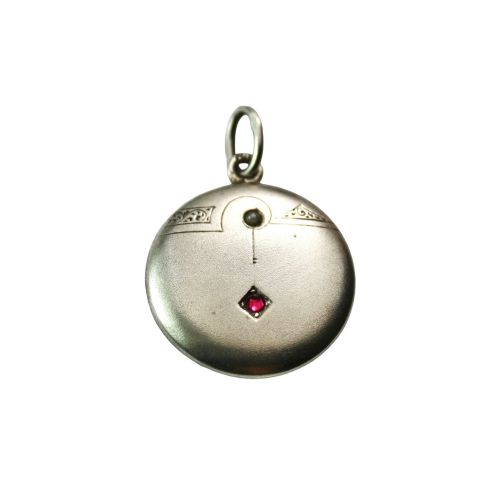
A red stone necklace encompasses everything from Victorian garnet fringe drops and Edwardian paste rivieres to bold Art Nouveau silver pendants set with coloured glass. Buyers exploring a red stone necklace typically encounter varied forms ranging from delicate gold pendants to substantial silver chains featuring red paste, garnet, or coral.
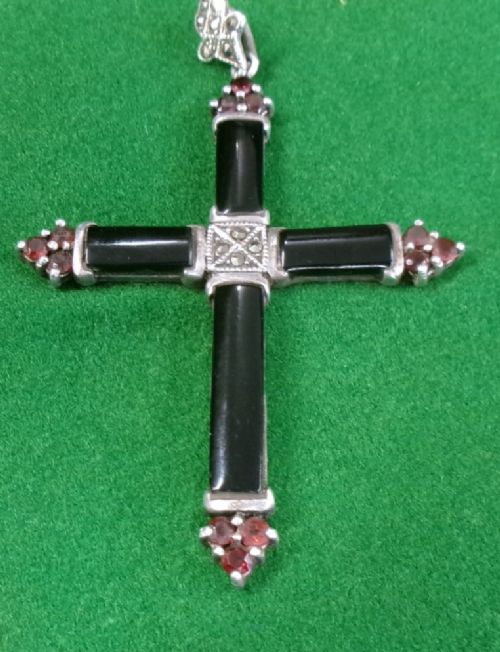
The pieces on this page span several distinct eras, notably the Victorian, Edwardian, and Art Deco periods, each bringing characteristic metalwork and stone-setting techniques. A red stone necklace can take the form of an elaborate fringe drop, a symbolic crucifix, or a simple gold pendant highlighting a central crimson cabochon.
Materials and construction
Construction techniques include delicate fringe drops, channel settings, and marcasite decoration, where small faceted marcasites are closely set in silver to frame the central red stones. Metal components such as T-bars and swivel fobs appear on pieces adapted from pocket watch chains into wearable necklaces.
Materials appearing across the inventory include natural Bohemian garnets, coral, seed pearls, onyx, and simulated ruby paste.
Distinctions in quality
Quality in these necklaces rests on the precision of the metalwork, the depth of colour in the stones, and the integrity of the original settings. Finer examples display crisp detail in Art Nouveau cast designs and secure bezel or prong work that holds each garnet or paste stone firmly.
The choice of materials also divides the range, with solid nine-carat gold and natural Bohemian garnets occupying a different tier from silver-gilt settings and simulated stones. Wear on the foil backings of older paste pieces or replacement elements on chains naturally influence the overall character of a piece.
The Red Stone Necklace Glossary
- Riviere necklace
- A continuous strand of identically cut gemstones or glass stones linked closely together. This style sits flat against the skin and catches the light with every movement.
- Paste
- Hand-cut and polished lead glass used to imitate precious gems. In antique pieces, paste is often backed with coloured foil to enhance its hue.
- Fringe drop
- A decorative arrangement of stones or metal elements suspended below the main chain or collar. This design creates movement and frames the neckline.
- Cabochon
- A gemstone shaped and polished with a smooth, convex surface rather than faceted edges. This cut is typical for opaque stones like coral and certain red rock crystals.
- Marcasite
- Small, faceted pieces of iron pyrite set into silver to provide a sparkling, dark metallic border. It gained immense popularity during the Victorian and Edwardian eras.
Red Stone Necklace: Frequently Asked Questions
How do I date a red stone necklace?
Dating relies on examining the metal hallmarks, the style of the clasp or chain, and the stone-cutting techniques employed by the maker. Victorian pieces often feature heavy gold or garnet clusters, whilst Edwardian designs lean towards lighter silver filigree and delicate paste work.
Changes in mount styles and the presence of converted elements like watch chains also provide clear chronological clues. Comparing the piece against known stylistic markers of the nineteen-hundreds helps narrow down its decade of origin.
Are these red stones real rubies?
Many red stones in these antique pieces are garnets, coral, or red paste rather than natural rubies. Past generations frequently utilised garnets and coloured glass to achieve a rich crimson appearance without the prohibitive cost of precious corundum.
Examining the stones under magnification reveals internal characteristics like natural crystal inclusions in garnets or tiny bubbles in glass paste. Each material brings its own distinct weight and lustre to the necklace.
Can I wear my necklace every day?
These antique necklaces benefit from gentle handling because delicate settings and foil-backed stones require protection from moisture and harsh impacts. Removing the necklace before swimming or heavy physical activity preserves the integrity of the gold, silver, and delicate seed pearls.
Storing each piece separately in a soft pouch prevents scratches between the metalwork and the stones. Regular, careful cleaning with a dry cloth keeps the metal bright without harming antique mountings.
What is an Albert watch chain necklace?
An Albert chain was originally designed to secure a pocket watch through a waistcoat buttonhole, featuring a central T-bar and a swivel fob. Victorians often repurposed these substantial silver and gold chains to be worn around the neck as statement necklaces.
These converted chains retain functional elements like dog clips and bloodstone fobs, adding distinct historical character to the piece. They offer a heavier, industrial weight compared to traditional lightweight neckchains.