


Gold Insect Brooch
A gold insect brooch brings naturalistic Victorian and twentieth-century design together in miniature.
Gold Insect Brooch
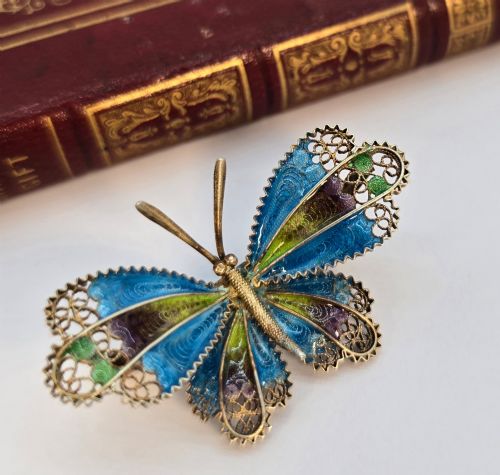
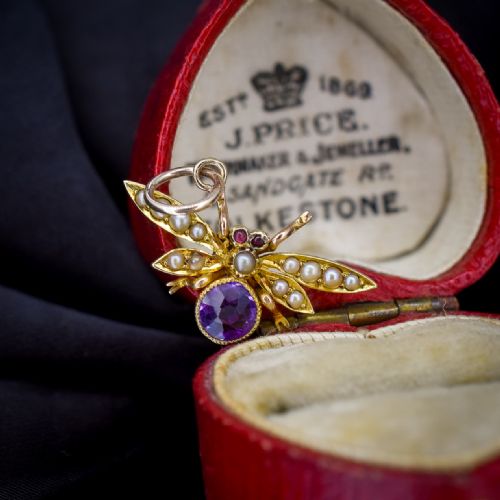
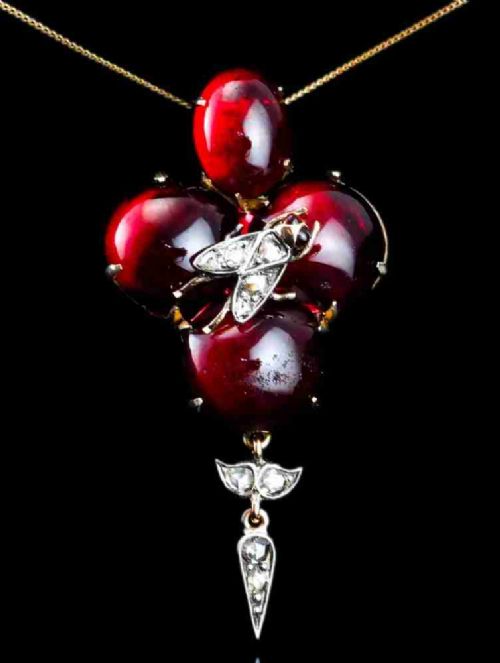
A gold insect brooch is a piece of fine jewellery taking the form of a fly, butterfly, beetle, dragonfly, spider, or bee. These ornaments emerge across the Victorian era, the Edwardian period, and into the 1930s. Buyers most frequently meet Victorian examples rendered in 9ct or 15ct gold.
The evidence shows these jewels serving multiple functions beyond a standard fastening. Many pieces double as pendants, while others take the form of hatpins. Forms range from simple bar brooches to convertible pendant brooches set with gems.
Origin and period vary across the selection, featuring French work alongside British pieces. Styles shift from naturalistic Victorian interpretations to Art Nouveau and Art Deco designs. The overarching subject remains the winged or multi-legged insect.
Materials and construction
Makers construct these jewels primarily in yellow gold, 14K gold, 15ct gold, 18ct gold, and 21ct gold, occasionally combining the metal with silver. Silver frequently mounts the gemstones to enhance their brilliance, particularly in Victorian pieces. Enamel and basaltic sapphire add colour to wings and bodies.
Gemstone selection defines the construction, incorporating diamonds, seed pearls, turquoise, sapphires, emeralds, rubies, amethysts, and labradorite. Rose cut diamonds and cabochon garnets appear alongside bloodstone and topaz. These varied stones map out the anatomy of the beetle, fly, or butterfly.
Materials span yellow gold, silver, diamonds, seed pearls, turquoise, sapphires, emeralds, rubies, amethysts, labradorite, bloodstone, and enamel across the Victorian, Edwardian, and 1930s periods.
Assessing the pieces
Quality rests on the precision of the stone setting and the naturalism of the insect form. Gems such as emeralds, sapphires, and diamonds must be securely flush-set or claw-set within the gold framework. The integration of materials, such as silver-topped gold, dictates the level of finish.
Artistic execution separates standard items from exceptional work, particularly in pieces by makers like Rene Lalique. The delicacy of the wings, the fidelity of the antennae, and the rarity of the gem combination elevate the piece. Convertible mounts and original boxes further distinguish the upper tier of the range.
Rene Lalique
The Gold Insect Brooch Glossary
- Cabochon
- A gemstone shaped and polished with a smooth, domed surface rather than being faceted. This cut appears frequently on garnets and turquoise in Victorian insect brooches.
- Rose cut
- A diamond cut featuring a flat base and a domed crown composed of triangular facets. It provides a subtle shimmer rather than modern brilliance.
- Seed pearl
- A very small, naturally occurring pearl, often drilled and strung or used en masse. These populate the delicate wings of Victorian butterfly and dragonfly brooches.
- Silver gilt
- Silver that has been coated with a thin layer of gold. This technique provides the cool colour of silver on the front while retaining a warm appearance.
- Convertible pendant
- A jewel engineered to be worn both as a brooch fastened to clothing and as a pendant suspended from a chain. Many insect designs utilise this dual function.
Gold Insect Brooch: Frequently Asked Questions
What periods do these gold insect brooches cover?
The available pieces span from the Victorian era through the Edwardian period and into the 1930s. Victorian examples form the largest group, often characterised by high-carat gold and rich gemstone combinations.
Later pieces move into Art Nouveau and Art Deco aesthetics, represented by makers such as Rene Lalique around 1912. Each period brings distinct shifts in metal purity and gemstone arrangements.
Which stones were used for the bodies?
Makers utilised a wide array of precious and semi-precious stones to depict the bodies and wings of insects. Turquoise, rubies, sapphires, emeralds, amethysts, and labradorite appear frequently in the settings.
Diamonds, both rose cut and brilliant, along with seed pearls, often highlight the wings or antennae. Bloodstone and garnet also contribute to the varied colour palette of these pieces.
Are these pieces marked with gold purity?
Many antique gold pieces carry hallmarks or stamps indicating the gold standard, ranging from 9ct and 15ct to 18ct and 21ct yellow gold. Some Victorian and Edwardian items may feature partial marks or rely on acid testing due to their age and delicate construction.
Silver and gold combinations, particularly in French pieces, often display historical control marks on the external mounts or pins.