
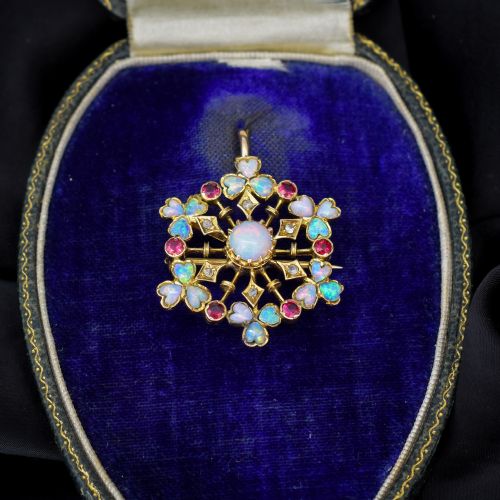
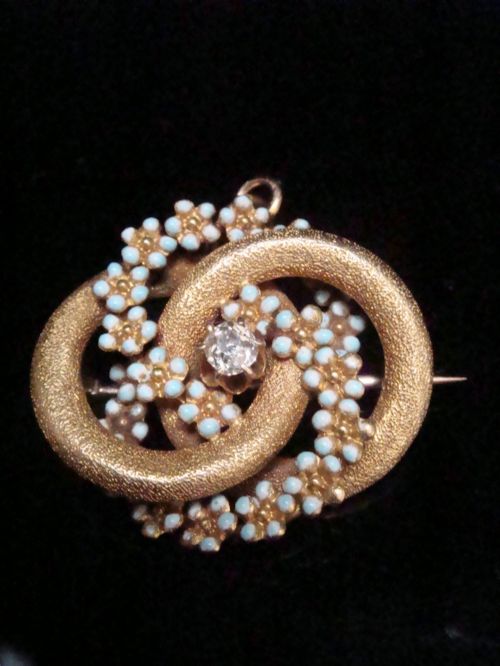
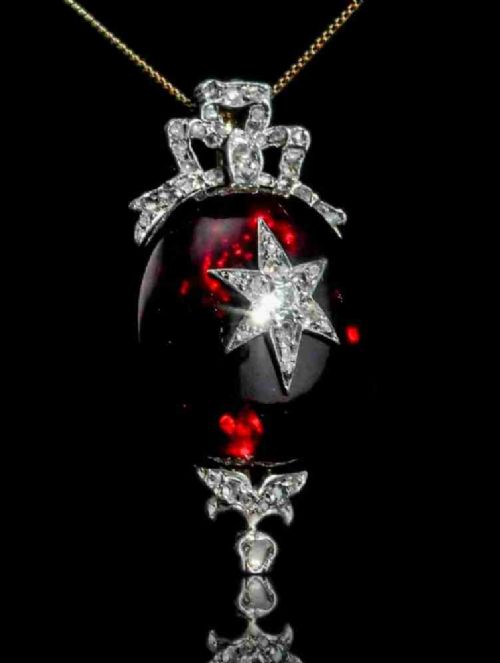


Victorian Convertible Pendant Brooch
A victorian convertible pendant brooch is dual-purpose jewellery that transitions effortlessly between a bodice fastening and a neck ornament.
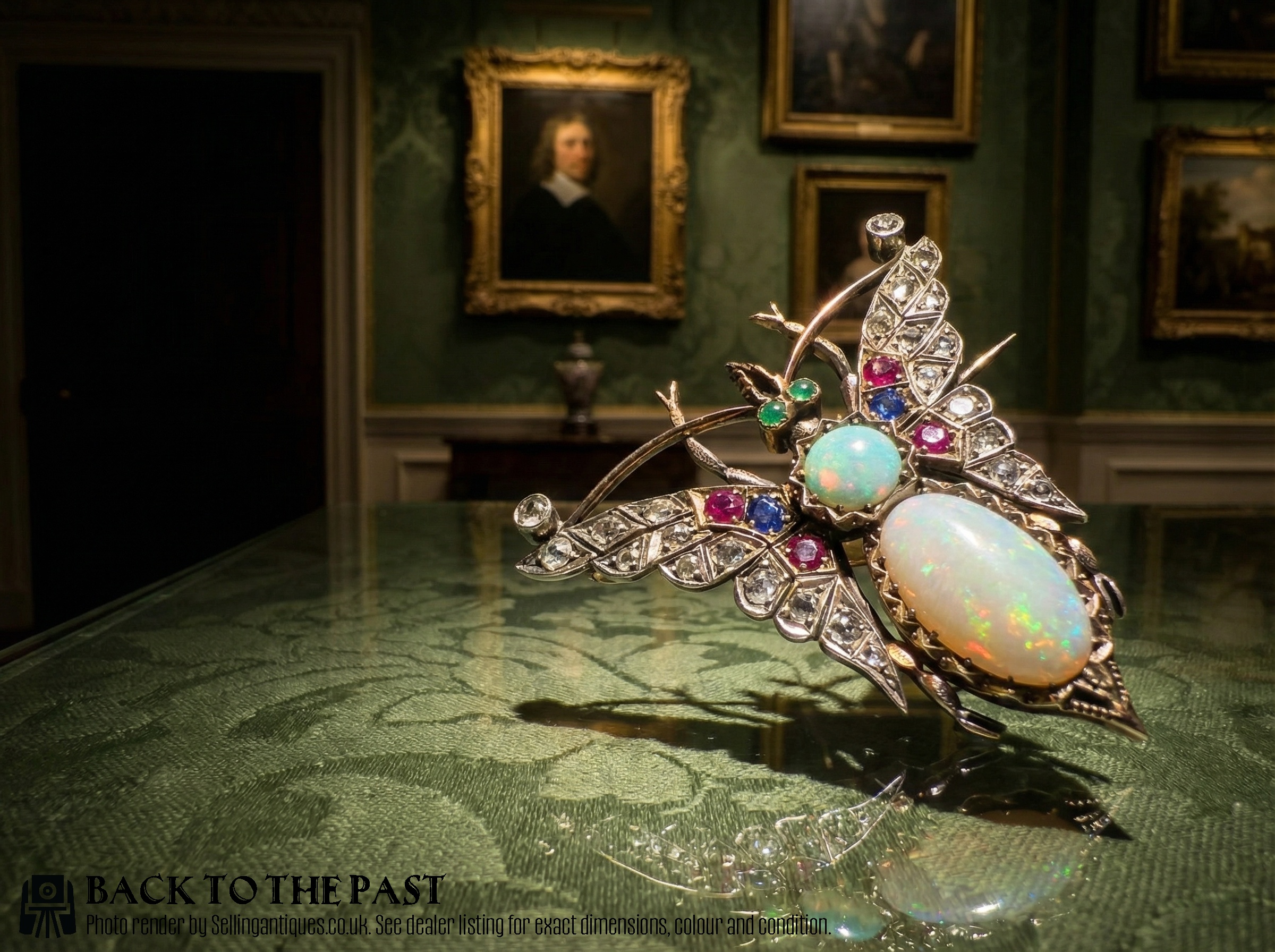
Victorian Convertible Pendant Brooch
A victorian convertible pendant brooch offers dual functionality by combining a secure pin fastening with a hidden or detachable loop for suspension on a chain. You will frequently encounter floral motifs, starbursts, bows, and insect forms across the pieces listed on this page.
The periods represented stretch from the nineteenth century into the Edwardian era, encompassing items from around eighteen seventy up to nineteen hundred. These jewels reflect a time when versatile ornamentation allowed the wearer to adapt a single high-value piece for daytime bodice wear or evening suspension.
Makers utilised various configurations, including drop pendants, tiara combinations, and necklaces that detach into standalone brooches. The forms rely on secure hinged bails and screw-in fittings to manage the transformation between brooch and pendant modes.
How they were made
Goldsmiths worked with twelve carat, fourteen carat, fifteen carat, and eighteen carat yellow gold, alongside silver settings designed to enhance the brilliance of mounted diamonds. Backings and structural mounts frequently combined gold and silver to support heavy gemstone arrangements.
Gemstone setting techniques involved foil backs, claw mounts, and closed-back bezel settings for stones such as natural opals, cabochon garnets, rubies, turquoises, and sodalites. Seed pearls and natural pearls were threaded or pegged onto gold frameworks, while diamonds were set into silver-topped gold to keep the metal colour bright against the stones.
The object forms include floral sprays, insects such as flies and butterflies, bows, forget-me-knots, and radiant starbursts.
What varies in quality
Quality depends upon the integration of the conversion mechanism, ensuring that the bail tucks away neatly or detaches cleanly without compromising the structural integrity of the main brooch frame. Superior examples conceal their hinges and loops so that the piece looks entirely natural in either configuration.
The choice and matching of gemstones dictate the upper tier of the range, particularly when natural opals, certified diamonds, and well-matched seed pearls or rubies are employed. Master jewellers balanced weight distribution carefully so the piece hangs evenly from a chain and sits flat against fabric when pinned.
The Victorian Convertible Pendant Brooch Glossary
- Cabochon
- A gemstone shaped and polished with a smooth, rounded surface rather than faceted. This style was particularly favoured for garnets and opals during the nineteenth century.
- Convertible jewellery
- Ornaments designed with removable or folding components that allow the wearer to change the function of the piece. In this category, items shift between a brooch and a pendant.
- Silver-topped gold
- A dual-metal technique where a thin layer of silver is soldered to a gold backing. This allowed jewellers to use white metal on the face for diamond settings while retaining the strength of gold underneath.
- Forget-me-knot
- A decorative motif shaped like knotted ribbon or floral stems symbolising enduring love and remembrance. It appears frequently in sentimental nineteenth-century designs.
- Starburst
- A radiating geometric motif set with diamonds or multi-coloured gems designed to catch candlelight. These pieces often feature collapsible loops to function as pendants.
Victorian Convertible Pendant Brooch: Frequently Asked Questions
Can I wear these everyday?
These items were built for formal nineteenth-century wear and require gentle handling due to their delicate silver-topped settings and organic gems like pearls and opals. Regular checks on the pin mechanism and bail security will prevent accidental loss.
Store them separately in lined boxes to protect softer stones and delicate gold work from abrasion.
How do I tell the periods apart?
Mid-nineteenth century pieces often showcase heavy garnet cabochons and closed-back settings, while items from around eighteen eighty to nineteen hundred lean towards brighter diamond starbursts and lighter silver-topped gold. Edwardian examples introduce finer ninety-carat gold frameworks with turquoise and pearls.
Pay attention to the complexity of the convertible mechanisms and the colour profile of the gold alloys used.
What is silver-topped gold?
It is a manufacturing method where silver is fused to the front of a gold base. Jewellers used this combination because silver provided a bright, white background that enhanced the sparkle of diamonds.
The gold underneath provided structural strength and prevented the silver from tarnishing against clothing.