


Pearl Cluster Brooch
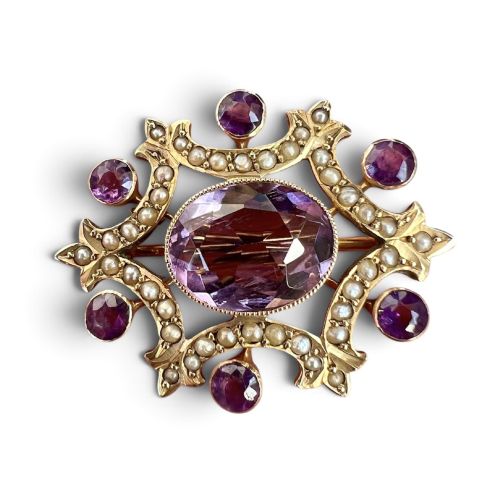
A pearl cluster brooch brings together lustrous pearls and coloured gems in intricate antique gold settings.
Pearl Cluster Brooch
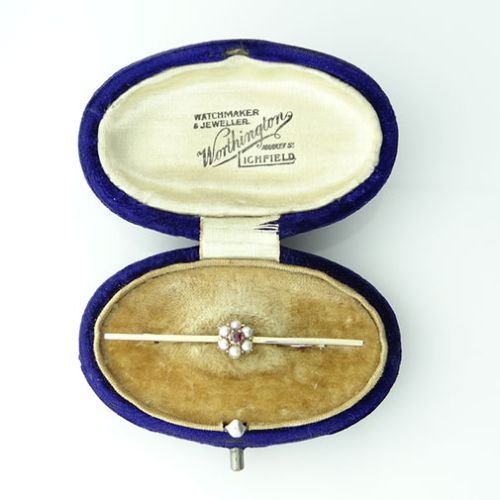
A pearl cluster brooch is a decorative pin featuring a central gemstone or pearl surrounded by smaller pearls, creating a distinct cluster formation. When you search for a pearl cluster brooch, you encounter pieces spanning from the Georgian and Victorian eras through to the Edwardian and mid-century periods.
How they were made
Gold forms the structural base of these jewels, appearing in nine-carat, fifteen-carat, and eighteen-carat purity alongside silver gilt settings. Goldsmiths shaped the metal into detailed bar designs, target frames, and star motifs to hold the central stones securely.
Seed pearls and natural pearls are meticulously mounted alongside gemstones like amethysts, garnets, peridots, and diamonds. Metalwork techniques of the period include fine wirework and claw settings that accentuate the contrast between the white pearls and coloured gems.
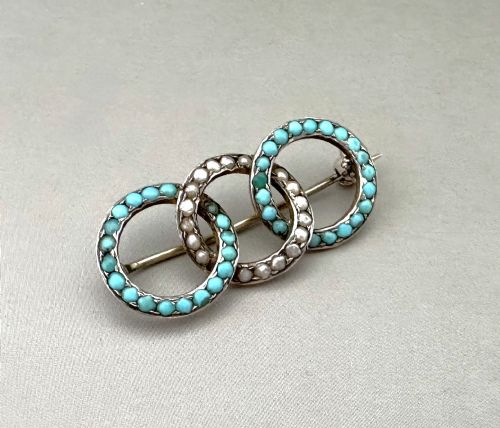
The selection includes seed pearls combined with coloured stones such as amethyst, garnet, peridot, sapphire, sodalite, and diamond.
What varies in quality
The sophistication of the metalwork and the uniformity of the pearls dictate the standing of an individual piece. Goldsmiths who invested greater labour into intricate claw work and balanced stone arrangements produced superior jewels.
The choice of accompanying gemstones, such as well-matched amethysts, deep garnets, or substantial diamonds, elevates the overall execution. Pieces that retain their original convertible mountings for pendants demonstrate higher craftsmanship.
Mikimoto
The Pearl Cluster Brooch Glossary
- Seed pearl
- A very small natural or cultured pearl, typically under two millimetres in diameter. These tiny pearls were frequently strung or clustered tightly to frame larger central gems.
- Target brooch
- A circular brooch design featuring concentric rings of stones radiating outwards from a central point. This style was particularly favoured during the Edwardian period.
- Bar brooch
- A horizontal metal pin featuring gemstones or pearls mounted along a slender bar. They were widely worn at the necklines of blouses during the late nineteenth and early twentieth centuries.
- Almandine garnet
- A deep red variety of garnet rich in iron and aluminium. It is commonly found in Victorian cluster jewellery.
- Silver gilt
- Silver that has been coated with a thin layer of gold. This technique provided the bright appearance of gold while utilising silver for specific structural or aesthetic effects.
Pearl Cluster Brooch: Frequently Asked Questions
How do I wear a pearl cluster brooch?
These pieces pin securely to heavy fabrics like wool coats, scarves, and structured jacket lapels. Many examples also incorporate hidden loops that allow them to suspend from chains as pendants.
Because pearls are delicate organic gems, attach the brooch after applying perfumes and hairsprays to protect their lustre. Store the piece flat in a lined box away from harder jewellery items to prevent surface scratching.
How can I tell a Victorian brooch from an Edwardian one?
Victorian brooches generally feature heavier, warmer yellow gold settings with deeper gemstones like garnets and amethysts. The metalwork often feels robust and substantial, reflecting the tastes of the nineteenth century.
Edwardian pieces tend to display lighter, airier designs with target motifs, star patterns, and bright seed pearls paired with diamonds. The aesthetic shifts towards delicate openwork and platinum or white metal accents.
What is a convertible brooch?
A convertible brooch is a versatile piece of jewellery designed to function as both a brooch and a pendant. These jewels feature integrated loops or detachable bails on the reverse.
This dual functionality made them popular investments for buyers who wanted to vary how they displayed their jewellery across different outfits and occasions.
Are these pearls natural?
Many antique pieces from the Victorian and Edwardian eras incorporate natural saltwater or freshwater seed pearls formed organically without human intervention. The listings reflect materials of the period including both natural pearls and cultured varieties.
Examining the pearls under magnification reveals subtle irregularities in shape and lustre that distinguish them from uniform modern factory-made alternatives.