
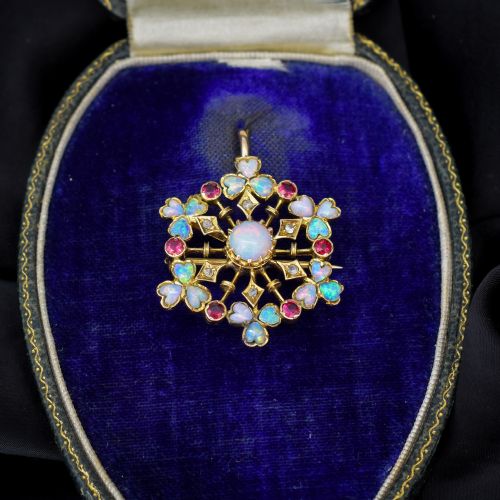
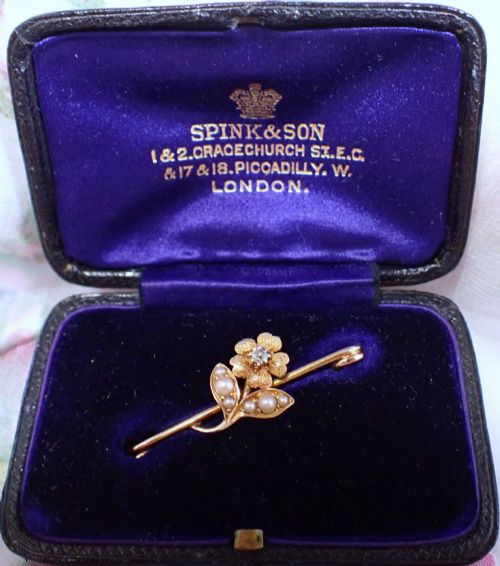


Diamond Flower Brooch
A diamond flower brooch brings botanical brilliance to lapels, combining precious gems and refined metals across Victorian, Edwardian, and Art Deco periods.
Diamond Flower Brooch
A diamond flower brooch takes botanical form, frequently emerging in Victorian, Edwardian, and Art Deco periods to celebrate natural motifs in wearable jewellery. These pieces frequently double as pendants, offering versatile wear across different garments and chains.
The selections available span from delicate floral sprays to bold cluster heads, often integrating pearls, rubies, sapphires, or opals alongside central diamonds. Buyers most commonly encounter Victorian and Edwardian examples set in combinations of gold and silver.
Makers shaped these jewels utilising yellow gold, rose gold, and silver-topped gold to enhance the brilliance of old cut and rose cut diamonds. The configuration ranges from single blossoms to elaborate multi-gemstone bouquets.
Materials and construction
Goldsmiths and jewellers combined yellow gold, rose gold, and silver to fabricate these botanical jewels, often mounting stones in silver over gold to maximise stone whiteness. The integration of fifteen-carat and eighteen-carat gold provided structural integrity for intricate petal and stem work.
Gemstone setting relied on hand-cut diamonds, including old cuts and rose cuts, supplemented by pearls, garnets, rubies, and sapphires. Enamel also appeared in select pieces to introduce vivid colour to petals and leaves.
Several floral brooches covertly double as pendants, ensuring your blooms can migrate from lapel to chain at a moment's notice.
Assessing quality in floral jewels
Quality rests in the precision of the botanical rendering, where lifelike petal arrangement and naturalistic stem work distinguish superior examples. The harmony between the selected gemstones and the underlying metal structure determines the overall refinement of the piece.
The weight, cut, and matching of the diamonds dictate the optical impact of the blossom, while secure settings and original conversions between brooch and pendant formats preserve the integrity of the design.
The Diamond Flower Brooch Glossary
- Old cut
- A vintage diamond cutting style characterised by a small table, high crown, and large culet, designed to catch candlelight.
- Rose cut
- A gemstone cut featuring a domed top covered in triangular facets and a flat base, resembling an unopened rosebud.
- Silver-topped gold
- A historical technique where silver was soldered to a gold backing, presenting a white metal surface for stones while retaining gold strength.
- Bar brooch
- A slender horizontal pin format popular in the late nineteenth and early twentieth centuries, often centred with a floral cluster.
Diamond Flower Brooch: Frequently Asked Questions
How do I wear a brooch as a pendant?
Many floral brooches feature integrated or folding loops behind the central frame that accommodate a chain for neckwear.
This dual function allows the piece to transition seamlessly from a lapel pin to a necklace pendant without altering the antique mount.
What periods do these brooches come from?
The pieces span the Victorian, Edwardian, and Art Deco eras, alongside French Second Empire examples from the mid-nineteenth century.
Victorian and Edwardian items predominate, showcasing transitional styles from sentimental floral clusters to lighter, diamond-heavy garlands.
How do I distinguish Victorian from Edwardian pieces?
Victorian brooches often incorporate heavy yellow or rose gold settings, sometimes paired with gemstones like garnets, opals, or rich enamels.
Edwardian items favour platinum or silver-topped gold with lighter pierced frameworks, emphasising bright diamonds and pearls.
Are coloured gemstones common in these floral designs?
Coloured stones frequently accent the diamond petals, with rubies, sapphires, opals, and carbuncle garnets appearing as central stamens or complementary blooms.
Enamel is also utilised to introduce realistic botanical hues to leaves and petals alongside precious stones.