


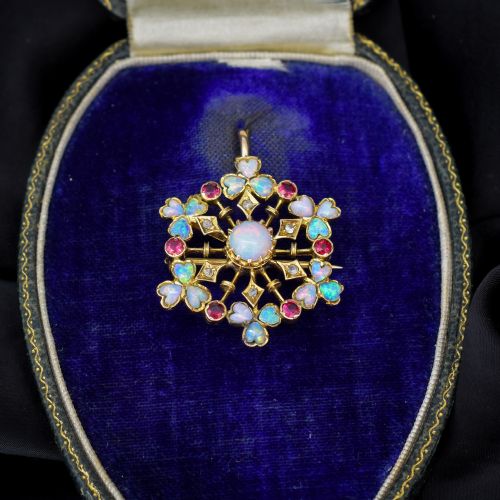
Antique Brooch Pin
An antique brooch pin fastens clothing while displaying the distinct periods, precious metals and gemstones of past centuries.
Antique Brooch Pin
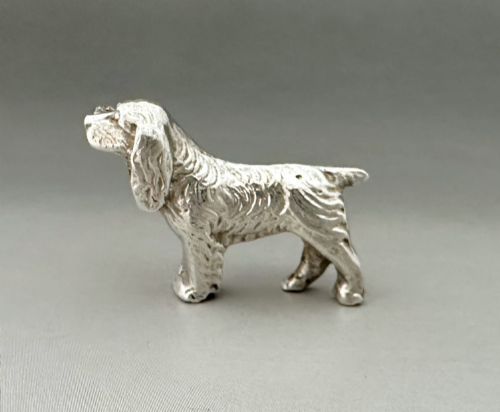
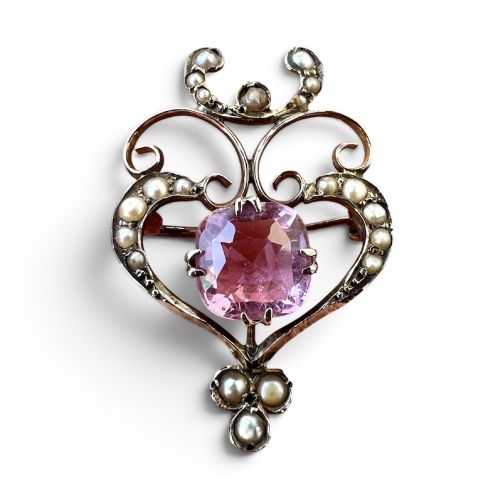
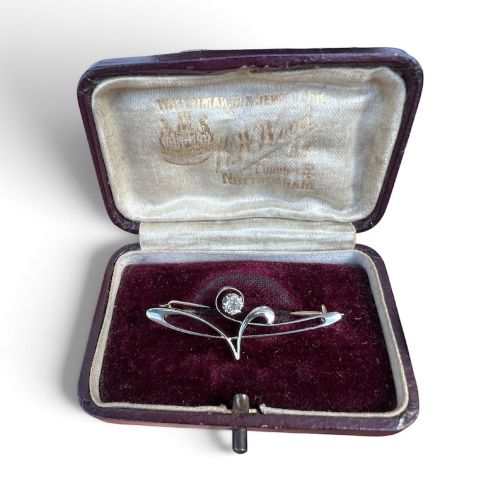
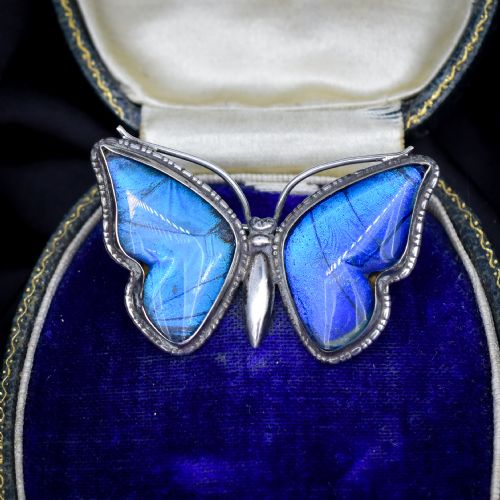
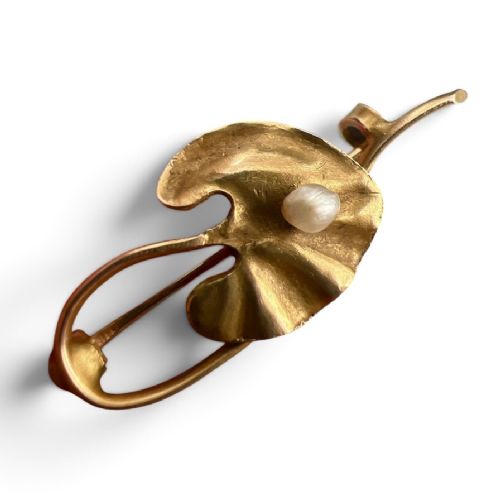
An antique brooch pin encompasses various wearable ornaments fastened with a pin stem and catch, historically pinned to lapels, bodices, hats and cravats. The selection spans structural bar brooches, floral sprays, locket compartments, animal motifs and delicate stick pins.
The pieces originate from diverse design eras, most notably the Victorian, Georgian, Edwardian, Art Nouveau and Art Deco periods. Silver and gold form the foundation of these ornaments, frequently embellished with seed pearls, diamonds, coloured gemstones and enamel.
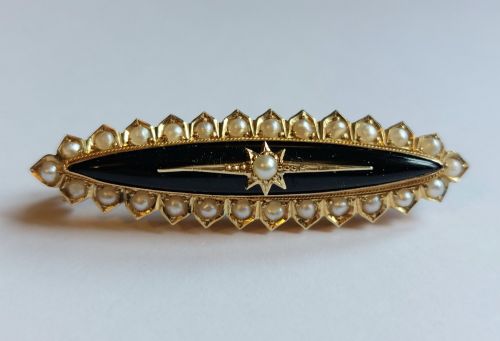
Buyers encounter everything from Scottish pebble brooches set in silver to platinum geometric creations of the 1920s. Simpler paste-set pieces sit alongside substantial 15ct gold mourning and floral designs.
How they were made
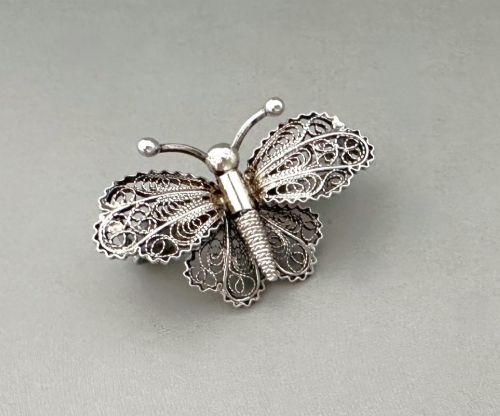
Metalsmiths shaped sterling silver, 9ct, 15ct and 18ct gold through casting, wire-work and filigree construction, occasionally applying silver gilt or platinum tops. Stones were secured via claw settings, bezel mounts or flush gypsy settings depending on the period style.
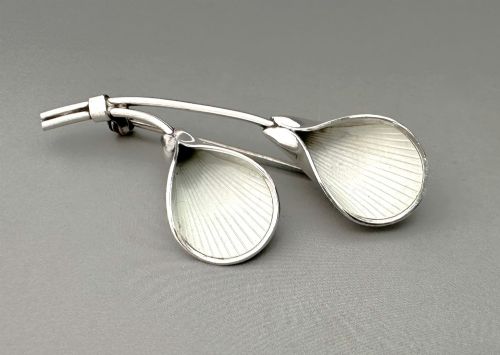
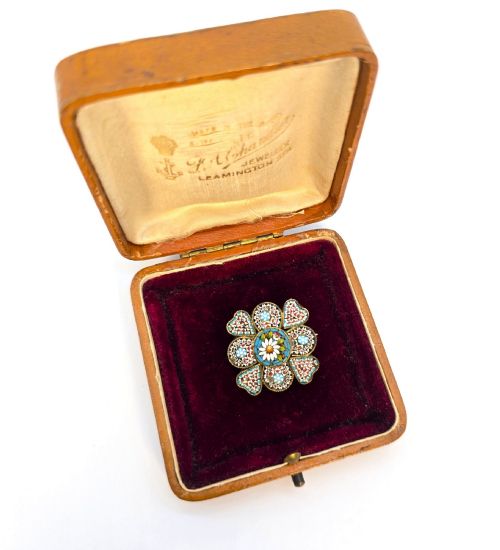
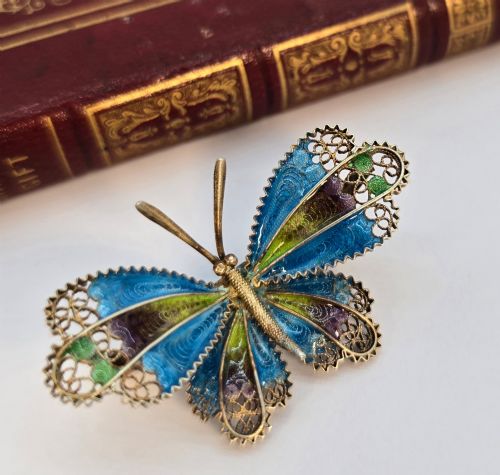
Enamelling techniques like guilloche added translucent colour over engine-turned metal bases, while micro mosaics required countless tiny glass tesserae assembled by hand. Natural materials such as agate, moss agate, turquoise, coral and pearls were shaped and polished to form centrepieces.
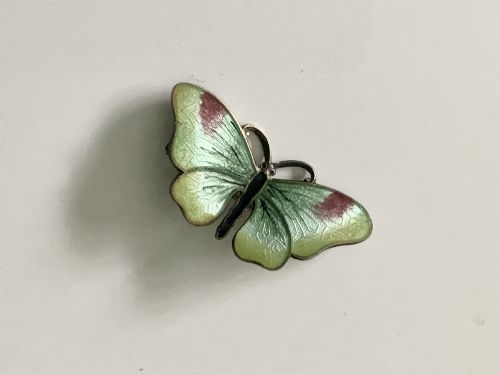
The inventory spans Victorian mourning pieces, Edwardian floral bar brooches, Art Deco geometric platinum work and mid-century Scandinavian enamel.
What varies in quality
Construction intricacy separates standard production from exceptional works, visible in hand-engraved details, articulated components and well-matched natural gemstones. The selection of materials dictates the tier, where genuine diamonds, natural opals and high-carat gold elevate a piece above base metal and glass paste.
Condition and originality play a significant part, maintaining secure pin mechanisms, undamaged enamel and intact stone settings without replacement elements. Maker attribution, such as signed work or distinctive regional Scottish pebble-work, marks a higher degree of craftsmanship.
A H Darby And Son·Charles Horner·Liberty London
The Antique Brooch Pin Glossary
- Bar brooch
- A horizontal metal rod forming the primary structure of the ornament, often mounted with gemstones or central motifs. These linear designs were especially popular during the Victorian and Edwardian eras.
- Guilloche enamel
- Decorative metalwork covered with translucent enamel over an engine-turned mechanical pattern. This technique creates a repeating geometric wave or ray effect beneath the coloured glass.
- Paste
- Hand-cut and polished lead glass used to imitate gemstones. High-quality antique paste is faceted by hand and foiled at the back to enhance brilliance.
- Seed pearl
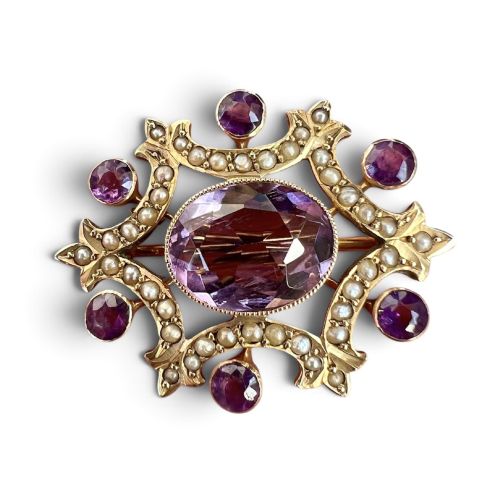
- Very small natural or saltwater pearls, typically unperforated or half-drilled, clustered to form floral or crescent shapes. They are characteristic of Victorian and Edwardian romantic jewellery.
- Micro mosaic
- Miniature pictures assembled from microscopic glass tesserae fused together with enamel paste. These detailed Italian souvenir pieces frequently depict historical ruins or animals.
Antique Brooch Pin: Frequently Asked Questions
How do I wear an antique brooch pin today?
These pieces attach securely to heavy coat lapels, knitted cardigans, scarves and silk blouses using their original pin stems and safety catches. Placing them on collars or waistbands provides an alternative method of styling heritage jewellery.
Heavier items require sturdy fabrics to prevent sagging, while lighter bar pins and stick pins suit delicate textiles when secured properly through multiple threads.
What is a mourning brooch?
Mourning jewellery was created to commemorate deceased loved ones, frequently incorporating black onyx, dark enamel, seed pearls and woven human hair placed beneath a glass compartment. These pieces served as personal tokens of remembrance during the Victorian period.
The inclusion of symbolic motifs like forget-me-knots or weeping willows distinguishes them from standard decorative ornaments of the same era.
How do I date an antique brooch?
Dating relies on material composition, gemstone cuts, fastening mechanisms and stylistic hallmarks characteristic of specific reigns and design movements. Georgian pieces often feature foiled rose-cut stones in closed-back settings, whereas Edwardian items favour platinum and light open-work filigree.
Assay office marks, maker stamps and registered design numbers stamped onto the reverse provide precise chronological markers where available.
What is a Scottish pebble brooch?
Scottish pebble brooches utilise native hardstones such as agate, jasper, citrine and bloodstone sourced from Scottish rivers and hills. These multicoloured stones were cut, polished and mounted in silver, often taking the form of dirks, shields or Celtic luckenbooths.
Queen Victoria popularised these regional pieces following her frequent visits to Balmoral, leading to widespread production during the nineteenth century.