



1920s Floral Jewellery
These 1920s floral jewellery pieces capture botanical forms in precious metals and gems, offering wearable blossoms that define interwar elegance.
1920s Floral Jewellery
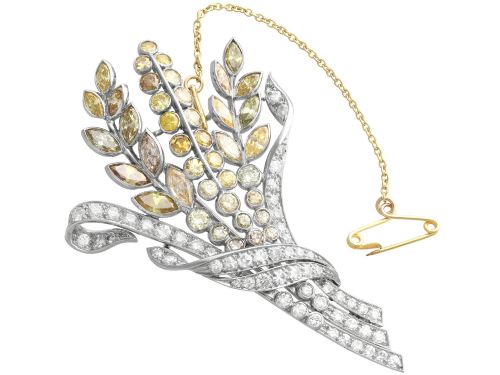
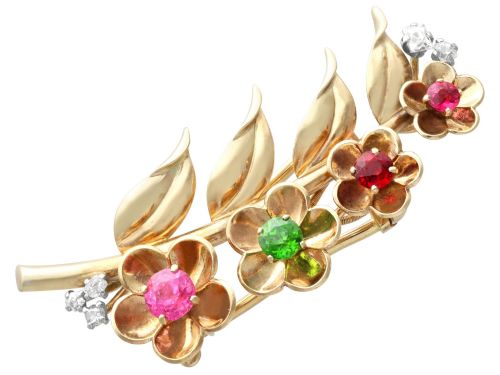
When you search for 1920s floral jewellery, you encounter wearable botanical motifs rendered as rings, brooches, pendants, and necklaces from the 1920 and 1930 periods. The selection on this page relies heavily on diamond daisy cluster rings and flower spray brooches.
Makers and designers of these items worked within distinct aesthetic movements, notably Art Deco and Skønvirke. Pieces range from Danish silver cape clips to elaborate gemstone pendants incorporating garnets, peridot, spinels, and cultured pearls.
How they were made
Craftsmen utilised precious metals including platinum, palladium, silver, yellow gold, and 18ct white gold to form the structural foundations of these botanical settings. Stones such as diamonds, sapphires, and multi-gemstones were secured to articulate petals, leaves, and stems.
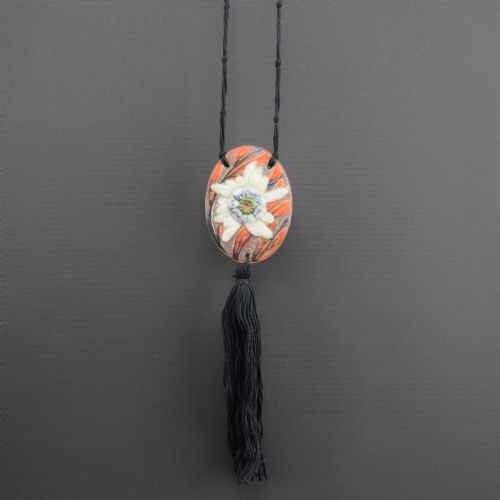
Specialised techniques include pate de verre glass production, as seen in sea thistle and rose pendants, alongside detailed marcasite work and intaglio cutting on teardrop pendants.
1920s Floral Jewellery Retail Price Guide 2026
Typical asking prices for 1920s floral jewellery among the pieces listed under this phrase on Sellingantiques today, from the lower quarter to the upper quarter. They describe what is for sale here now, not the wider market.
The listings span the 1920 and 1930 periods, incorporating materials from platinum and palladium to pate de verre glass.
What varies in quality
Quality rests on the selection and weight of the set stones, such as substantial diamond carat counts in platinum or white gold mountings, compared to smaller multi-gemstone combinations in yellow gold. The precision of the botanical form, from naturalistic flower sprays to geometric daisy clusters, dictates the overall execution.
The choice of medium introduces distinct tiers of quality, ranging from intricate pate de verre glasswork and certified pearl strands with sapphire and diamond clasps to cast silver and marcasite components.
Cartier·Argy Rousseau
The 1920s Floral Jewellery Glossary
- Art Deco
- A design style characterised by geometric symmetry and stylised motifs that emerged during the interwar years. It heavily influenced the setting of diamonds in rings and brooches.
- Pate de verre
- A glass-making method where crushed glass is packed into a mould and fused in a kiln. This technique produced translucent coloured pendants shaped like roses and sea thistles.
- Daisy cluster
- A ring or earring configuration featuring a central stone encircled by a ring of smaller stones resembling flower petals. This form is common in diamond and gold engagement rings.
- Marcasite
- Small faceted polished pieces of iron pyrite set into silver mounts to provide a shimmering metallic border. It frequently frames intaglio teardrop pendants.
- Skønvirke
- A Scandinavian design movement contemporaneous with Art Nouveau that focused on craft and nature. It appears in Danish silver brooches and cape clips.
1920s Floral Jewellery: Frequently Asked Questions
How do I wear a floral brooch?
Pin flower spray brooches and silver cape clips onto jacket lapels, heavier knitwear, or scarves to secure fabric while displaying the botanical form.
Heavier platinum or gold brooches require sturdy cloth to support their weight without pulling the fabric.
What is a daisy cluster ring?
A daisy cluster ring arranges smaller diamonds or coloured gemstones around a central stone to mimic a natural blossom.
These pieces were frequently utilised as engagement rings during the 1920 and 1930 periods.
How do I care for pate de verre?
Pate de verre glass pendants require gentle handling to protect the fused glass material from impact and harsh chemical cleaners.
Store these delicate pieces separately in lined boxes away from harder metal jewellery.
How do I date these items?
Dating relies on material combinations like platinum and white gold alongside characteristic Art Deco or Skønvirke design traits.
Documentation such as gemological certificates can also confirm the period of manufacture.