


Cabochon Garnet Pendant
A cabochon garnet pendant brings deep red depth to the neckline, shaped by Victorian, Edwardian and later hands.
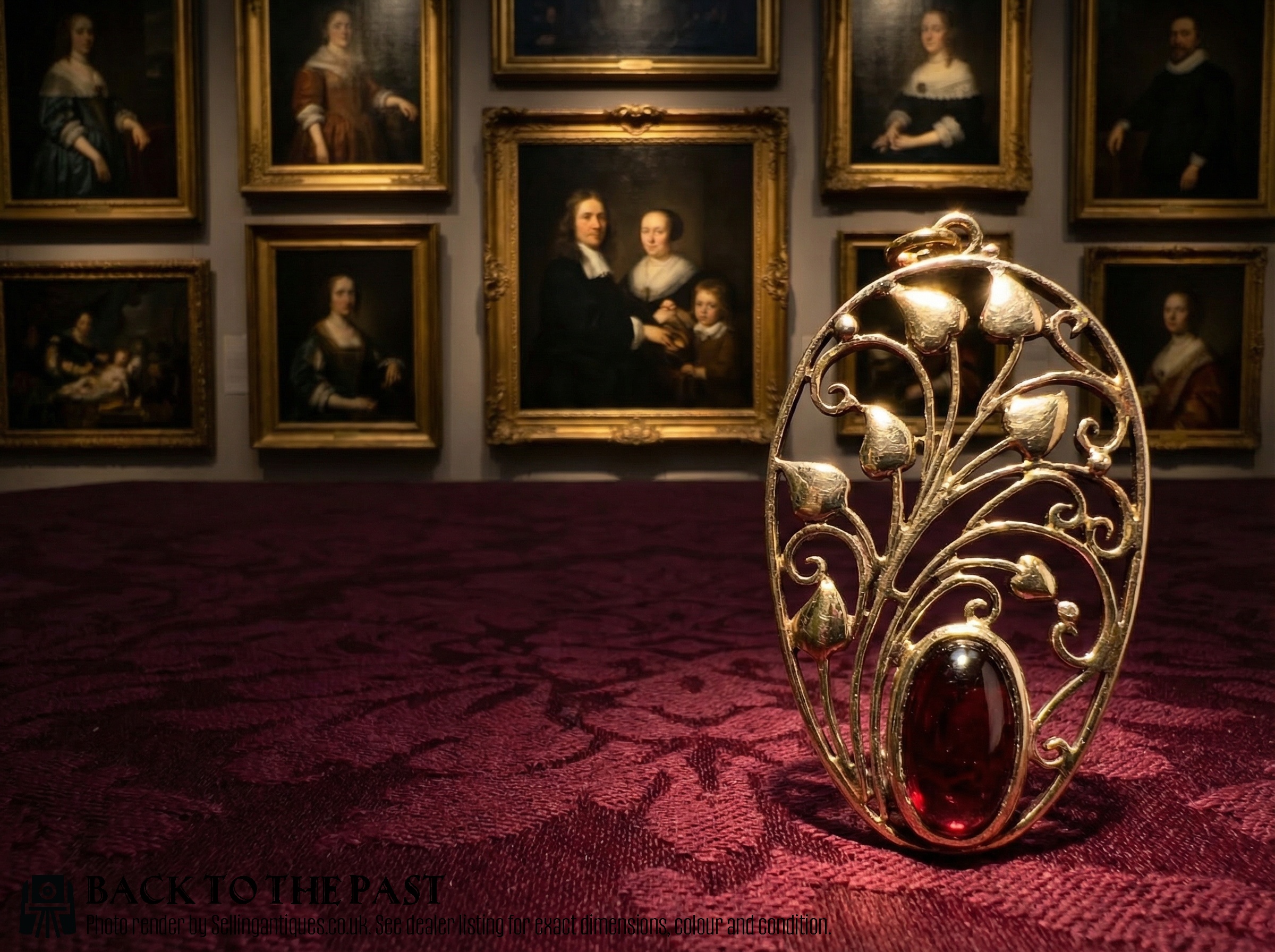
Cabochon Garnet Pendant
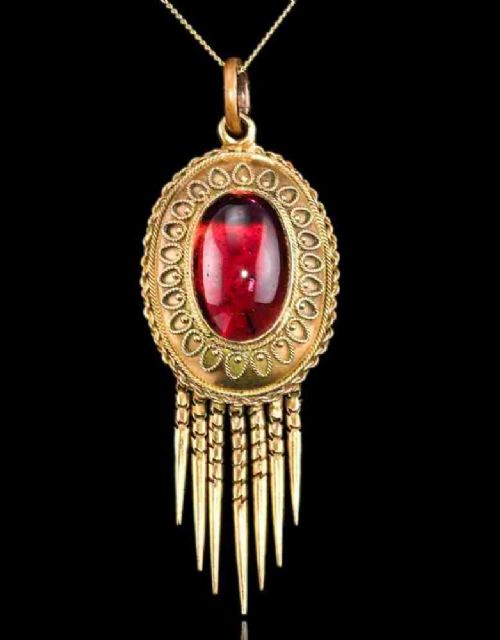
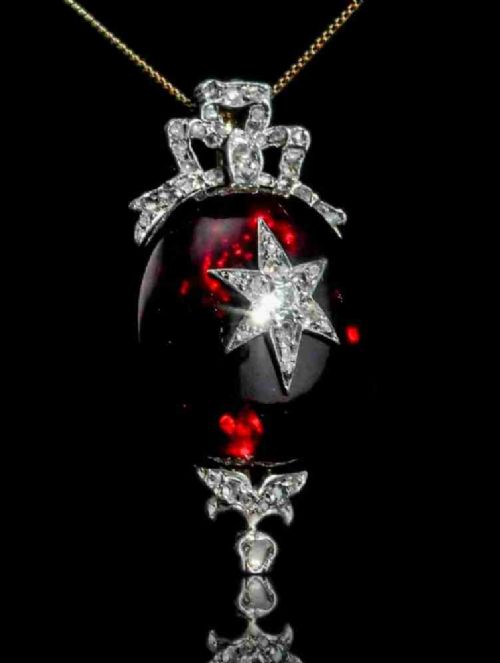
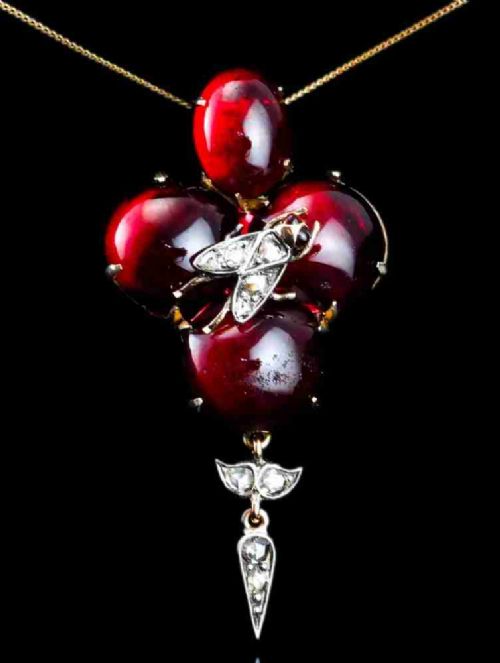
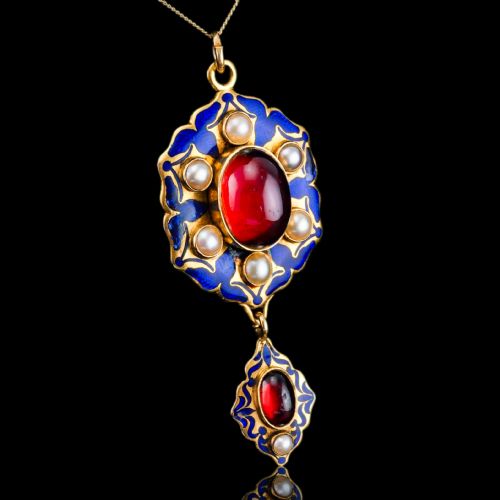
The styles span Etruscan Revival, Renaissance Revival, Art Nouveau and Arts & Crafts, showing how makers adapted the smooth, polished stone across decades. Simpler drop versions and elaborate cluster designs with pearls or diamonds appear regularly.
Conversions from brooches to pendants are common in this category, reflecting how modern wearers adapt historical pieces for everyday use. The scale ranges from delicate single stones to substantial high-carat gold centrepieces.
How they were made
Goldsmiths set cabochon garnets into bezels or open-back settings of nine-carat, fifteen-carat or eighteen-carat gold, as well as silver. Many Victorian examples utilise high-carat yellow or rose gold to complement the warm tones of the stone.
Enamelling, pearls and rose-cut diamonds frequently accompany the central garnet, especially in Etruscan Revival and Holbeinesque designs. Hand-applied wirework, granulation and delicate millegrain edges add texture to the metalwork.
What varies in quality
The clarity and saturation of the garnet dictate the visual impact, alongside the weight and purity of the gold mounting. Stones with a clean, deep red glow without internal cloudiness command greater interest.
The precision of the metalwork, from delicate wire granulation to secure bezel settings, separates standard production from exceptional jewellers' work. Original clasps, integrated bails and intact enamel or pearl accents preserve the integrity of the piece.
John Paul Cooper
The Cabochon Garnet Pendant Glossary
- Cabochon
- A gemstone shaped and polished with a smooth, convex dome rather than faceted edges. This cut highlights the deep, glowing colour of garnets.
- Etruscan Revival
- A nineteenth-century design movement inspired by ancient Etruscan goldwork, characterised by granular wirework and classical motifs. These pieces often incorporate rich yellow gold.
- Holbeinesque
- A Victorian style drawing on sixteenth-century Renaissance jewellery designs, featuring elaborate geometric frameworks set with pearls, enamel and gemstones.
- Guilloche
- An intricate decorative technique where a mechanical pattern is engraved into metal beneath a translucent layer of enamel. Red guilloche often forms the backdrop for garnet clusters.
- Bail
- The ring or loop attached to the top of a pendant that holds the chain. Original integrated bails indicate a piece designed specifically for suspension.
Cabochon Garnet Pendant: Frequently Asked Questions
How do I style a cabochon garnet pendant?
Wear a pendant on a matching gold chain against solid fabrics to let the deep red stone stand out. Shorter chains work well with high necklines, while longer lengths suit looser blouses.
Many antique versions double as brooches, allowing you to pin them to lapels or scarves. Mixing different historical styles creates an eclectic, personal collection.
Are these pendants fragile?
Garnet is a durable gemstone, but the surrounding gold settings and delicate pearl accents require careful handling. Store pieces individually in soft pouches to prevent scratching.
Avoid wearing delicate antique chains while sleeping or exercising. Professional cleaning helps maintain the security of bezels and prongs.
How do I date a Victorian pendant?
Examine the construction methods, hallmark stamps and accompanying decorative styles such as Etruscan Revival or Renaissance motifs. Victorian pieces often use higher carat gold alloys like fifteen-carat.
Convertible brooch fittings and glazed back compartments for hair also point towards nineteenth-century origins. Consulting hallmarks helps narrow down the exact decade.