


Red Garnet Necklace
A red garnet necklace brings deep crimson fire to the neck, anchored in gold or silver through centuries of shifting design.
Red Garnet Necklace
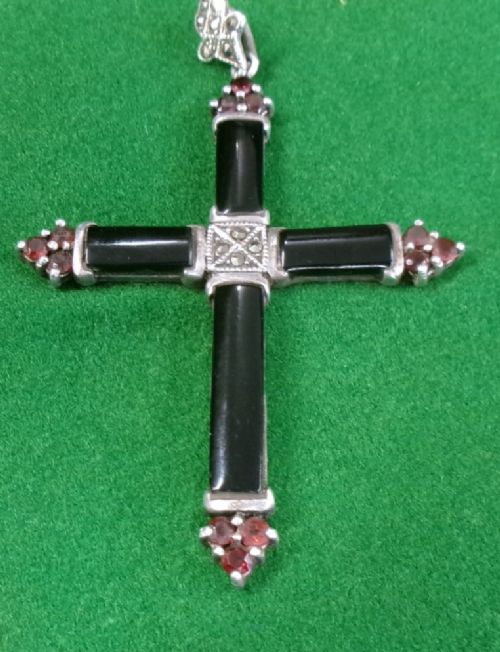
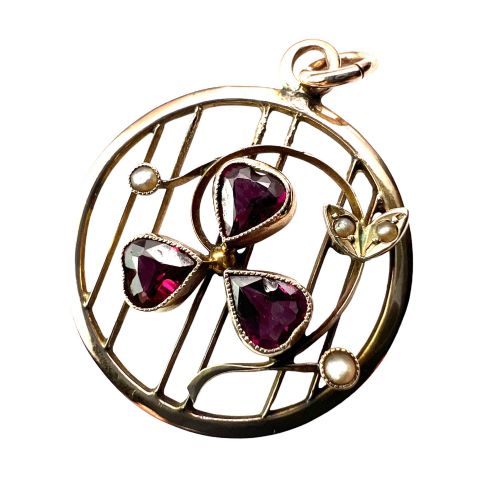
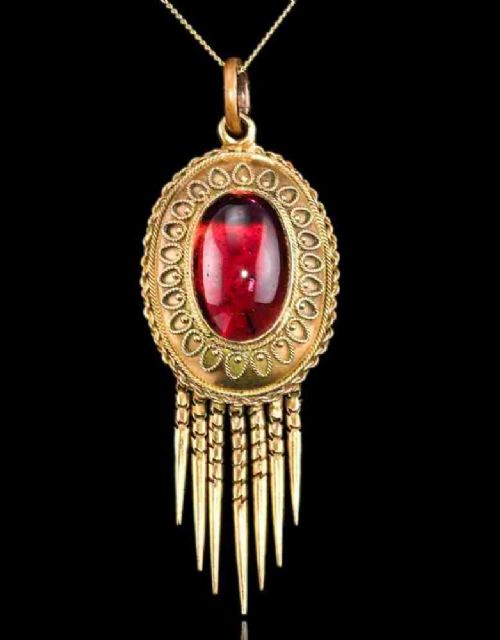
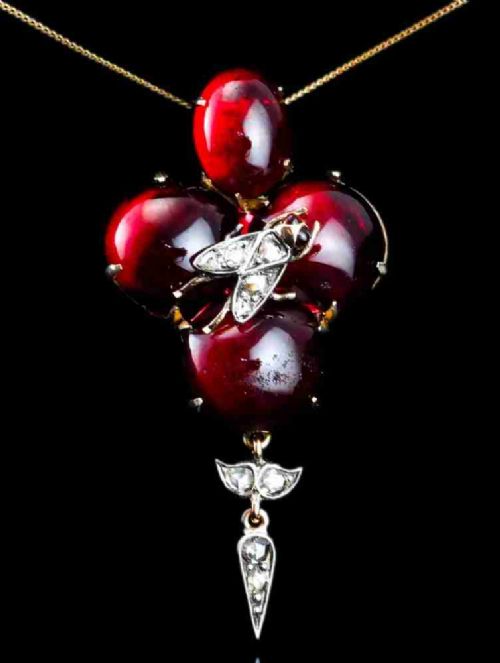
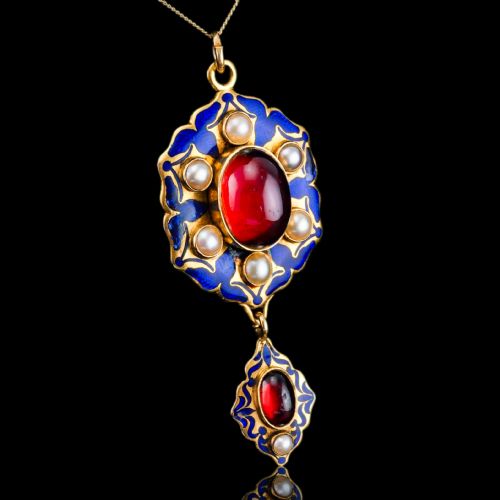
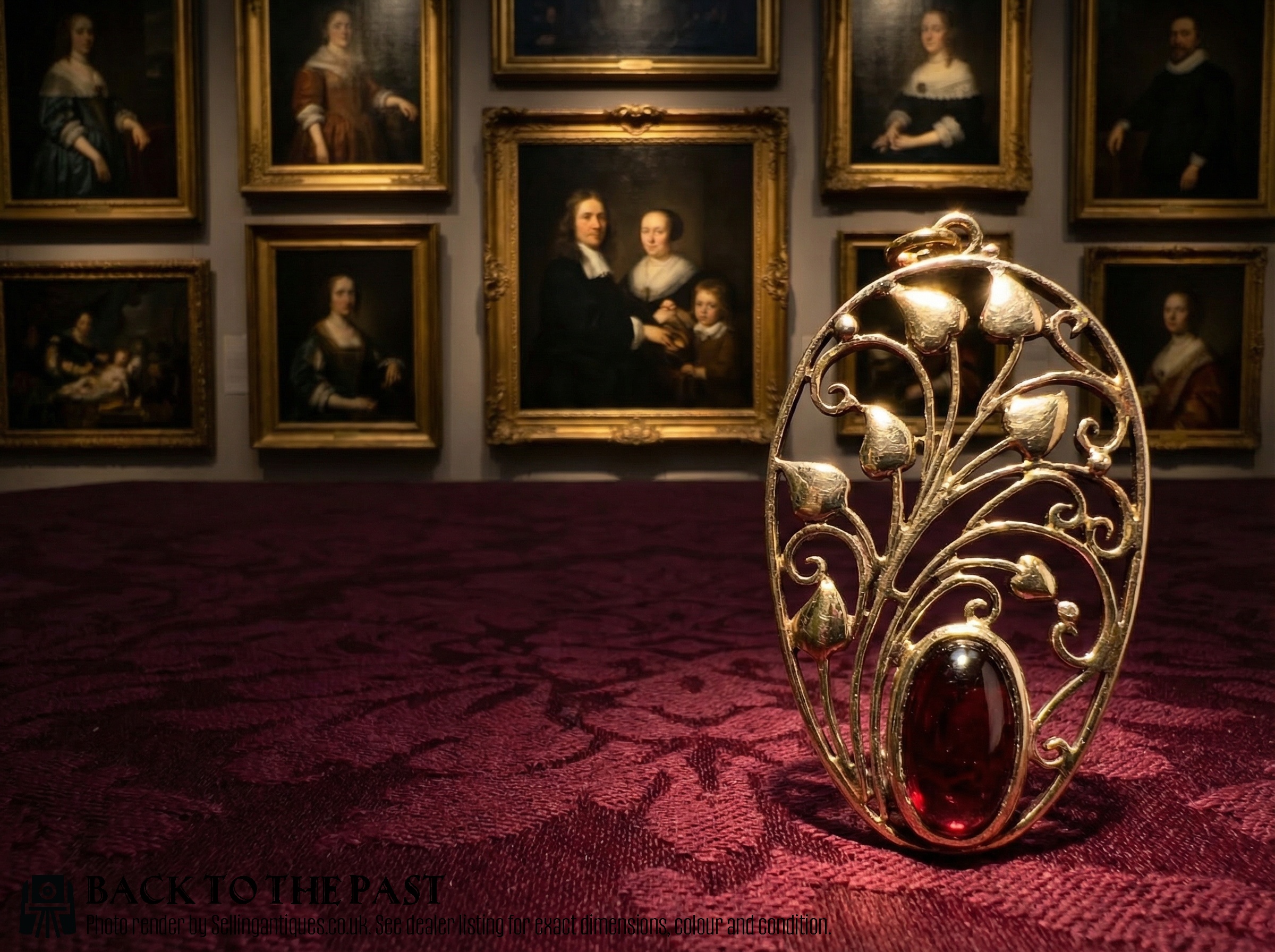
A red garnet necklace takes many forms across the Victorian, Edwardian, and mid-century periods represented here, moving from elaborate pendants to simple fringe drops and pearl strands with garnet clasps. The Victorian examples lean towards Etruscan Revival, Holbeinesque, and Renaissance Revival styles in high-carat gold, alongside Bohemian cut garnets set closely together. Later pieces shift into Edwardian and Art Nouveau designs, where seed pearls and flowing lines frame the dark red stones.
Buyers will find pendant necklaces, brooches that double as pendants, and double-strand pearl necklaces fastened with garnet-set gold clasps. The gold ranges from nine-carat rose and yellow gold up to fifteen and eighteen-carat versions, sometimes accompanied by silver settings for the gems. Periods span from the mid-nineteenth century through the 1920s, 1930s, and into the 1950s and 1960s.
Materials and construction
The materials centre on deep red garnets paired with nine-carat, fourteen-carat, fifteen-carat, or eighteen-carat gold, sterling silver, seed pearls, cultured pearls, and occasional diamonds or marcasite. Stones are cut in cabochon, oval, or pear shapes, or faceted into dense bohemian fringe drops where the metal recedes behind the mass of red stones.
Goldsmiths utilised granulation, wirework, and bezel settings to hold the garnets, particularly in revivalist pieces from the Victorian era. Lavaliere drops and clover heart motifs demonstrate articulated settings that allow the stones to catch the light with movement.
Some Victorian garnet drops are secretly hollow behind the stones to keep the heavy crimson cluster light enough to wear all day.
Assessing quality
Quality rests on the depth and matching of the garnet stones, the purity of the gold or the integrity of the silver work, and the fidelity of the period style. Finer pieces display carefully matched imperial garnets or well-oriented cabochons secured in substantial gold settings with intact seed pearl accents.
The design execution separates standard production from exceptional examples, such as those employing complex Holbeinesque enamel work or intricate Etruscan wire twisting. The survival of fragile elements like seed pearls and delicate fringe drops also marks the preservation standard of the piece.
The Red Garnet Necklace Glossary
- Etruscan Revival
- A Victorian design style inspired by archaeological discoveries, featuring applied gold wirework, granulation, and classical motifs. It gives garnet pieces a distinct archaeological texture.
- Holbeinesque
- A Victorian revival style drawing on sixteenth-century court jewellery designs, typically incorporating symmetrical strapwork, coloured stones, pearls, and enamel drops. These pendants are often substantial and richly detailed.
- Fringe drop
- A necklace construction where multiple small stones or drops hang closely from a central chain or collar. In Bohemian garnet pieces, this creates a dense curtain of red stones.
- Cabochon
- A gemstone cut with a smooth, rounded, convex upper surface rather than faceted planes. This style highlights the deep, glowing colour of the garnet.
- Lavaliere
- A pendant necklace featuring a central stone or drop suspended below a main decorative motif, popular during the Edwardian era. It offers a light, dangling movement against the wearer's chest.
Red Garnet Necklace: Frequently Asked Questions
How do I date a garnet pendant?
Dating relies on the metal hallmarks, the style of the setting, and the cut of the stones. Victorian pieces often show higher carat gold or revivalist motifs, while Edwardian versions favour lighter filigree and seed pearls.
Mid-century items tend to use nine-carat gold alongside cultured pearls or simpler bezel settings. Examining the clasp and the reverse of the pendant helps confirm the manufacturing period.
Were garnets popular in the Victorian era?
Garnets were exceptionally popular throughout the nineteenth century, particularly in Bohemia and Britain. They were prized for their rich red colour, which suited the sentimental and revivalist tastes of the period.
Jewellers used them in everything from mourning pieces to elaborate fringe necklaces and multi-stone matching suites. Their durability made them practical for daily wear in rings and brooches as well as necklaces.
What is an imperial garnet?
An imperial garnet is a term used to describe stones with a particularly vivid, saturated red or purplish-red hue. These stones command attention due to their depth of colour and clarity.
They appear in twentieth-century pieces alongside standard garnet cuts to create contrast within the pendant design. Their presence elevates the overall visual impact of the necklace.
How should I care for an antique garnet necklace?
Antique garnet necklaces require gentle handling due to their delicate goldwork and seed pearl additions. Cleaning should be done with a soft, dry cloth rather than harsh liquid dips that might damage foil-backed stones or pearls.
Storage in a separate lined box prevents the denser garnets from scratching softer gold or adjacent pearls. Regular checks of the claw or bezel settings ensure the stones remain secure.