


Victorian Garnet Pin
A victorian garnet pin brings together deep red stones and rich gold work, offering a touch of nineteenth-century character for the modern lapel.
Victorian Garnet Pin
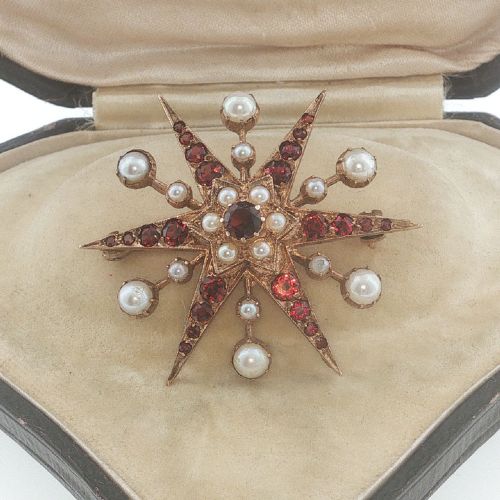
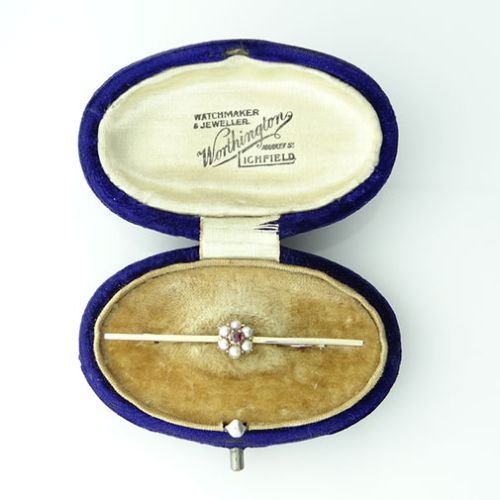
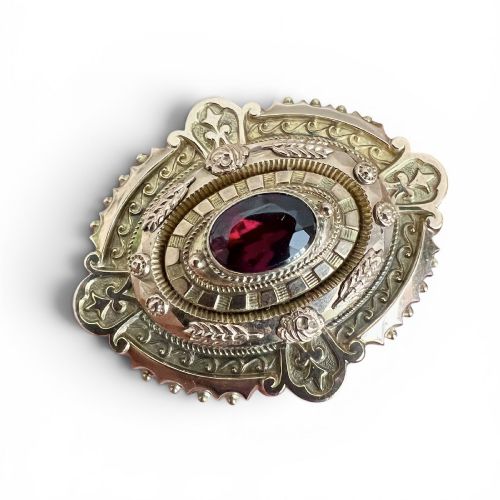
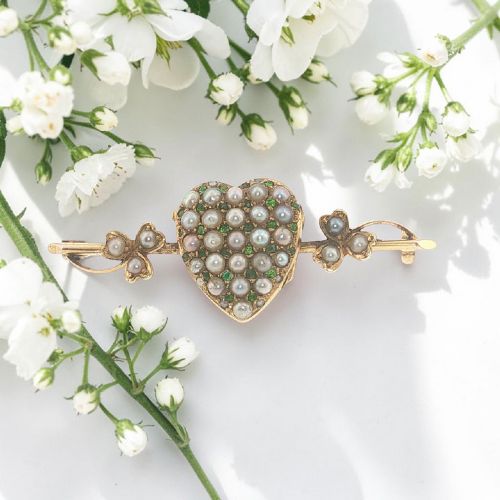
When you search for a victorian garnet pin, you encounter a selection of brooches, stick pins, and convertible pendant brooches that span the nineteenth century and later revival periods. The pieces on this page range from grand, gem-set starbursts and Etruscan revival lockets to delicate bar brooches and novelty jockey cap pins.
Most examples hail from the Victorian era, supplemented by Edwardian and mid-century revivals that mirror earlier design choices. Forms vary from simple claw-set cabochons to complex multi-stone arrangements incorporating seed pearls, diamonds, and enamel work.
How They Were Made
The makers of these pieces worked primarily in gold of varying purities, including 9ct, 10ct, 15ct, and 18ct gold, alongside gilded metals. They secured the garnets using collet, claw, and flat-cut settings that maximised the deep red or almandine colour of the stones.
Detailing often included applied wirework, granulation, and guilloche enamel, frequently paired with accents of natural pearls, seed pearls, or small diamonds to create contrast against the dark red stones.
One tiny gold cap pin captures a day at the races in miniature.
What Varies in Quality
Quality rests in the crispness of the gold work and the selection of the stones, with superior pieces showing meticulous granulation, well-matched garnets, and secure stone settings. The sophistication of the design, such as an intricate Etruscan revival locket or a balanced starburst motif, separates standard production from finer examples.
The presence of hallmarks, maker marks, or original boxes adds distinction, while the integration of secondary gems like diamonds and pearls elevates the overall ambition of the piece.
The Victorian Garnet Pin Glossary
- Almandine garnet
- A dense, dark red variety of garnet frequently seen in nineteenth-century jewellery. It often displays a deep brownish-red tone under natural light.
- Carbuncle
- A cabochon-cut garnet or other red stone polished smooth rather than faceted. This historic cutting style enhances the rich, velvety depth of the gem.
- Etruscan Revival
- A nineteenth-century design movement inspired by ancient archaeological discoveries. It is characterised by elaborate gold wirework and tiny granules.
- Guilloche enamel
- A decorative technique where geometric patterns are engraved beneath translucent enamel. It provides a lustrous, patterned background for mounted gems.
- Seed pearl
- A very small, natural or saltwater pearl used as a delicate accent. These tiny pearls often edge starburst or floral gold motifs.
Victorian Garnet Pin: Frequently Asked Questions
How do I wear a victorian garnet pin?
These pieces suit heavy winter coats, structured jackets, or simple knitwear where the weight of the gold and stones is properly supported.
Stick pins work well on lapels or cravats, while larger brooch and pendant combinations offer versatility for chains or scarves.
Are these pins made of solid gold?
The metals vary across the selection, ranging from high-purity 15ct and 18ct yellow and rose gold to 9ct and 10ct variations, alongside occasional gilded items.
Examining the back of the pin or checking for hallmarks helps determine the exact metal composition of each piece.
How do I date a garnet pin?
Dating relies on the style of the mounting, the cut of the stones, and any accompanying hallmarks or original presentation boxes.
Victorian pieces often feature heavy gold castings and Etruscan revival motifs, whereas later twentieth-century revivals employ different pin mechanisms and alloy standards.