
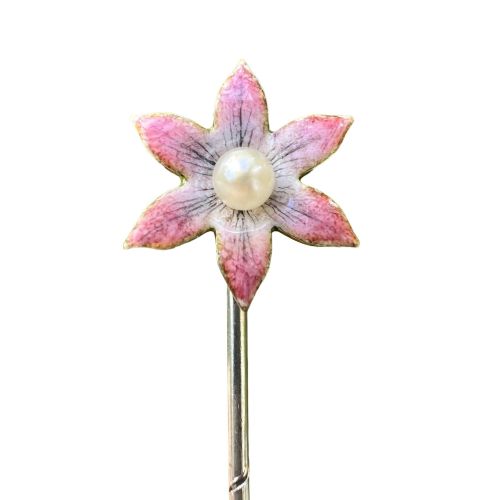


Gold Cravat Pin
A gold cravat pin fastens a gentleman's neckwear with quiet dignity, bringing enduring sparkle to a lapel or cravat.
What these pieces are
A gold cravat pin serves as a decorative fastener for traditional neckwear, holding folds of silk securely in place with a sharp stem and an ornamental head. When you search for a gold cravat pin, you encounter items designed to catch the light on a lapel or a heavy winter scarf.
The selections span distinct eras, notably the Victorian period alongside Regency and mid-twentieth-century examples such as a Royal Victoria Yacht Club piece. Forms vary from traditional stick pins to convertible brooch pins, often taking thematic shapes like jockey caps, horseshoes, and miniature portraits.
How they were made
Goldsmiths utilised varying purities of metal, working in 15ct gold, 18ct yellow gold, and occasional lower purities to fashion the delicate shafts and ornate settings. Techniques such as cannetille work involved intricate wire filigree soldered onto surfaces to create textured patterns resembling fine embroidery.
Gemstones including old-cut diamonds, seed pearls, green stones, and garnets were hand-set into the gold mounts to provide focal points on the heads of the pins. Miniature portraits on ivory or card were likewise encased in protective gold bezels with glass covers.
Retail Price Guide 2026
Typical UK retail prices for gold cravat pin, calculated from the Sellingantiques database of over a million retail prices indexed since 2003. This retail price guide relies exclusively on Sellingantiques data; no external sources or auction records are used, so the figures do not describe the wider market.
What varies in quality
The distinction between ordinary and exceptional examples rests upon the finesse of the metalwork and the quality of the mounted stones. Pieces displaying detailed cannetille wirework or superior old-cut diamonds demonstrate a higher standard of craftsmanship from the maker.
The structural integrity of the pin stem and the security of the stone settings determine durability and wearability. Finer examples maintain crisp detailing on miniature portraits and equestrian motifs without visible solder repairs.
The Gold Cravat Pin Glossary
- Cannetille
- A form of ornamental goldwork popular in the nineteenth century, characterised by fine gold wires and tiny metal balls arranged in lace-like patterns. This technique gave jewellery an elaborate, textured appearance reminiscent of embroidery.
- Old-cut diamond
- A hand-faceted diamond shape from the nineteenth century or earlier, featuring a small table, open culet, and chunky facets designed to catch candlelight. These stones possess a softer, more intimate brilliance than modern brilliant cuts.
- Jabot pin
- A decorative pin originally designed to fasten a jabot, which is a ruffled lace embellishment worn at the front of a shirt or cravat. They often feature ornamental designs at both ends or a secure clasp mechanism.
- Seed pearl
- A very small, naturally occurring or early cultured pearl, often drilled and strung or used in clusters to form floral or geometric designs. They provide a subtle, creamy lustre distinct from faceted gemstones.
- Stick pin
- A long, slender pin with a decorative head, worn vertically through a necktie, cravat, or lapel. The sharp point is typically secured at the back with a small cap or clutch.
Frequently Asked Questions
How were cravat pins worn?
Gentlemen pushed the sharp stem directly through the folds of a cravat or necktie to anchor the cloth to the shirt beneath.
They served both a practical purpose in keeping the neckwear neat and a decorative one as an expression of personal style.
Can these pins be worn today?
Modern wearers frequently place them on coat lapels, cardigans, or scarves rather than traditional cravats.
Their secure stems allow them to function nicely as miniature brooches on heavier fabrics.
What is the difference between a stick pin and a cravat pin?
The terms largely overlap in antique jewellery, though cravat pins historically anchored specific neckwear folds.
Both utilise a long pin shaft and a decorative face designed to remain visible on fabric.
How do I date a gold cravat pin?
Dating relies upon stylistic clues such as cannetille wirework, the cut of the diamonds, and specific thematic motifs.
Victorian pieces often incorporate symbolic elements like horseshoes, miniature portraits, or sporting themes.