
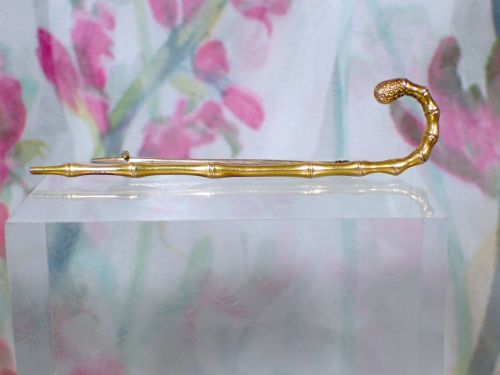


Yellow Gold Stick Pin
A yellow gold stick pin fastens a lapel or cravat with small-scale goldwork, sporting motifs, and gemstones.
Yellow Gold Stick Pin
A yellow gold stick pin is a traditional piece of jewellery designed to secure a tie, cravat, or lapel, combining a decorative head with a long metal stem. These pins appear in various historical periods, including the Victorian and Edwardian eras, as well as the nineteenth century and mid-twentieth century.
The versions most commonly met on this page span the Victorian and Edwardian periods, frequently taking the form of sporting motifs, floral elements, or gemstone clusters. Miniature portraits, marine subjects, and carved animal designs also emerge across the selection.
Makers and jewellers from the nineteenth and twentieth centuries used these pieces to display fine stones such as diamonds, garnets, amethysts, opals, and seed pearls mounted securely in yellow gold.
Materials and construction
Gold forms the structural base of these pieces, utilising varying purities including 9ct, 14ct, 15ct, 18ct, and broader yellow gold standards. Metalworkers shaped the shafts and mounts by hand or through early industrial techniques, often applying textured wirework or specialised settings.
Gemstones like old cut diamonds, garnets, opals, and amethysts are integrated alongside organic materials such as pearls and quartz cat's eyes. Detailed decorative elements like cannetille work, enamel, and Essex crystal miniatures demonstrate the high level of lapidary and metalworking skill applied to small formats.
The inventory records yellow gold stick pins and related brooches spanning the nineteenth century through the mid-twentieth century.
Distinctions in quality
Quality in a yellow gold stick pin rests on the precision of the miniature metalwork and the integrity of the gemstone setting. Superior examples display crisp chasing, secure stone retention, and balanced proportions between the decorative head and the functional pin.
The refinement of the artistic subject, whether a carved animal, a portrait, or a sporting emblem, separates standard production pieces from finer handcrafted items. The purity of the gold and the presence of undamaged original components further define the standing of each piece.
The Yellow Gold Stick Pin Glossary
- Stick pin
- A decorative pin with a long stem designed to be pushed through a tie or lapel and secured at the back with a guard. These items gained popularity during the nineteenth century as both practical fasteners and decorative accessories.
- Cannetille
- A delicate form of filigree work using twisted gold wire arranged in intricate patterns resembling lace. This technique is often seen on mid-nineteenth-century gold pieces.
- Essex crystal
- A technique where a rock crystal cabochon is reverse-carved and painted to create a three-dimensional illusion of an animal or subject underneath. The method requires immense miniature painting skill.
- Old cut
- A diamond cutting style typical of the Victorian and Edwardian eras featuring a smaller table, higher crown, and open culet. These stones catch candlelight and soft indoor illumination effectively.
- Jabot pin
- A decorative pin originally used to fasten the jabot or ruffle of a shirt, featuring ornamentation at both ends or a substantial pinned head. They share many stylistic traits with standard stick pins.
Yellow Gold Stick Pin: Frequently Asked Questions
How were stick pins worn historically?
Victorian and Edwardian gentlemen and ladies used stick pins to secure neckties, cravats, scarves, and lapel folds. They served both a functional purpose in holding garments in place and a social purpose in displaying taste or allegiance.
Over time, fashion shifts moved these items from daily menswear staples into versatile decorative accessories worn on coats, hats, and collars by all genders.
How can I tell a Victorian stick pin from a later one?
Dating often relies on the prevailing motifs, gemstone cuts, and gold purities associated with specific reigns and decades. Victorian pieces frequently employ heavier gold weights like 15ct and 18ct, alongside characteristic old cut diamonds and mourning or sporting themes.
Later Edwardian and twentieth-century examples often lean towards lighter 9ct settings, floral garlands, and brighter, airier designs.
Are these pins safe to wear on modern clothing?
The long metal stems require care when pushing through tightly woven modern fabrics to avoid bending the shaft or damaging the garment. Using a small protective cap or guard on the sharp end prevents loss during wear.
Heavier decorative heads may tilt forward on lightweight silks, so heavier wools or structured lapels provide the best support.
What motifs are common in antique stick pins?
Common subjects include sporting emblems such as hunting bugles, horseshoes, foxes, and jockey caps, reflecting nineteenth-century leisure pursuits. Natural forms like flowers, insects, hearts, and marine flags also appear frequently.
Figurative subjects range from miniature painted portraits of ladies to carved animal chimeras and opal clusters.