


Edwardian Stick Pin
These edwardian stick pin pieces bring delicate lapel work to contemporary tailoring.
Edwardian Stick Pin
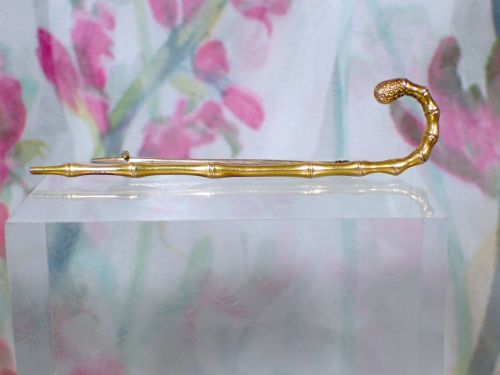
When you search for edwardian stick pin, you find slender decorative fasteners designed to secure neckties, lapels, and cravats during the early twentieth century. These small ornaments combine fine metalwork with gemstones, enamel, and pearls to create subtle points of interest.
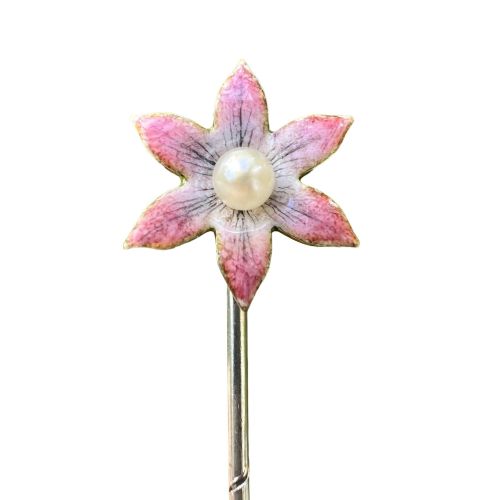
The versions most commonly met on this page date from the Edwardian period and feature slender metal shafts topped with decorative heads. Formats range from simple floral motifs and precious stones to sporting symbols and insect designs.
Makers of the era utilised both yellow and white gold alongside silver to mount diamonds, pearls, rubies, and amethysts. These pieces demonstrate the refined lapidary skills and delicate proportions typical of jewellery from nineteen hundred onwards.
How they were made
Craftsmen shaped slender metal stems from nine carat gold, fifteen carat gold, and sterling silver to form the practical pins. These shafts support decorative terminals secured through soldering or integrated casting techniques.
Goldsmiths set small diamonds, pearls, opals, and coloured stones using claw and flush settings adapted to miniature scales. Enamelling and carved shell elements also appear, adding colour and texture to the compact decorative heads.
What varies in quality
Quality in an edwardian stick pin rests upon the integrity of the metalwork and the selection of gemstones. Finer examples display secure stone settings, well-defined casting, and undamaged enamel work without surface abrasion.
The balance between the decorative head and the pin shaft determines structural success in daily wear. Superior pieces maintain straight, resilient stems joined firmly to balanced motifs that sit flat against fabric.
Charles Horner
The Edwardian Stick Pin Glossary
- Jabot pin
- An ornamental pin designed to fasten ruffled lace jabots on women's wear. It typically has decorative terminals at both ends or a secure clasp mechanism.
- Baroque pearl
- A pearl with an irregular, non-spherical shape. These organic forms were frequently utilised in Edwardian jewellery for naturalistic floral or animal motifs.
- Essex crystal
- A technique where rock crystal is carved into a dome and painted from the reverse side to create a three-dimensional miniature image.
Edwardian Stick Pin: Frequently Asked Questions
How were edwardian stick pin pieces originally worn?
These pins secured neckties, cravats, and lapels on formal garments worn by both men and women during the early twentieth century. They pushed directly through folded fabric before resting securely in place.
Today, owners wear them on lapels, collars, hats, and scarves as subtle decorative accents that bring period craftsmanship into modern wardrobes.
Are these pins safe for modern clothing?
The long metal shafts require careful handling when pushing through dense modern weaves. Using a protective backing cap prevents the sharp point from catching on skin or fabric.
Heavier decorative heads benefit from placement on sturdy woollens, heavy silk, or structured lapels rather than thin, delicate shirt fabrics.
How do I identify an authentic Edwardian piece?
Authentic pieces from the period often feature characteristic design motifs such as floral garlands, crescent moons, and natural pearls set in yellow gold. Hallmarks, where present, indicate metal purity standards typical of the era.
Proportions remain delicate, reflecting the aesthetic preferences dominant around nineteen hundred rather than the bolder geometry seen in later decades.
What materials appear most often?
Gold in nine carat and fifteen carat variants forms the structural base for many pieces alongside sterling silver. Gemstones such as diamonds, amethysts, opals, and rubies frequently accompany seed pearls.
Enamel work and carved materials like shell also appear across the surviving inventory, providing variety in colour and texture.