

Mens Jewellery
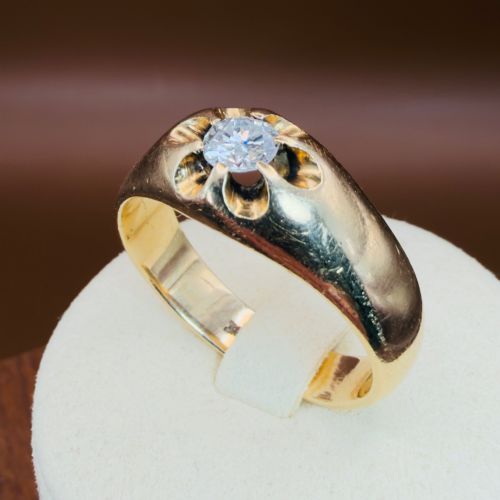
Mens antique jewellery offers refined personal detail for daily wear, uniting solid precious metals with careful decorative craft.
Understanding mens antique jewellery
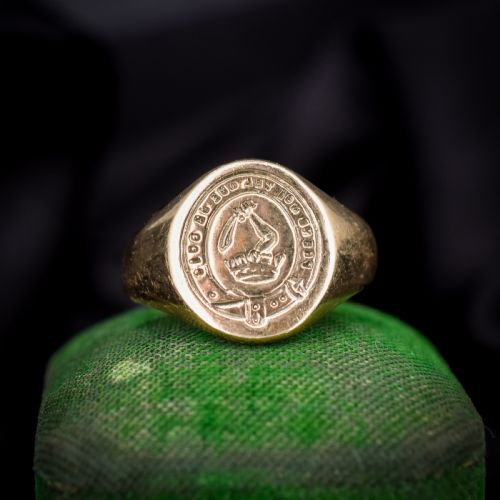
When you search for mens antique jewellery, you encounter purposeful accessories that defined masculine attire through the late nineteenth and early twentieth centuries. These survivals concentrate heavily on functional items that doubled as markers of status and club membership.
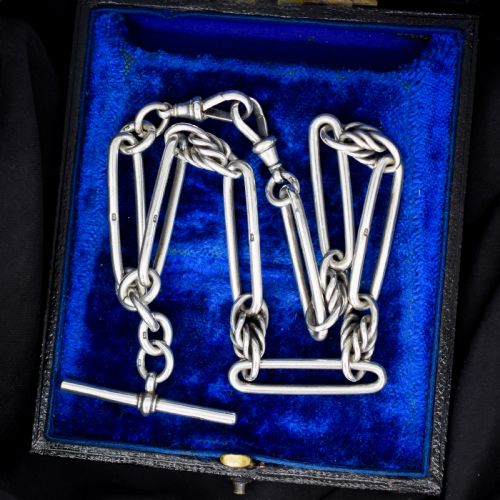
The pieces on this page span the Edwardian era and the Great War period, showcasing the restrained elegance favoured before the modern age. You are most likely to meet cufflinks and pocket watch chains, often housed in their original fitted boxes.
Materials and methods
Makers utilised sterling silver and nine-carat gold as the primary structural metals for chains and cufflink mounts. These metals provided the necessary durability for daily handling while maintaining a lustrous finish.
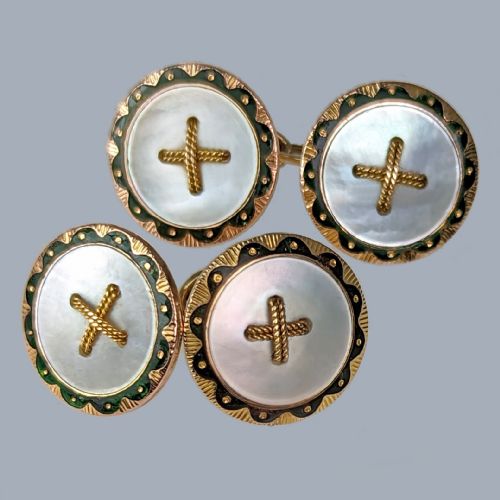
Decorative elements incorporate mother-of-pearl, hand-painted rock crystal, and vitreous enamel. Components frequently bear official assay office hallmarks, confirming the metal standard and year of manufacture.
Judging quality
Superior quality in these accessories reveals itself in the crispness of the hand-painted details beneath rock crystal and the secure fit of hinged cufflink backs. Lesser examples display softer engraving and simpler mechanical joins that lack refined finishing.
The presence of original fitted presentation boxes elevates a piece, as does documented provenance linking the item to specific fraternal lodges or historical events.
Solomon Blanckensee Son
The Mens Jewellery Glossary
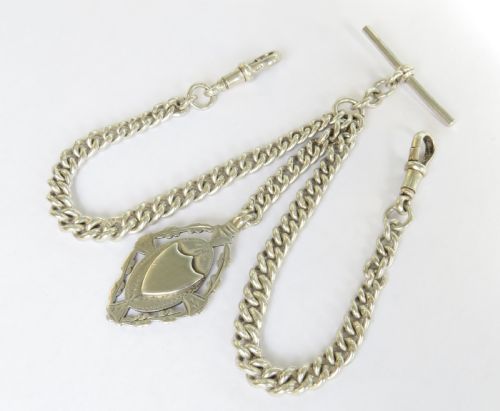
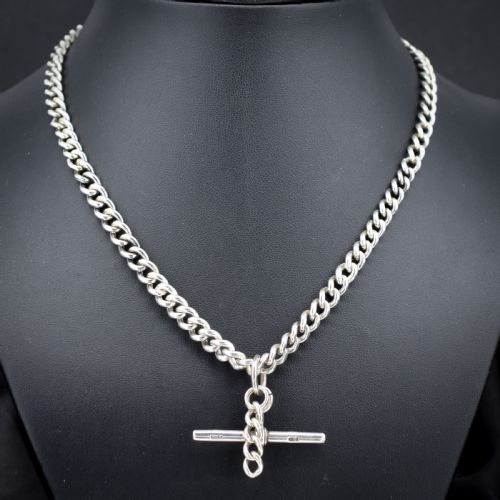
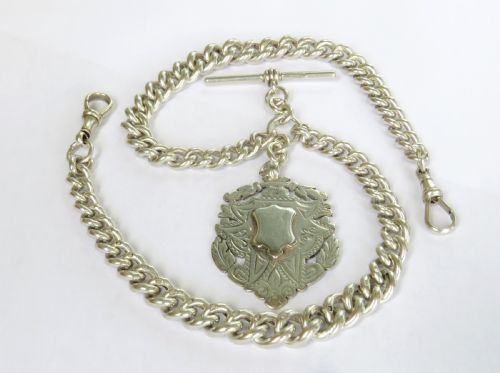
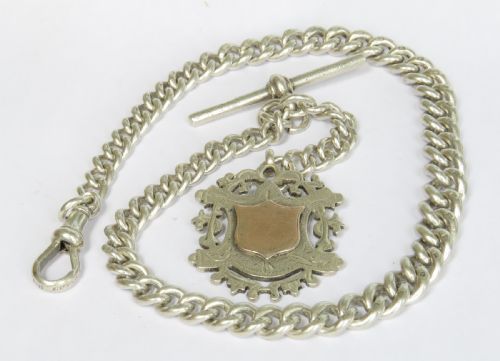
- Albert chain
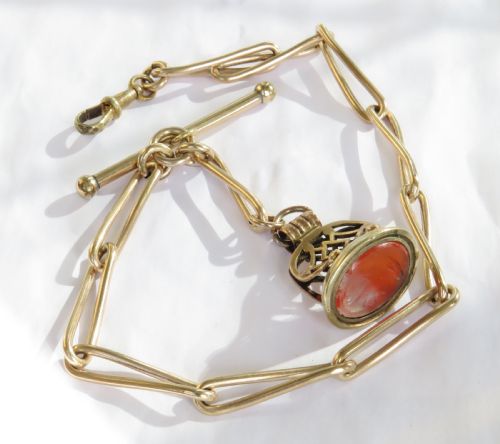
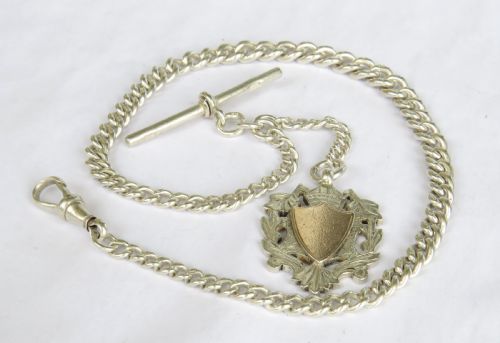
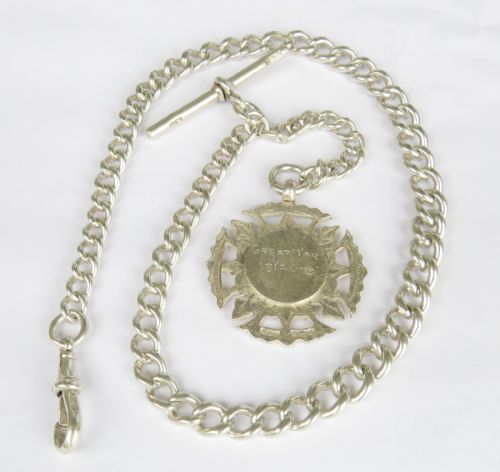
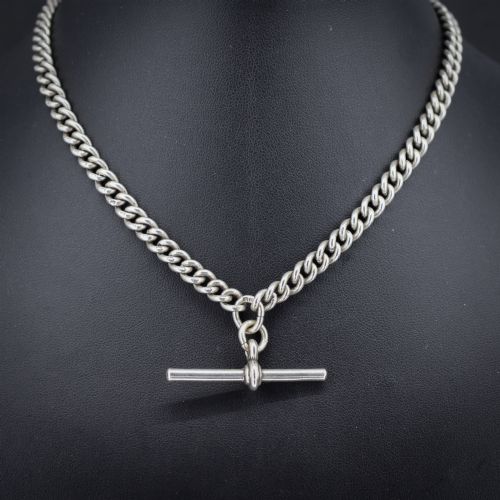
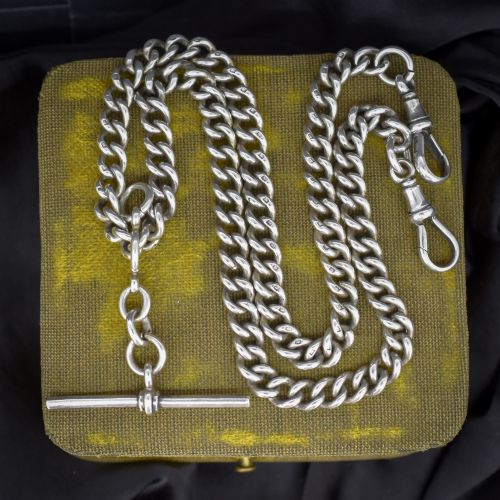
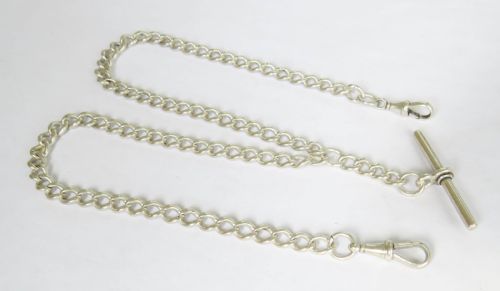
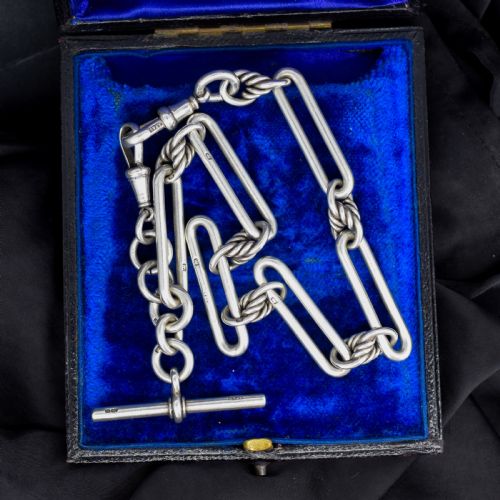
- A chain attached to a pocket watch, named after Prince Albert, designed to be worn across a waistcoat or secured to a buttonhole.
- Essex crystal
- A technique where rock crystal is carved into a dome and reverse-painted to create a three-dimensional miniature portrait or motif.
- Hallmark
- An official stamp applied to precious metals indicating the purity standard, the assay office, and the date letter.
- Fob
- A small medallion or ornament attached to a pocket watch chain, often commemorating an organisation or achievement.
Frequently Asked Questions
How do I wear antique cufflinks?
Antique cufflinks with chain or rigid bar connections fit standard French cuff shirts easily. Ensure you slip them through the buttonholes gently to protect delicate enamel or crystal faces.
Store them separately in soft compartments to prevent scratching the gold, silver, or mother-of-pearl surfaces when not being worn.
What is an albert chain used for?
An albert chain secures a pocket watch to a waistcoat, anchoring the timepiece in the pocket while the decorative length spans the front. The attached fob dangles as a distinct ornamental counterweight.
Modern wearers often repurpose these chains as bracelets or attach them to belt loops for a traditional decorative accent.
How do I date Edwardian jewellery?
Edwardian pieces often feature lighter mountings and delicate motifs compared to heavy Victorian designs, spanning roughly from nineteen hundred to nineteen ten. Assay office hallmarks stamped into the gold or silver provide the exact year of testing.
Stylistic cues like specific lodge symbols or wartime motifs further narrow the timeline to the exact decade of manufacture.
Are these pieces suitable for daily wear?
Sterling silver and nine-carat gold accessories were built for regular use, but antique items require mindful handling. Avoid exposing enamel or mother-of-pearl components to harsh chemicals or ultrasonic cleaning methods.
Occasional gentle wiping with a soft cloth keeps the precious metals bright without wearing down delicate hand-painted details.