

Sterling Silver Fob
These sterling silver fob pieces are dense, tactile markers of personal history designed to hang from pocket watch chains or be worn independently.
Sterling Silver Fob
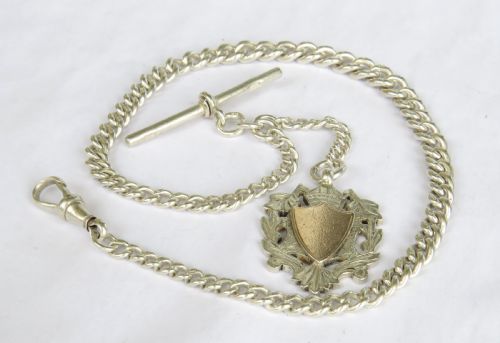
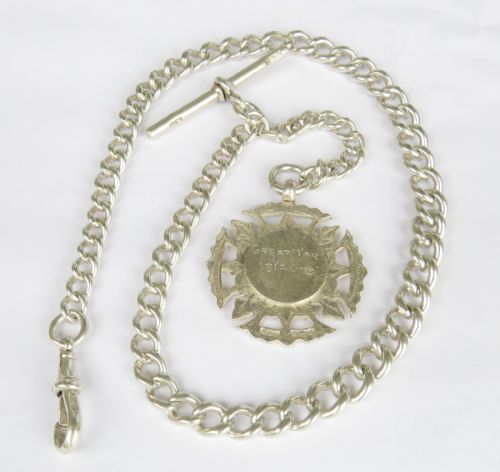
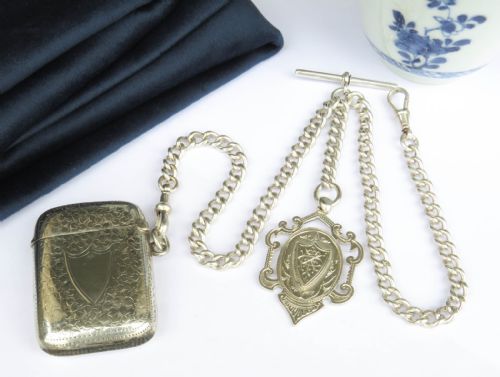
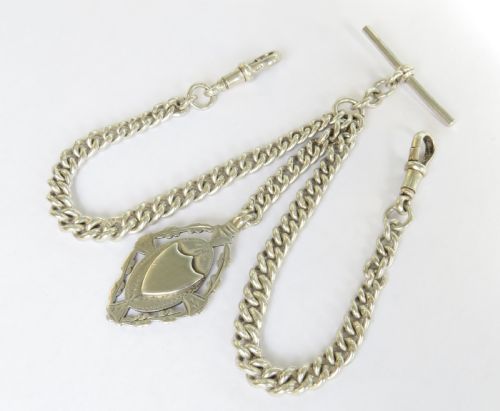
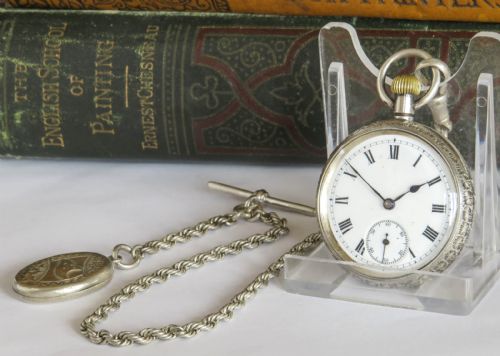
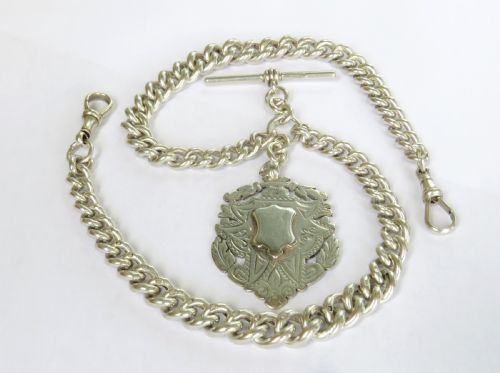
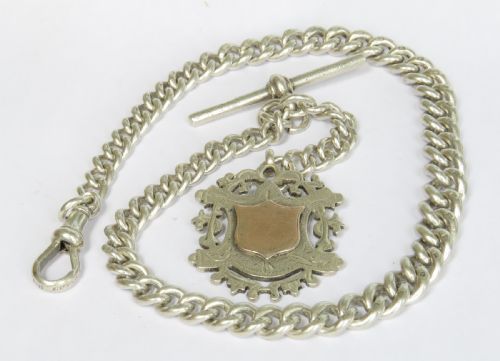
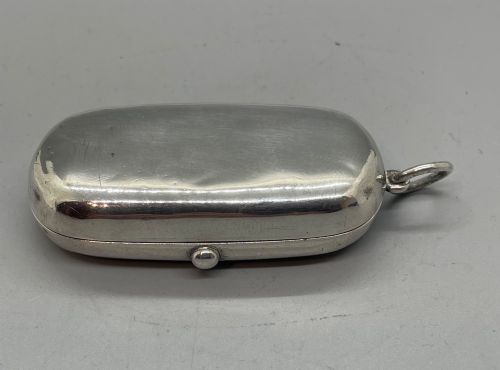
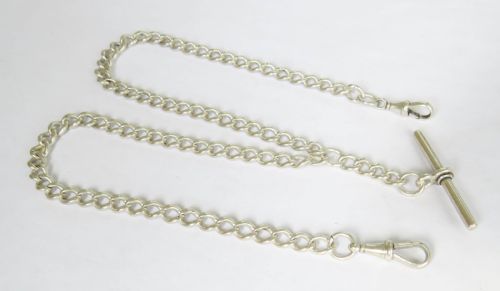
When searching for a sterling silver fob, you encounter items designed to secure or ornament pocket watches, including seal fobs, shield pendants, and watch chains equipped with T-bars. The versions most commonly met on this page date from the late Victorian and Edwardian eras through to the Art Deco period, often carrying full British hallmarks.
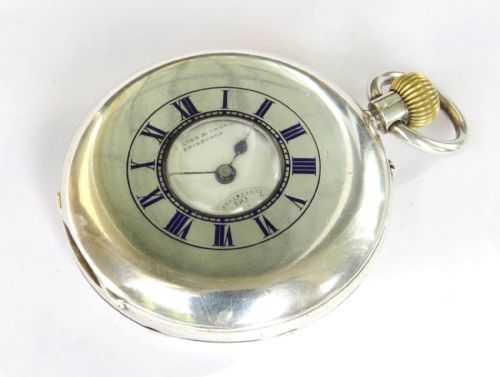
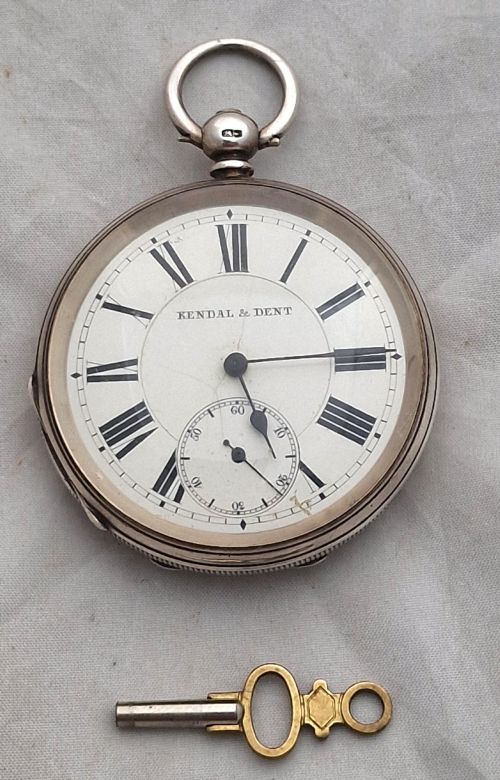
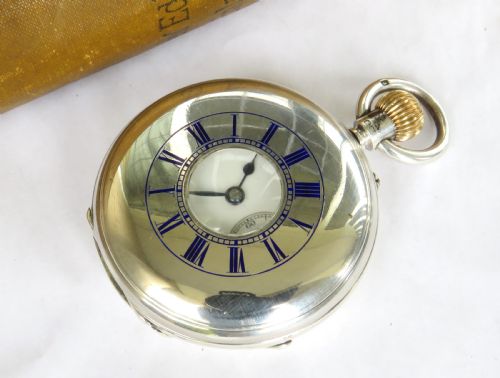
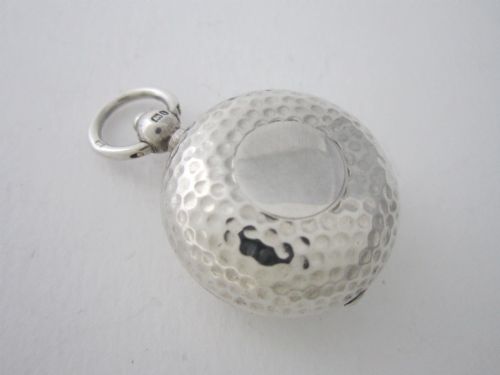
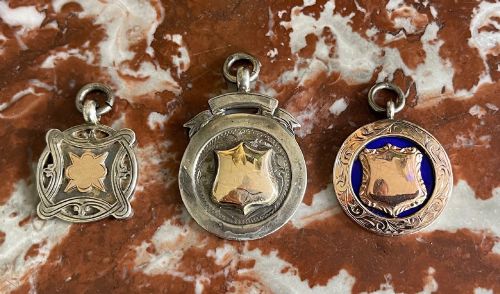
Many of these small objects double as functional containers or markers of affiliation, taking the form of sovereign cases, vesta cases, stamp cases, or inscribed medals from societies like the Oddfellows. They connect directly to period timepieces such as full hunters, half hunters, and fusee pocket watches.
The material palette is anchored firmly in solid sterling silver, frequently paired with gold accents, enamel, or glass, and occasionally accompanied by brass components. They range from simple curb link chains to elaborate double alberts and chatelaines.
Materials and construction techniques
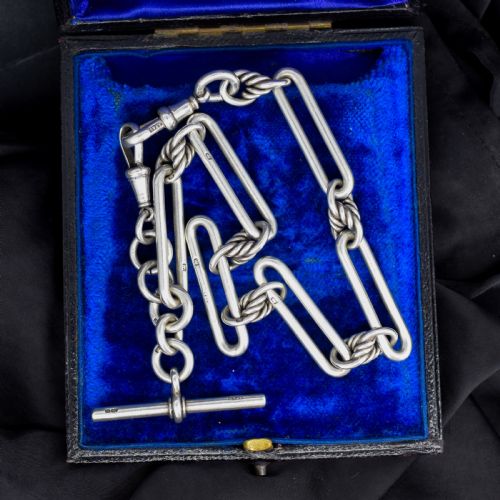
Silversmiths constructed these pieces primarily from solid sterling silver, utilising techniques such as stamping, casting, and hand-engraving to achieve intricate patterns like love knots, curb links, and trombone links. Enamel work adds colour and contrast to the metallic surface.
Components like swivel clasps, spring rings, and T-bars were engineered for durability to withstand the daily removal of pocket watches and sovereign cases from waistcoat pockets. Hallmarks were stamped directly into the metal to certify the standard of the silver at regional assay offices like Birmingham and London.
Sterling Silver Fob Retail Price Guide 2026
Typical asking prices for sterling silver fob among the pieces listed under this phrase on Sellingantiques today, from the lower quarter to the upper quarter. They describe what is for sale here now, not the wider market.
Object forms span pocket watches, sovereign cases, vesta cases, stamp cases, whistle pendants, and albert chains.
Assessing quality in silver fobs
The calibre of a piece rests largely on the crispness of the original chasing and engraving, where deeper, hand-cut detailing maintains its definition far better than shallow machine stamping. Crisp hallmarks indicating specific assay masters and clear date letters also elevate the standing of an item.
Structural integrity in moving parts, such as the snap closure of a vesta case or the tension in a swivel clasp, separates standard utilitarian items from finer workshop output. Weight and gauge of silver determine the substantial feel of chains and sovereign holders in the hand.
Hamilton & Inches·Kendal & Dent·Aaron Lufkin Dennison·Crisford & Norris·W & G Neal
The Sterling Silver Fob Glossary
- Albert chain
- A pocket watch chain named after Prince Albert, designed to stretch across a waistcoat and secure a timepiece at one end.
- T-bar
- A short transverse bar attached to the centre of a watch chain, used to anchor the chain securely through a buttonhole.
- Vesta case
- A small pocket container designed to hold matches, usually fitted with a striking strip on the base.
- Sovereign case
- A small circular container engineered to hold gold sovereign coins securely, often fitted with a spring mechanism.
- Hallmark
- An official stamp or series of marks applied to precious metals in the United Kingdom to certify purity and origin.
Sterling Silver Fob: Frequently Asked Questions
How were watch chains worn?
Watch chains were threaded through a waistcoat buttonhole using the central T-bar, with the pocket watch secured in one pocket.
The fob or pendant would hang downward from the buttonhole as a decorative or symbolic display.
What is an albert chain?
An albert chain is a specific style of pocket watch chain designed to span a gentleman's waistcoat, appearing in single or double strand configurations.
They often incorporate decorative links like curb or trombone patterns, terminating in swivels and T-bars.
How do I date a silver fob?
Dating relies heavily on the assay office hallmarks stamped directly onto the silver, which include specific symbols for the year of manufacture.
Stylistic cues such as Art Deco geometry or Victorian chased floral motifs also help assign pieces to broad production eras.