

Victorian Silver Watch Chain
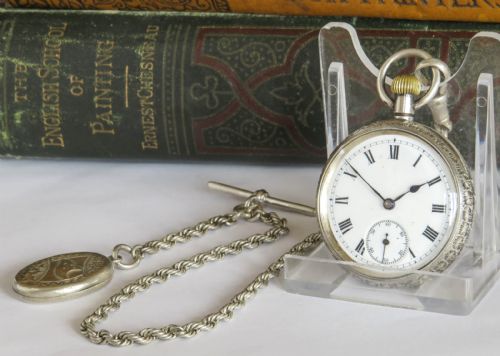
A victorian silver watch chain offers substantial craftsmanship and historical utility, functioning today as a versatile necklace, bracelet, or traditional pocket accessory.
Victorian Silver Watch Chain
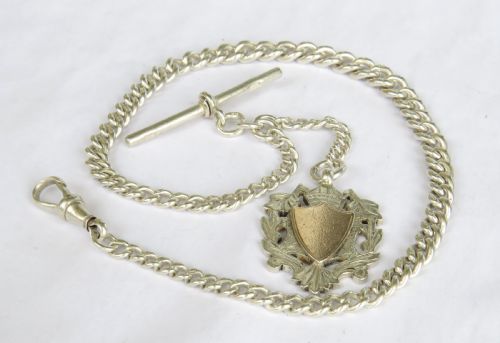
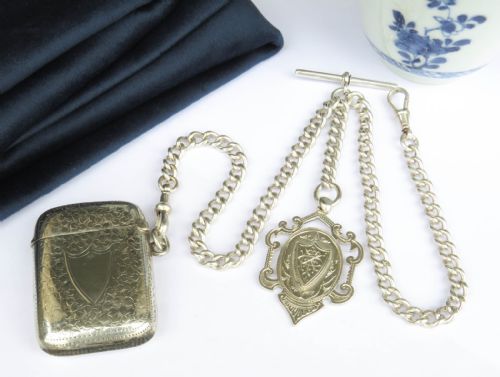
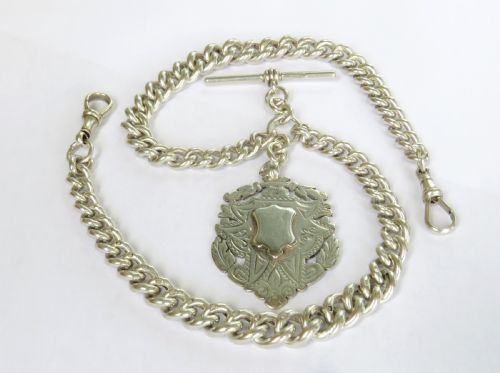
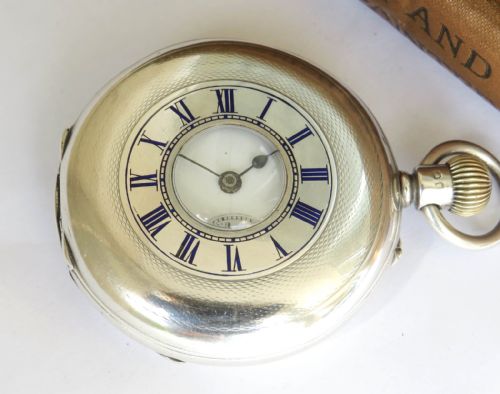
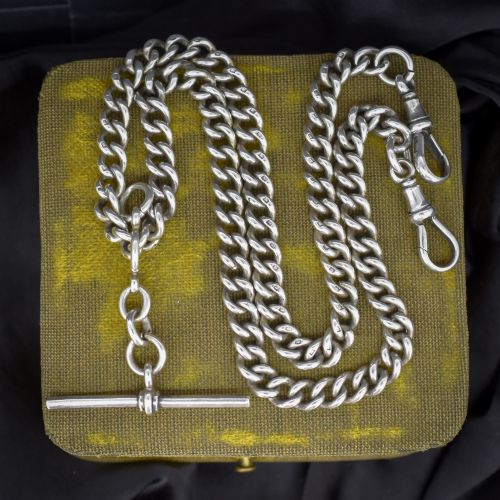
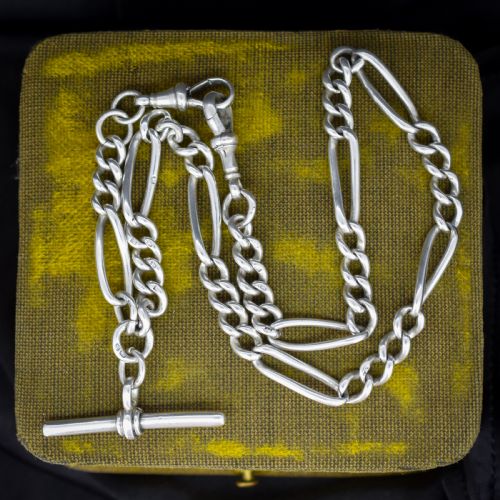
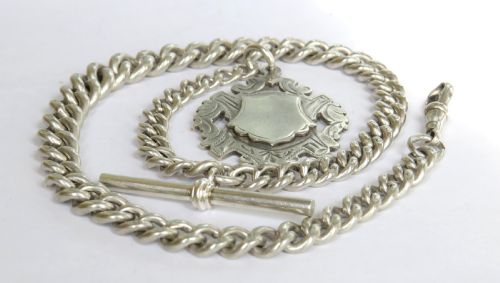
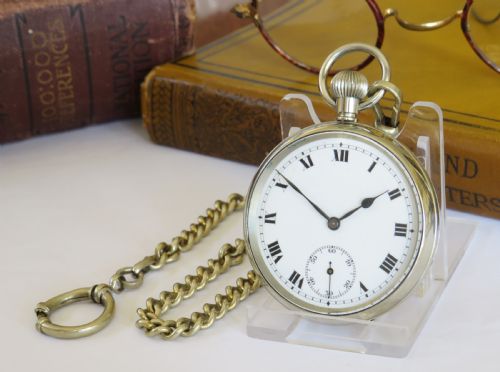
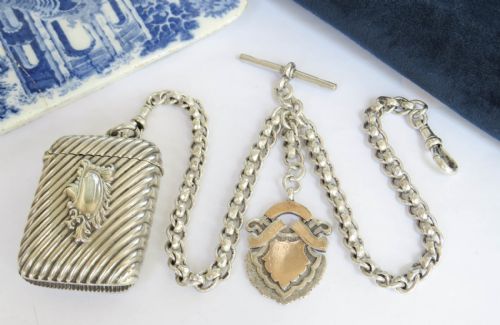
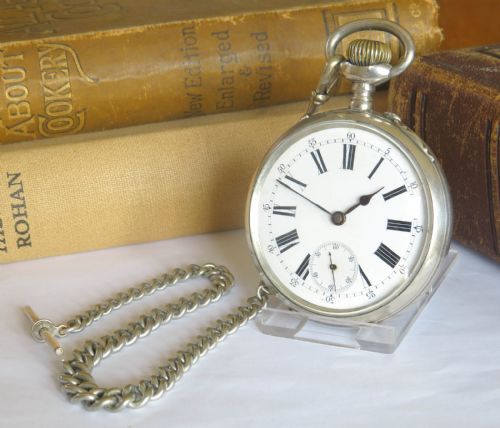
When examining a victorian silver watch chain, buyers encounter robust functional adornments originally designed to secure pocket watches to a gentleman's waistcoat or a lady's chatelaine. The forms range from heavy single and double albert chains to delicate albertinas, often accompanied by decorative fobs, keys, and silver vestas.
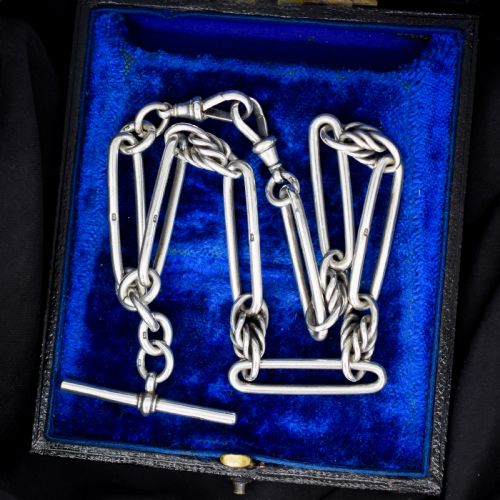
Most examples originate from the nineteenth and early twentieth centuries, spanning the Victorian and Edwardian eras. These pieces frequently incorporate distinct link patterns such as curb, trombone, and figaro, reflecting the diverse manufacturing styles of British assay offices like Birmingham and Sheffield.
How They Were Made
Silversmiths utilised sterling silver and occasionally silver gilt, shaping wire and sheet metal into interlocking links by hand or with early mechanical assistance. Individual links were often soldered together and fitted with swivel dog clips and T-bars designed to withstand daily wear.
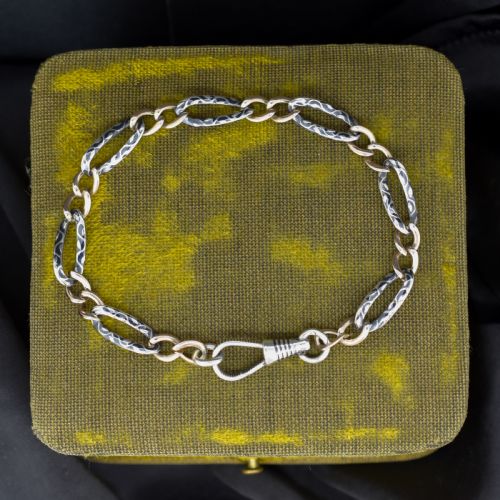
Many links bear clear hallmarks indicating the year of assay and the maker's mark, while special decorative elements incorporate niello inlay, enamel work, or subtle gold accents to highlight specific sections of the design.
Victorian Silver Watch Chain Retail Price Guide 2026
Typical asking prices for victorian silver watch chain among the pieces listed under this phrase on Sellingantiques today, from the lower quarter to the upper quarter. They describe what is for sale here now, not the wider market.
Some chains conceal miniature silver cricket bats and table tennis paddles, proving that Victorian gentlemen took their leisure pursuits remarkably seriously.
What Varies In Quality
The distinction between ordinary and exceptional pieces lies in the weight of the metal and the complexity of the link construction. Heavier gauge silver, substantial gram weights, and fully graduated links denote superior utilitarian grade.
Quality also depends on the completeness of the original components, such as matching hallmarks across links and T-bars, alongside the presence of intact swivel dog clips and specialised fobs like bloodstone, engraved shields, or sovereign cases.
Joseph Bladon
The Victorian Silver Watch Chain Glossary
- Albert chain
- A type of watch chain named after Prince Albert, designed to secure a pocket watch in a waistcoat pocket with a T-bar at one end. Single albert chains feature a single drop, whereas double versions connect to two pockets.
- T-bar
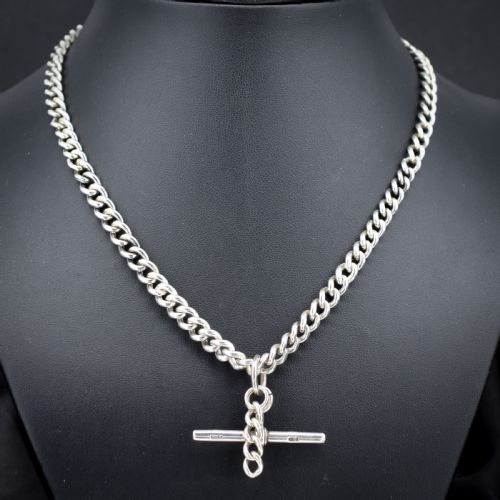
- The short transverse bar attached to the centre of an albert chain, slipped through a buttonhole to anchor the chain securely. It often bears full silver hallmarks.
- Dog clip
- A spring-loaded swivel clasp attached to the end of a watch chain for fastening to a pocket watch or fob. The swivel mechanism prevents the chain from twisting during wear.
- Albertina
- A finer, more decorative variant of the watch chain traditionally worn by women, frequently featuring multiple strands, tassels, and charms. These often convert easily into modern bracelets.
- Vesta case
- A small portable container used for holding matches, commonly suspended from a watch chain. These cases are frequently engraved with floral or geometric motifs.
Victorian Silver Watch Chain: Frequently Asked Questions
How do I wear a watch chain today?
Many people wear these chains as necklaces or wrap them around the wrist as multi-strand bracelets. The integrated dog clips and T-bars make them easy to secure.
Alternatively, you can attach them to modern waistcoats or belt loops to utilise them in their original manner.
What is the difference between single and double alberts?
A single albert chain runs from a single pocket to a buttonhole anchor, featuring a drop for a fob or pocket watch. A double albert chain connects two pockets simultaneously, meeting at a central T-bar.
Double chains generally offer a heavier and more symmetrical appearance.
How do I identify the date of a chain?
British pieces typically feature hallmark stamps on the individual links, T-bars, and dog clips. These stamps include assay office symbols and date letters corresponding to specific years.
Matching marks across multiple components indicate that the chain retains its original configuration.
What were fobs used for originally?
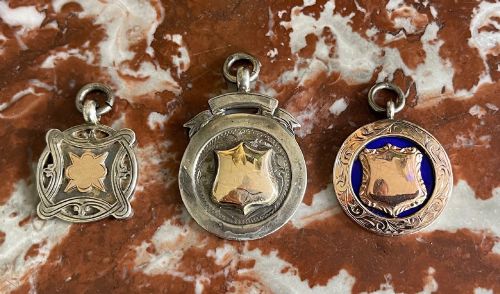
Fobs served as decorative ornaments and functional counterweights that hung from the end of the watch chain. They often doubled as wax seals or housed decorative stones like bloodstone.
Sports clubs and societies also issued engraved silver fobs to commemorate achievements and competitions.