

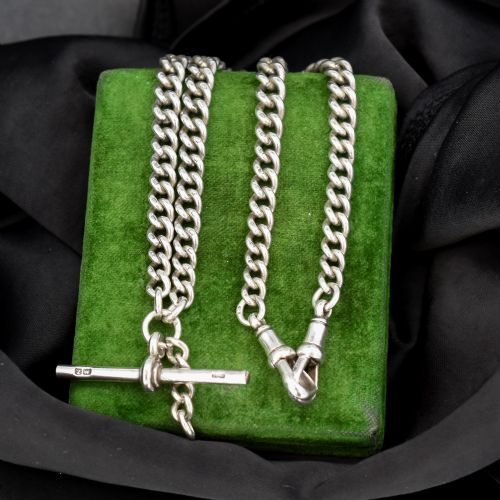


Solid Silver Watch Chain
A solid silver watch chain offers a robust piece of antique engineering designed to secure a pocket watch with practical elegance.
What these pieces are
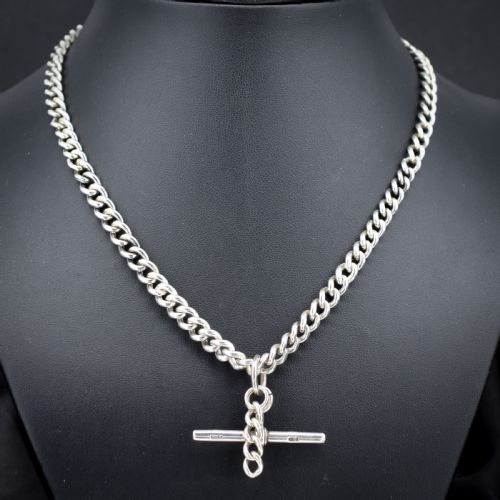
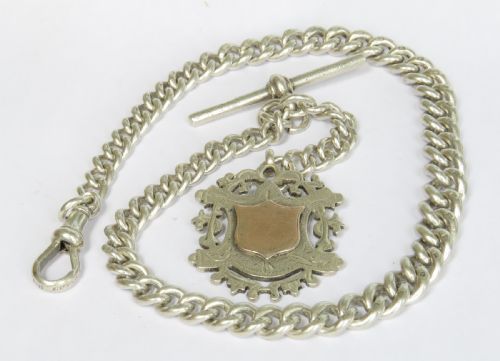
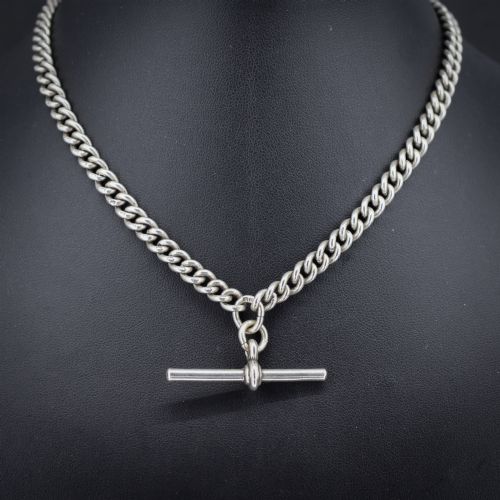
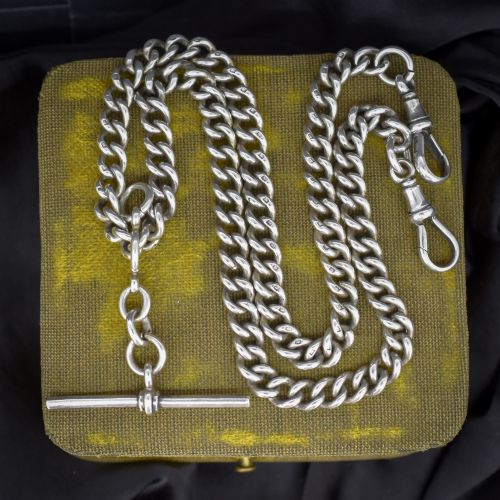
A solid silver watch chain represents a sturdy piece of wearable history originating from the Victorian and Edwardian eras. These functional accessories link a pocket watch to a waistcoat or garment, often featuring lengths ranging from thirteen to seventeen inches.
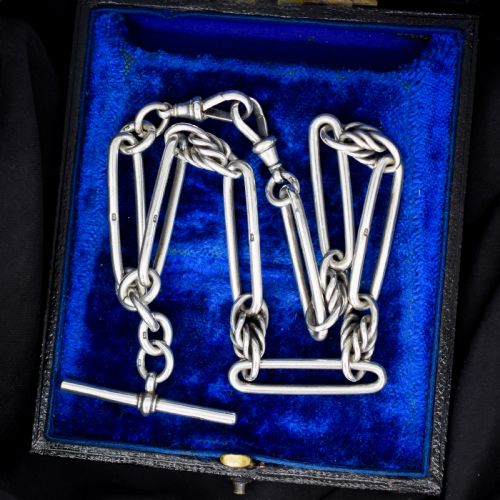
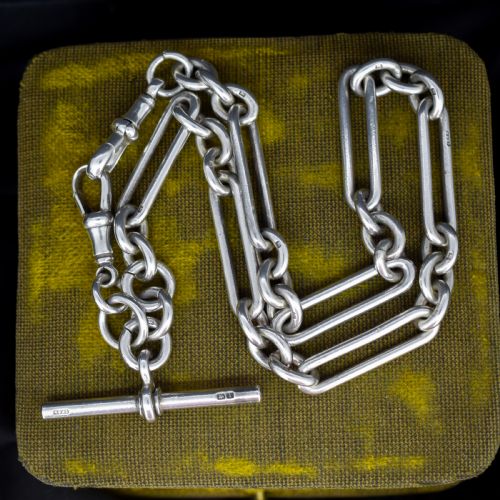
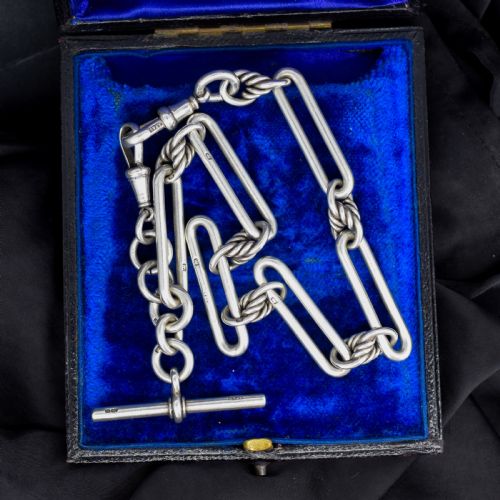
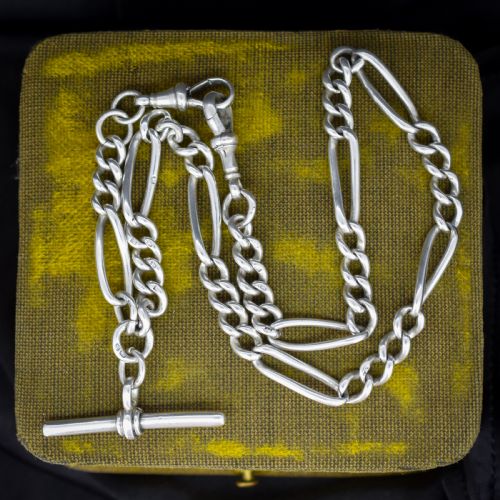
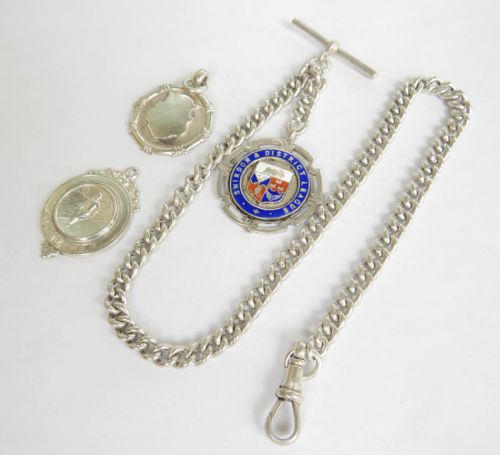
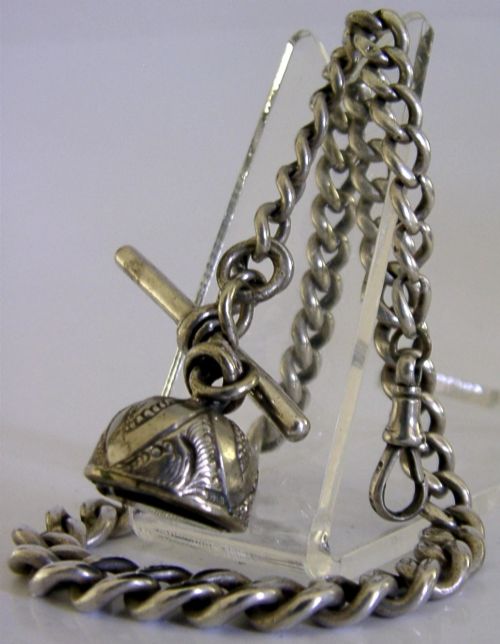
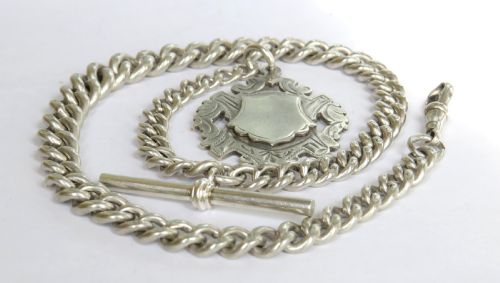
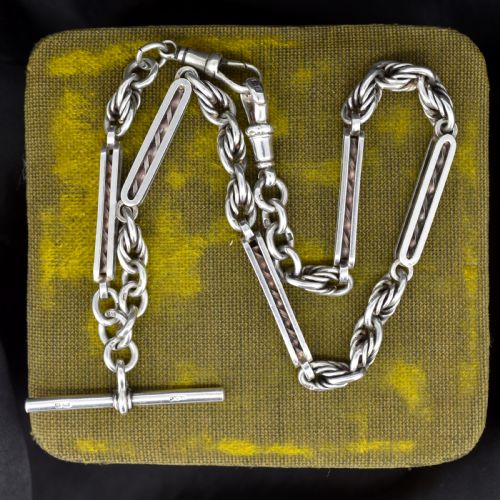
Most examples found on this page take the form of an albert chain or a trombone link design, frequently accompanied by original dog clips and T-bars. The selection spans the late nineteenth century through to the early decades of the twentieth century, capturing a period of meticulous metalwork.
How they were made
Silversmiths constructed each solid silver watch chain using sterling silver links, sometimes combining the white metal with accents of rose gold or gold. Individual links were shaped by hand or machined before being assembled into flexible strands capable of daily wear.
Makers integrated functional components such as swivelling dog clips and T-bars directly into the structure, securing the heavy chains together with durable solder joints.
Retail Price Guide 2026
Typical UK retail prices for solid silver watch chain, calculated from the Sellingantiques database of over a million retail prices indexed since 2003. This retail price guide relies exclusively on Sellingantiques data; no external sources or auction records are used, so the figures do not describe the wider market.
Every time you fasten a dog clip, you use a miniature nineteenth-century spring mechanism built to survive a lifetime on the railways.
What varies in quality
The distinction between average and superior examples rests upon the weight and complexity of the links. Heavier double albert chains containing substantial gram weights stand apart from lighter single strands.
The presence of matching hallmarks on every link, alongside intact fobs and original dog clips, elevates the status of a piece within the hierarchy of surviving items.
The Solid Silver Watch Chain Glossary
- T-bar
- The crossbar attached to the centre of the watch chain, used to anchor the piece through a buttonhole on a waistcoat. This component frequently bears silver hallmarks.
- Dog clip
- A spring-loaded swivel clasp attached to the end of the chain, designed to fasten securely to the loop of a pocket watch. It allows the watch to be detached easily.
- Trombone link
- A specific link shape characterised by elongated rectangular sections interspersed with smaller round or oval connectors. This pattern is common in Edwardian examples.
- Sterling silver
- An alloy comprising ninety-two point five percent silver and seven point five percent other metals, chosen for durability in functional jewellery.
Frequently Asked Questions
How do I wear a watch chain today?
Many buyers repurpose a solid silver watch chain as a necklace or choker, fastening the dog clip directly to the T-bar or to the links themselves. The substantial weight of these pieces allows them to drape comfortably around the neck.
Alternatively, you can thread the T-bar through a buttonhole on a jacket or waistcoat and secure the watch in the pocket, exactly as intended during the Victorian period.
How can I date a silver watch chain?
Dating relies heavily on the hallmarks stamped onto the individual links, the T-bar, and the dog clips. Assay office marks and date letters reveal the exact year and location of manufacture.
Stylistic indicators such as trombone links or love knots also point towards specific eras like the Edwardian period or the late nineteenth century.
Are these chains made of solid silver?
The pieces listed utilise sterling silver, ensuring the metal is solid throughout rather than merely plated. This composition gives the items their characteristic heft and durability.
Over the decades, this solid construction allows the silver to develop a deep, attractive patina through handling and wear.