
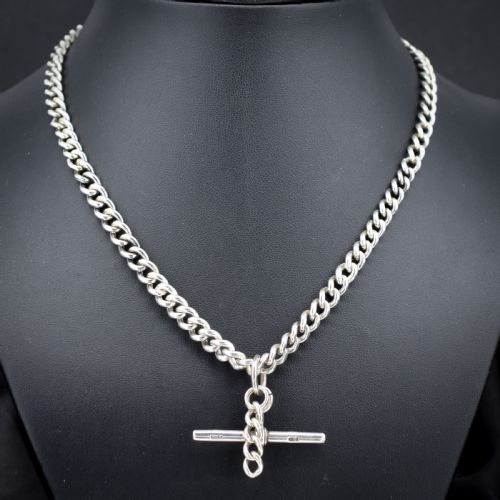
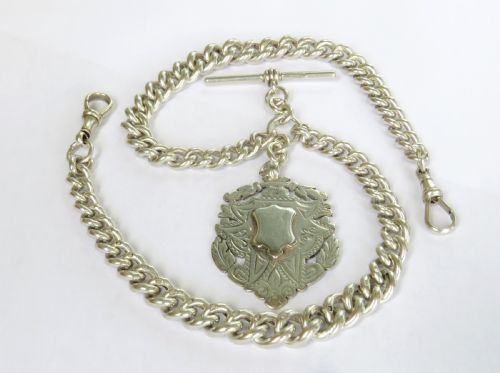
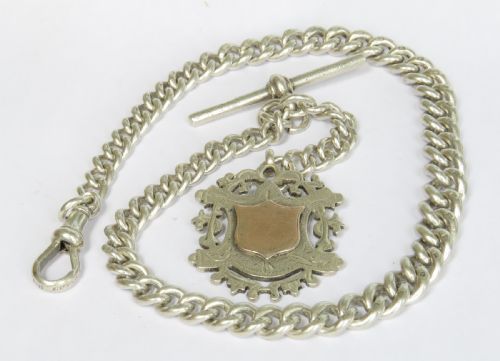
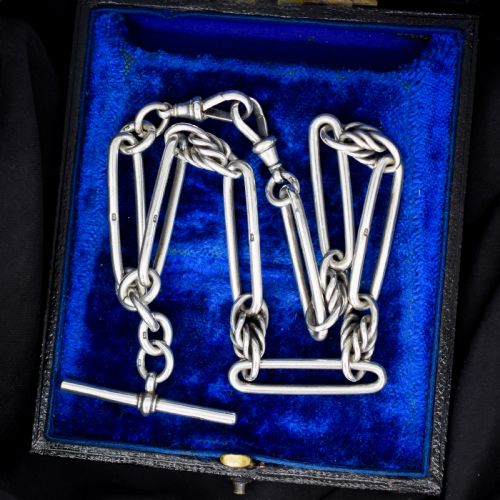
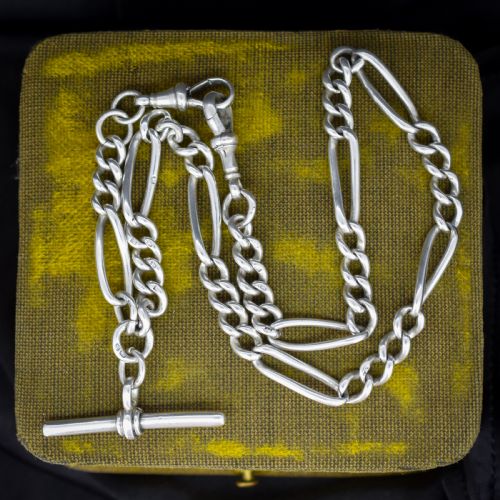

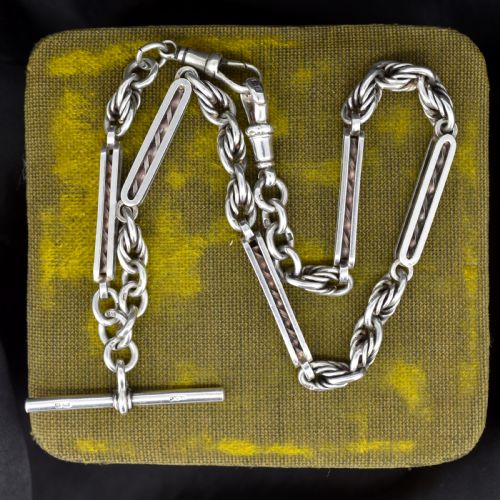
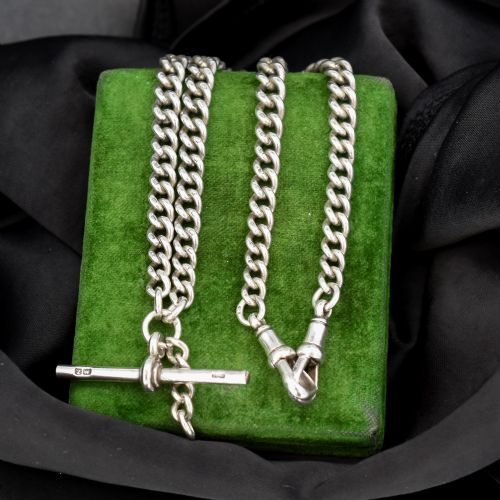


Silver T Bar Necklace
These sterling silver t bar necklace pieces are wearable pieces of history adapted from nineteenth and early twentieth century watch chains.
Understanding a silver t bar necklace
A silver t bar necklace repurposes antique pocket watch chains, specifically the Albert chain design originally fastened to waistcoats. The evidence shows these pieces span from the nineteenth century through the Edwardian period, Art Deco era, and into mid century modernism.
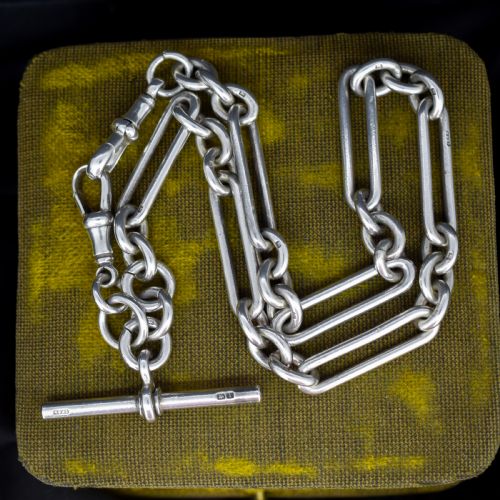
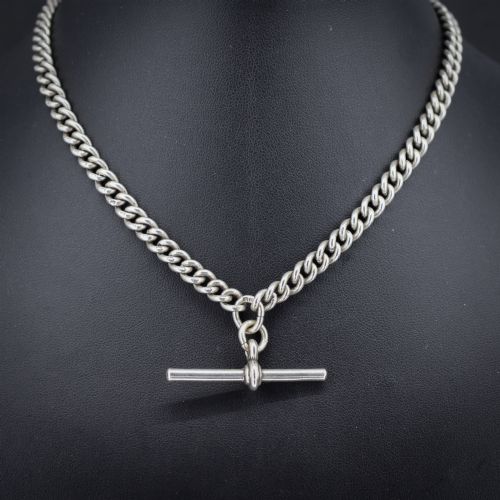
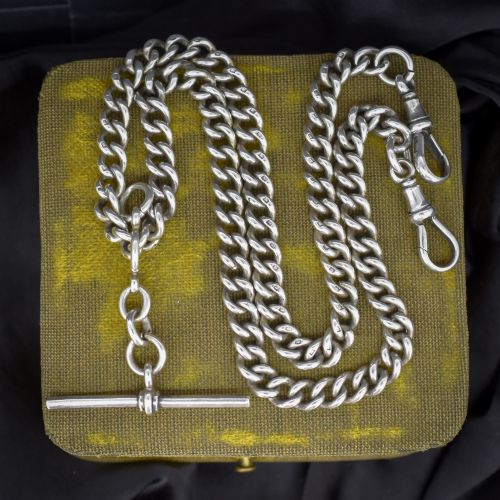
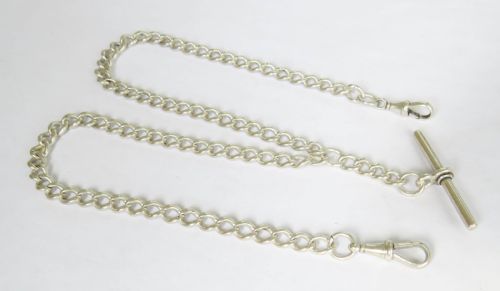
The most common form met here is the curb link or trombone link chain equipped with a central toggle bar and dog clips. These items bridge utilitarian pocket watch suspension and decorative neckwear.
Makers historically designed these chains in solid sterling silver, often incorporating dated elements such as hallmarks from specific years like the late nineteenth century.
Materials and construction
The listings record solid sterling silver and standard silver as the primary materials, shaped into uniform curb links, love knots, and trombone links. Individual links connect to form substantial weights, reaching heavy proportions in chunky variants.
Craftsmen joined each link securely by hand or machine before attaching functional swivel dog clips and the characteristic transverse bar. Hallmarks stamped directly onto the silver provide precise dating evidence for these components.
Retail Price Guide 2026
Typical UK retail prices for silver t bar necklace, calculated from the Sellingantiques database of over a million retail prices indexed since 2003. This retail price guide relies exclusively on Sellingantiques data; no external sources or auction records are used, so the figures do not describe the wider market.
Distinguishing quality
Quality separates ordinary converted chains from exceptional survivals through the crispness of the original hallmarks, the gauge of the silver links, and the original tightness of the dog clip springs. Substantial weight and complete matching components elevate a piece above simpler conversions.
The retention of original maker marks and clear date letters adds historic depth, whereas worn links or replacement clasps alter the structural integrity and originality of the silver t bar necklace.
The Silver T Bar Necklace Glossary
- T-bar
- The short transverse bar attached to the centre of the chain, originally designed to slip through a waistcoat buttonhole. It hangs as a decorative pendant when worn as a necklace.
- Albert chain
- A type of pocket watch chain named after Prince Albert, featuring a main strand and often a smaller drop strand for a fob or t-bar.
- Dog clip
- A spring loaded swivel clasp used to secure pocket watches, which now serves as a primary fastening mechanism on converted necklaces.
- Curb link
- A chain design consisting of identical interlocking links that lie flat when the chain is held straight.
- Trombone link
- A specific geometric link style featuring elongated rectangular loops alternating with smaller circular connecting rings, popular in late Victorian jewellery.
Frequently Asked Questions
What is a silver t bar necklace?
A silver t bar necklace is a piece of jewellery created by repurposing an antique pocket watch chain, typically an Albert chain from the Victorian or Edwardian eras.
The central toggle bar, which once secured a watch in a pocket, now hangs as a decorative front element alongside functional dog clips.
How do I wear a t bar necklace?
These necklaces are worn with the t bar positioned at the front as a focal point or allowed to drop through a central loop.
The dog clips can be attached to other links on the chain to adjust the drop or wear length depending on the specific collar design.
Are these necklaces original antiques?
The evidence shows the underlying chains date from the nineteenth century up through the nineteen fifties, encompassing Victorian, Edwardian, and Art Deco periods.
Many retain original hallmarks stamped into the silver links, confirming their period manufacture.
What silver purity is used?
The listings record solid sterling silver and silver as the standard materials for these watch chain conversions.
Assay office hallmarks often verify the sterling standard on individual links and clasps.