


Heavy Silver Curb Chain
A heavy silver curb chain is a substantial link necklace worn for presence and weight, combining structural strength with historical utility.
What a heavy silver curb chain is
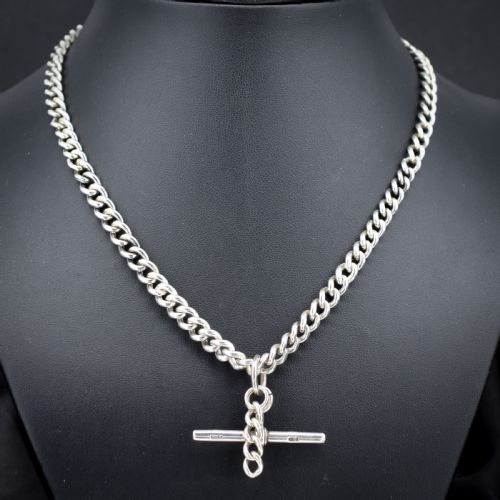
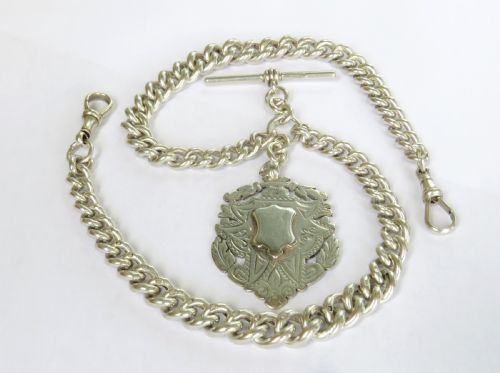
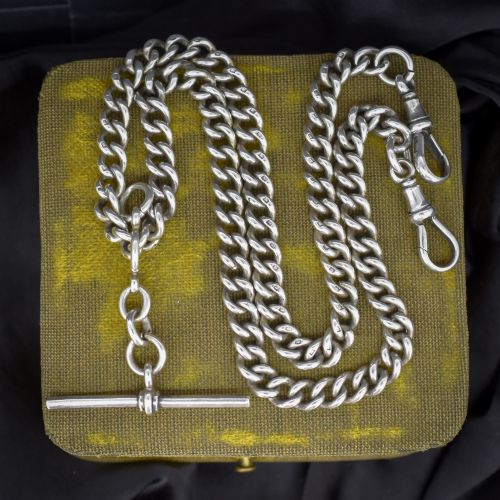
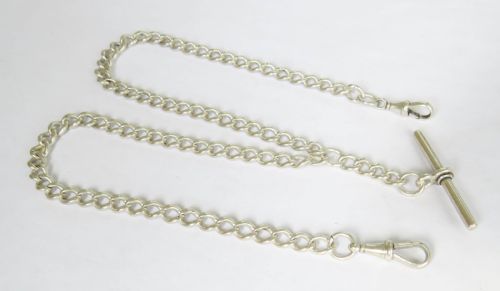
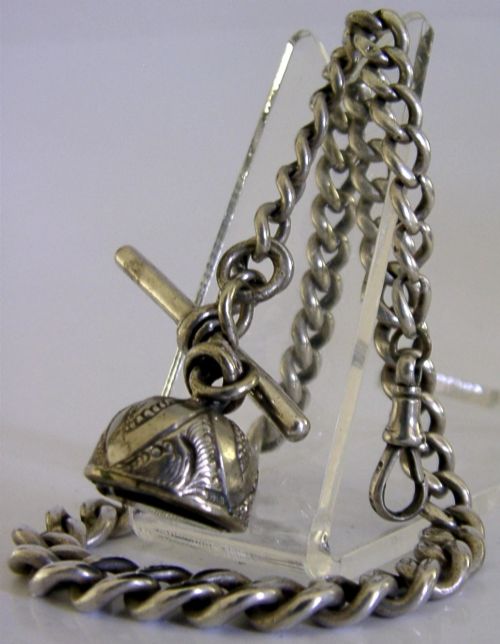
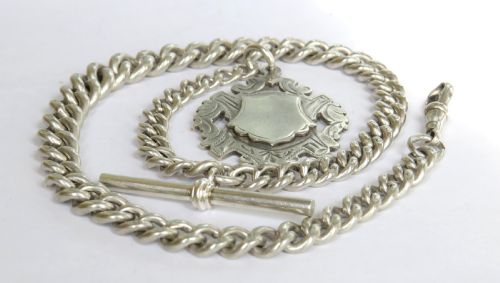
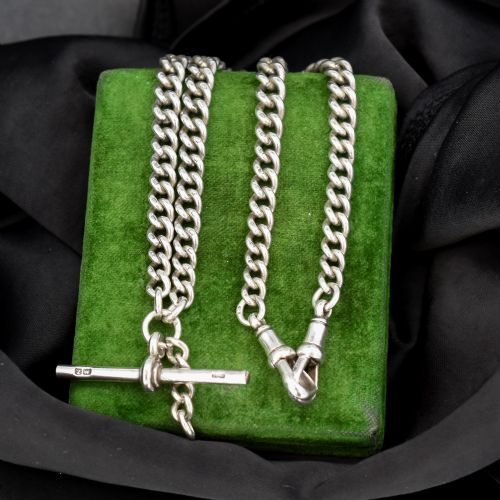
When you search for a heavy silver curb chain, you find substantial sterling silver neckwear featuring interlocking uniform or chunky links. These pieces originate across the nineteenth century, nineteen ten, and nineteen twenty, spanning Victorian and Art Deco styles.
The versions most commonly met on this page take the form of necklaces and Albert watch chains, frequently incorporating functional elements like double dog clips, single dog clips, and T-bars. Lengths vary considerably across the selection, ranging from shorter pieces such as fifteen and a half inches up to extended lengths of thirty-two and a half inches.
How they were made
Every piece recorded in the evidence is formed from sterling silver, utilising the metal's inherent durability for daily wear. Silversmiths constructed these items using individual curb links that were shaped, joined, and finished by hand to create continuous, flexible strands.
Makers integrated specialised components into the construction, attaching swivelling dog clips and T-bars directly to the main chain body. These structural additions required secure soldering and robust loop connections to withstand regular handling.
Some chains stretch past thirty inches, meaning you could practically tow a small vintage bicycle with them.
What varies in quality
Quality in a heavy silver curb chain rests in the uniformity and tightness of the link construction, alongside the substantial feel of the metal. Pieces that retain crisp definition across each interlocking curb link demonstrate superior initial manufacture.
The presence of original fitted components such as fully functioning dog clips and T-bars alters the overall integrity of the piece. Selection ranges from standard uniform links to particularly chunky configurations that carry significantly more visual and physical weight.
The Heavy Silver Curb Chain Glossary
- Sterling Silver
- A standard alloy of silver comprising ninety-two point five percent silver by mass and seven point five percent other metals, usually copper. This composition provides the durability required for sustained jewellery use.
- Curb Link
- A type of chain link that has been twisted and flattened so that the chain lies flat against the skin or clothing. It forms the primary structural style found in these pieces.
- Dog Clip
- A spring-loaded swivel fastening resembling a miniature leash clasp, designed to secure pocket watches or pendants safely. They operate via a thumb lever that retracts an internal spring gate.
- T-Bar
- A short horizontal metal bar attached to a centre drop on a watch chain, used historically to secure the chain through a waistcoat buttonhole. It remains a defining feature of Albert chains adapted for modern wear.
- Albert Chain
- A specific form of pocket watch chain named after Prince Albert, featuring a T-bar at one end and a clip at the other. When worn as a necklace, these historical elements create distinct focal points.
Frequently Asked Questions
What is a heavy silver curb chain?
A heavy silver curb chain is a substantial sterling silver necklace composed of interlocking links that lie flat. These items derive from nineteenth-century and early twentieth-century jewellery traditions.
Many examples originate as Albert watch chains, retaining functional elements like dog clips and T-bars that distinguish them from standard commercial necklaces.
What materials are used in these chains?
The pieces recorded in the evidence are made exclusively from sterling silver. This metal provides both the necessary structural strength for chunky link construction and a bright reflective finish.
No other metal types are represented in the current selection, ensuring a consistent material standard across the inventory.
How do I date a silver curb chain?
Dating these chains relies on stylistic indicators, documented assay marks, and specific configuration types associated with Victorian and Art Deco periods. Pieces span from the nineteenth century through to nineteen twenty.
Specific dates or broader period classifications assigned to each listing help establish the chronological context of manufacture.