


Silver Curb Link Necklace
A silver curb link necklace brings together solid links, dog clips, and t-bars adapted from pocket watch chains for everyday wear.
Silver Curb Link Necklace
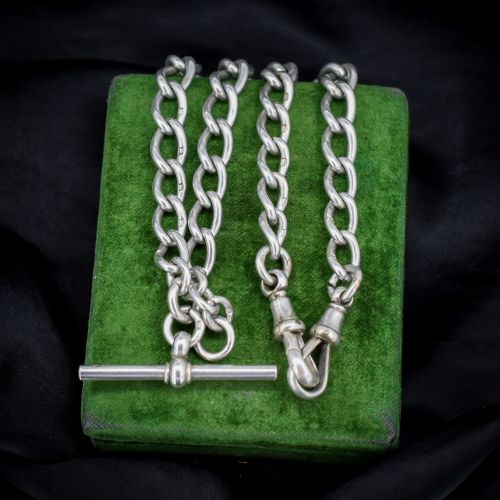
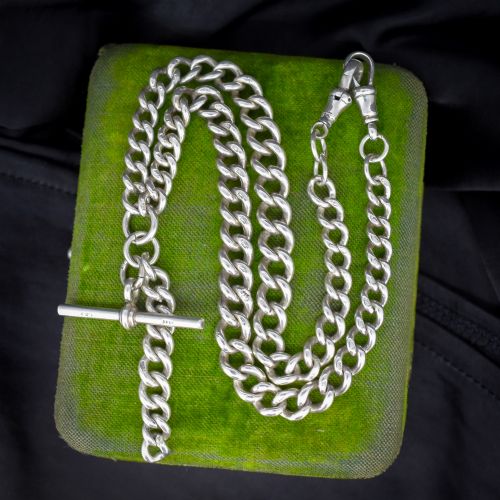
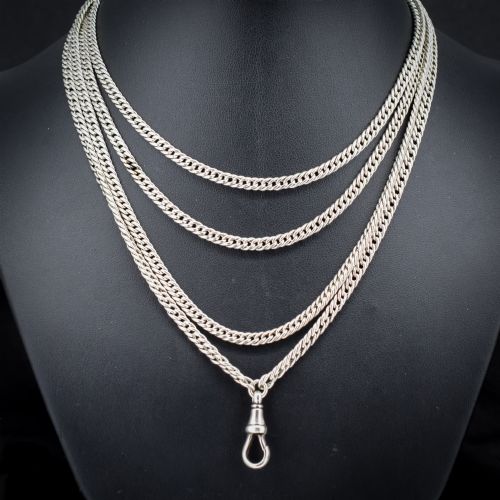
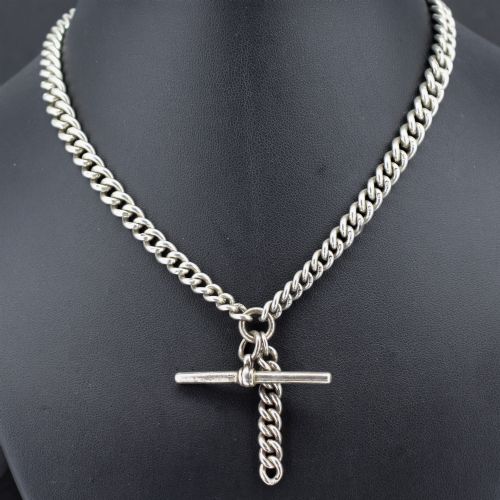
When you search for a silver curb link necklace, you find robust lengths of interlocking metal links designed to sit securely around the neck. These pieces often originate as pocket watch chains, specifically albert chains, which are worn today as necklaces.
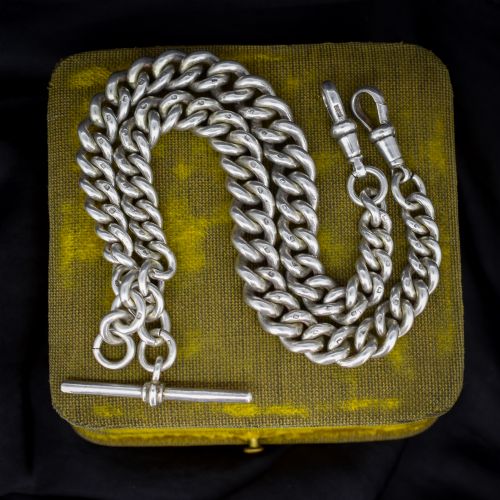
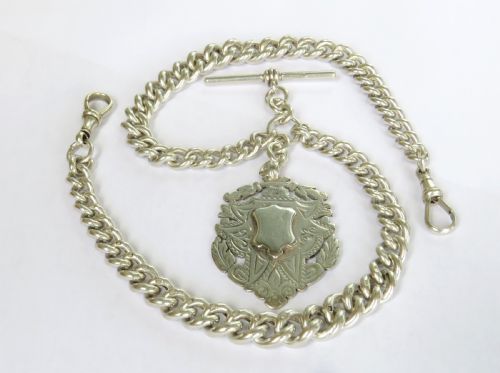
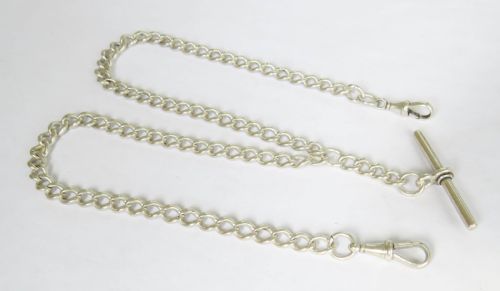
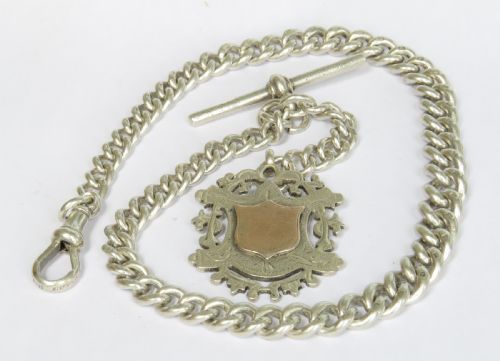
The evidence shows examples spanning the Victorian period through the 1930s, including specific years like 1887, 1906, 1924, and 1936. You encounter uniform links alongside heavier chunky variations, frequently fitted with original dog clips, swivels, and t-bars.
Victorian, Edwardian, and Art Deco styles dominate the selection, showing how utility items transitioned into decorative jewellery. Many pieces retain functional components like bloodstone fobs and keys, preserving their original mechanical character.
How they were made
Makers fashioned these chains from sterling silver and standard silver, sometimes incorporating rose gold details or gemstone elements like bloodstone. Metalworkers formed each individual curb link by hand or with early industrial machinery, soldering and finishing them to withstand daily use as watch chains.
The construction relies on secure mechanical fastenings, notably dog clips and T-bars, which allowed owners to secure pocket watches safely. These durable links and robust clasps explain why so many nineteenth and early twentieth-century examples survive intact.
Silver Curb Link Necklace Retail Price Guide 2026
Typical asking prices for silver curb link necklace among the pieces listed under this phrase on Sellingantiques today, from the lower quarter to the upper quarter. They describe what is for sale here now, not the wider market.
Listings show sterling silver and standard silver pieces spanning the Victorian era, Edwardian period, 1910, 1920, and Art Deco 1930s.
What varies in quality
The substance of the metal separates standard pieces from heavier examples, with weights ranging up to substantial multi-gram items. Heavier chunky links show less wear at the pivot points where each loop meets the next.
Completeness dictates distinction, as items retaining their original dog clips, t-bars, and fobs hold greater historical integrity. Hallmarks stamped into the silver provide reliable evidence of origin and date, anchoring the quality of the workmanship.
The Silver Curb Link Necklace Glossary
- Curb link
- A type of chain made from flattened, interlocking links that lie flat against the skin. This design provides exceptional flexibility and durability.
- Dog clip
- A spring-loaded clasp resembling a snap hook, used originally to secure a pocket watch to an albert chain. It serves today as the primary fastener for necklace conversions.
- T-bar
- A short transverse metal bar attached to a chain, designed to slip through a waistcoat buttonhole. On a necklace, it hangs as a decorative pendant feature.
- Albert chain
- A type of pocket watch chain named after Prince Albert, featuring a central drop for a fob. Many survive today converted into necklaces.
- Fob
- A small ornament or seal attached to a watch chain by a short length of chain. They often incorporate gemstones like bloodstone.
Silver Curb Link Necklace: Frequently Asked Questions
What is an albert chain?
An albert chain is a traditional pocket watch chain designed to attach a timepiece to a waistcoat. Victorian and Edwardian examples featured robust links and dog clips.
Today, these chains are widely worn as necklaces because their length and weight suit modern styling while retaining their original mechanical hardware.
How do I wear a watch chain as a necklace?
You wear an albert chain necklace by fastening the dog clip directly to any link or to a dedicated ring. This allows you to adjust the drop of the T-bar and any attached fobs.
The T-bar naturally rests at the front or side as a decorative toggle, mirroring how it hung from a pocket.
How do I date silver curb link necklaces?
You date these pieces primarily through silver hallmarks stamped onto the links, dog clips, or T-bars. These assay marks reveal the exact year of manufacture and the city of origin.
Stylistic markers, such as Victorian chunky proportions or Art Deco geometric influences, also help narrow down the period when hallmarks are rubbed.